


WASHINGTON (AP) — Congress has approved a short-term extension of a critical surveillance program used by U.S. spy agencies, staving off a Friday expiration as disputes over a longer reauthorization remain unresolved.
The House sent the extension to President Donald Trump’s desk Thursday after the Senate cleared it earlier in the day. The move comes despite passage through the House of a longer three-year extension, with lawmakers needing more time to negotiate a final agreement. The temporary patch extends the program through June 12.
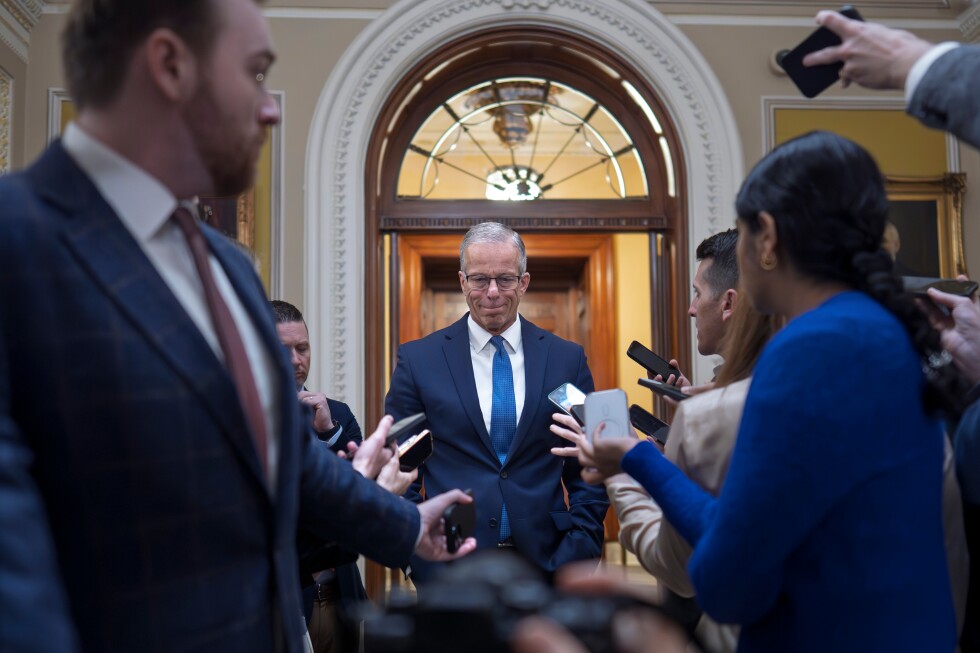
“I don’t like kicking the can down the road. Not my jam. But that’s where we are,” said Senate Majority Leader John Thune, R-S.D.
Trump and intelligence officials have for weeks urged Congress to renew a key provision of the Foreign Intelligence Surveillance Act that allows agencies like the CIA, National Security Agency and FBI to collect communications from foreign targets without a warrant.
But negotiations have stalled over concerns that the program can incidentally sweep up Americans’ communications. Critics want a warrant requirement when those communications are accessed.
The short-term extension was passed Thursday by unanimous consent in the Senate. In the House, it received bipartisan support, with many Democrats joining the Republican majority in the 261-111 vote.
“I won’t oppose this short extension, but only because it is my fervent hope and determination it will give us the time to work together across the aisle to implement meaningful reforms,” said Rep. Jamie Raskin, the top Democrat on the House Judiciary Committee.
Some House Republicans did speak against it ahead of the vote. Kentucky Rep. Thomas Massie has been among the Republicans pushing for a warrants requirement.
“A short term infringement of the Constitution is still an infringement of the Constitution,” Massie said on the House floor.
Thune said Thursday he believed the extension into June would allow Congress to work with the White House on reforms to the program.
“We’ll get to work in earnest and try to find something you actually are able to do a long term extension of the authorization with,” Thune said.
Concerns about warrantless surveillance have made passage of a long-term renewal a heavy lift for Republican leadership. Earlier this month, lawmakers approved a short-term extension through April 30 after a chaotic late-night session.
House GOP leaders appeared to make headway Wednesday, clearing a key procedural hurdle on a three-year renewal after flipping several Republican holdouts. The bill later passed with bipartisan support.
But House leaders added separate legislation banning a central bank digital currency to win more votes. Senate leaders made clear that provision would not pass their chamber.
Thune said he told Johnson Wednesday that “what they sent us, we weren’t going to be able to process over here.”
___
Associated Press writer Mary Clare Jalonick contributed.
