


Rows of treadmills, bikes and ellipticals have long anchored the fitness floor, delivering reliable, steady-state training built around repetition and endurance. But as training preferences have evolved toward strength, and as operators look to get more out of their space and equipment, that model has begun to show its limits.
What’s emerging in its place is something less defined by category.
“The biggest evolution we’re seeing is the ability to get more out of each footprint,” says Joe Travers, Chief Product Officer at REP Fitness. “Whether that’s a single unit in a garage gym or a full commercial floor, it’s about combining multiple modalities into one product to expand training capability without expanding space.”
That shift is at the center of REP’s Strive™ cardio line, which is designed to bridge the gap between traditional cardio and strength-based training, less as a hybrid category, and more as a reflection of how people actually train today.
Blurring the Line Between Cardio and Strength
At its core, the Strive™ line is built around a simple idea: that conditioning, resistance and power work no longer need to exist in separate zones of the gym.
“The equipment blurs the line between cardio and strength,” Travers says. “Coaches can now program an entire session on a single piece of equipment, making training more efficient and versatile while reducing the need for multiple stations.”
That versatility is most visible in the details of the equipment itself.
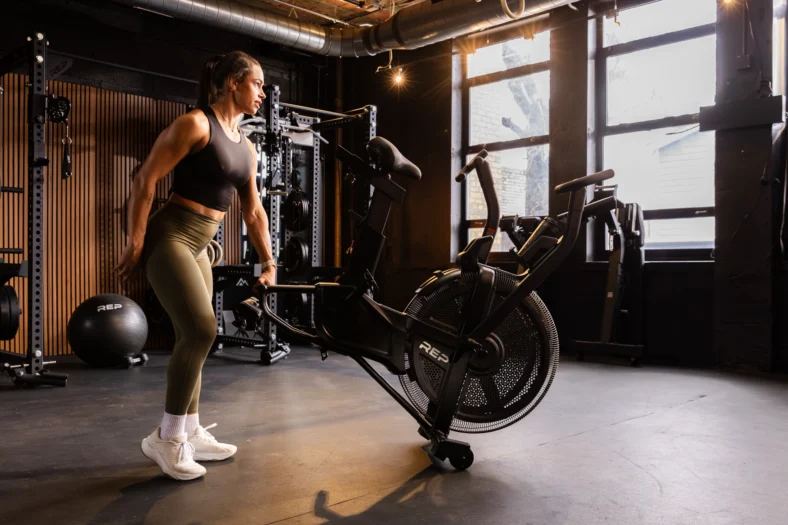
On the cardio side, the Strive™ Air Bike featuring VPR™ introduces patent-pending Variable Pitch Resistance, allowing users to adjust the angle of the fan blades and fundamentally change the resistance curve. Instead of being limited to a single output tied to effort alone, the bike can be tuned to match different training goals ranging from low-intensity aerobic work to high-load, strength-driven intervals.
“VPR introduces a much wider power curve than traditional air bikes,” Travers explains. “That allows the Strive™ Air Bike to function as both a low-intensity cardio machine and a high-intensity resistance tool.”
The result is a single piece of equipment capable of supporting a broader spectrum of training, without requiring users to move between modalities.
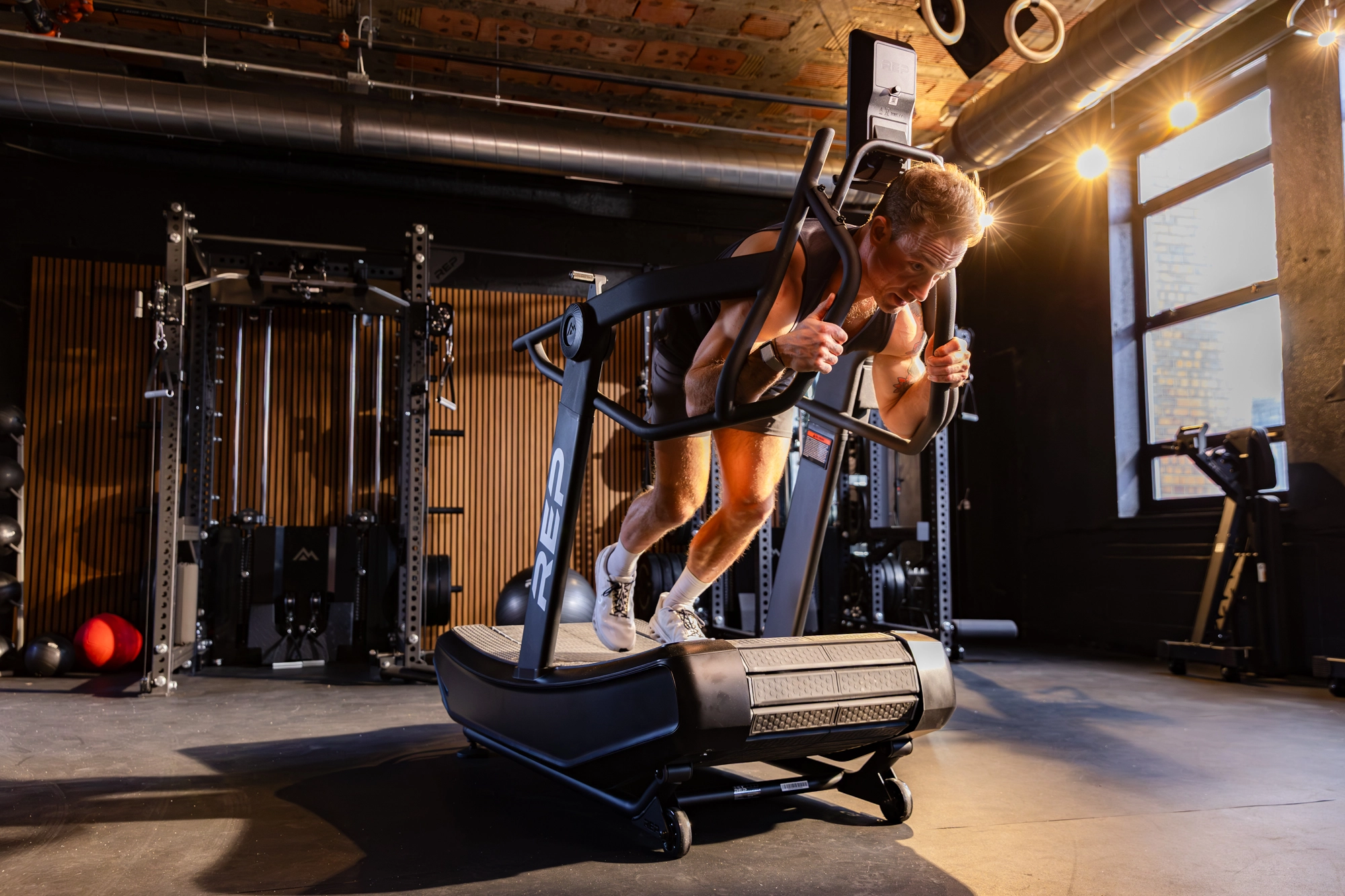
The same thinking carries through to the Strive™ curved treadmill.
While curved treadmills have become increasingly popular in performance-focused facilities, REP’s version pushes the concept further by integrating sled training directly into the machine.
The Strive™ Curved Treadmill delivers up to 600 pounds of sled resistance before quickly converting back into a free-running treadmill. That transition is supported by features like a throttle handle for quick mode changes, a heads-down display for visibility under load and ergonomic shoulder bars designed specifically for sled pushes.
“The versatility allows operators to place it in either cardio or functional areas,” Travers says. “At the same time, it frees up turf space by replacing traditional sled work.”
For operators, this has direct implications for how the floor is designed. Instead of dedicating space to multiple stations — treadmills in one area, sleds and turf in another — the same training outcomes can be achieved within a single footprint. In an environment where space is increasingly at a premium, that kind of consolidation is significant.
Programming for Efficiency and Outcomes
As equipment becomes more versatile, the way coaches design programs begins to change as well.
Historically, conditioning and resistance training have been segmented, not necessarily because they needed to be, but because equipment dictated it. Moving between zones, setting up different stations and managing transitions has always been part of the process.
Multi-modal equipment eliminates many of those constraints entirely.
“Coaches can now build sessions that combine conditioning, power and resistance without having to move athletes across the floor,” Travers says.
That efficiency helps streamline programming, allowing for smoother transitions, better pacing and a clearer focus on performance.
Another aspect the Strive™ line addresses is how users interact with the equipment.
For years, much of the innovation in cardio has centered around entertainment — larger screens, streaming integrations and immersive content designed to keep users engaged. That focus is beginning to change.
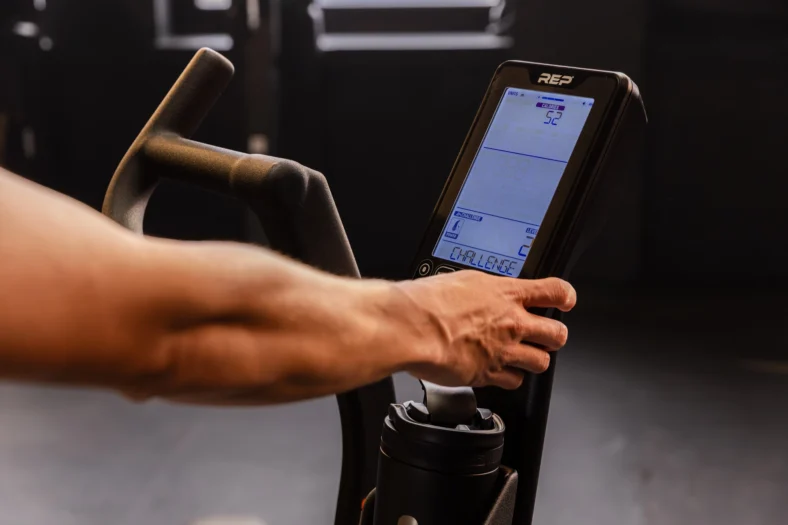
“More users are prioritizing performance over entertainment,” Travers says. “That’s driving us to design products that emphasize measurable outputs and progression.”
That emphasis carries through to both the data and the experience.
Performance metrics become central, helping users track progress over time and connect effort to outcome. At the same time, the physical interaction with the equipment is designed to be intuitive, particularly under load.
“When introducing hybrid modalities, the experience has to be seamless,” Travers adds. “If users can’t transition easily or track performance clearly, especially at high intensity, the product won’t be adopted the way it should be.”
For operators, the shift carries clear business implications.
“The more a product connects users to measurable progression, the more likely they are to come back and use it again, so it’s a retention play,” Travers says. “At the same time, usage data helps operators track usage and therefore, make smarter investment decisions.”
Collectively, these shifts are reshaping the role cardio equipment plays on the fitness floor.
Ultimately, Travers says traditional cardio equipment peaked in the 2010’s in innovation, but cardio still clearly has its place.
“Core modalities remain, but the category is evolving. The future is about how much equipment delivers during training sessions, and how it connects users to measurable progress and guides next steps. The brands that deliver that will define the next generation of the category.”
