


(Bloomberg) — US consumer sentiment tumbled this month to a more than two-year low and long-term inflation expectations jumped to a 32-year high as anxiety over tariffs continued to build.
Most Read from Bloomberg
The final March sentiment index declined to 57 from 64.7 a month earlier, according to the University of Michigan. The latest reading was below both the 57.9 preliminary number and the median estimate in a Bloomberg survey of economists.
Consumers expect prices to rise at an annual rate of 4.1% over the next five to 10 years, the data released Friday showed. That’s the highest since February 1993 and above the 3.9% preliminary reading. They saw costs rising 5% over the next 12 months, the highest since 2022.
While the University of Michigan’s long-term inflation expectations have soared this year, other measures have remained steady. The outlook for inflation three years and five years out, according to a Federal Bank of New York consumer survey, was stable last month.
During a press conference this month, Fed Chair Jerome Powell largely dismissed the Michigan survey as an outlier for longer-run expectations, and other policymakers have since echoed his remarks.
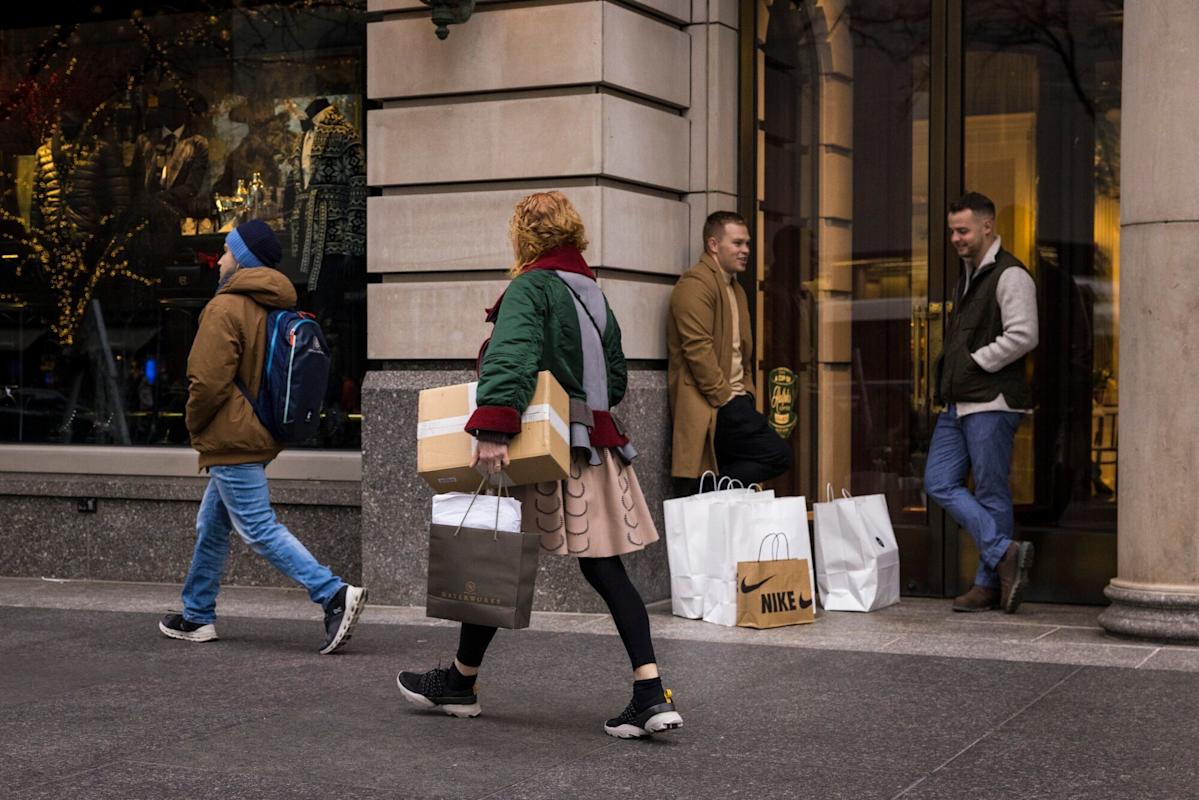
As President Donald Trump’s tariff policy expands, consumers across the political spectrum are growing more worried that the added duties will drive up prices. A prolonged rise in costs could prompt households to cut back on discretionary spending, which has implications for broader economy.
“Consumers continue to worry about the potential for pain amid ongoing economic policy developments,” Joanne Hsu, director of the survey, said in a statement. “Notably, two-thirds of consumers expect unemployment to rise in the year ahead, the highest reading since 2009.”
Respondents said there was more than a 23% chance they or their spouse would lose their job within the next five years, the highest since 2020. Labor market expectations worsened considerably across demographic and political groups in a sign of subdued spending over the coming months, the report showed. Moreover, expectations among high-income consumers sank.
Consumers said they expect their incomes to rise 0.4% in the next year, the least since 2013 when excluding the pandemic.
“This trend reveals a key vulnerability for consumers, given that strong labor markets and incomes have been the primary source of strength supporting consumer spending in recent years,” Hsu said.
