Close Menu
  • Home
  • AI & Technology
  • Politics
  • Business
  • Cryptocurrency
  • Sports
  • Finance
  • Fitness
  • Gadgets
  • World
  • Marketing

Subscribe to Updates

Subscribe to our newsletter and never miss our latest news

Subscribe my Newsletter for New Posts & tips Let's stay updated!

What's Hot

Bitcoin Analyst Who Bought At $1 Revealed What Really Caused The October 10 Crash

March 27, 2026

Amazon Big Spring Sale 2026: Best Fitness, Wellness, Health Deals

March 27, 2026

Iranian attack on Saudi base wounds at least 10 US troops

March 27, 2026
Facebook X (Twitter) Instagram
  • Home
  • About US
  • Advertise
  • Contact US
  • DMCA
  • Privacy Policy
  • Terms & Conditions
Facebook X (Twitter) Instagram
MNK NewsMNK News
  • Home
  • AI & Technology
  • Politics
  • Business
  • Cryptocurrency
  • Sports
  • Finance
  • Fitness
  • Gadgets
  • World
  • Marketing
MNK NewsMNK News
Home » Trump’s Trade Policy Turns Back The Clock to the Days of Hawley-Smoot
Finance

Trump’s Trade Policy Turns Back The Clock to the Days of Hawley-Smoot

MNK NewsBy MNK NewsApril 5, 2025No Comments3 Mins Read
Facebook Twitter Pinterest LinkedIn Tumblr Email
Share
Facebook Twitter LinkedIn Pinterest Email


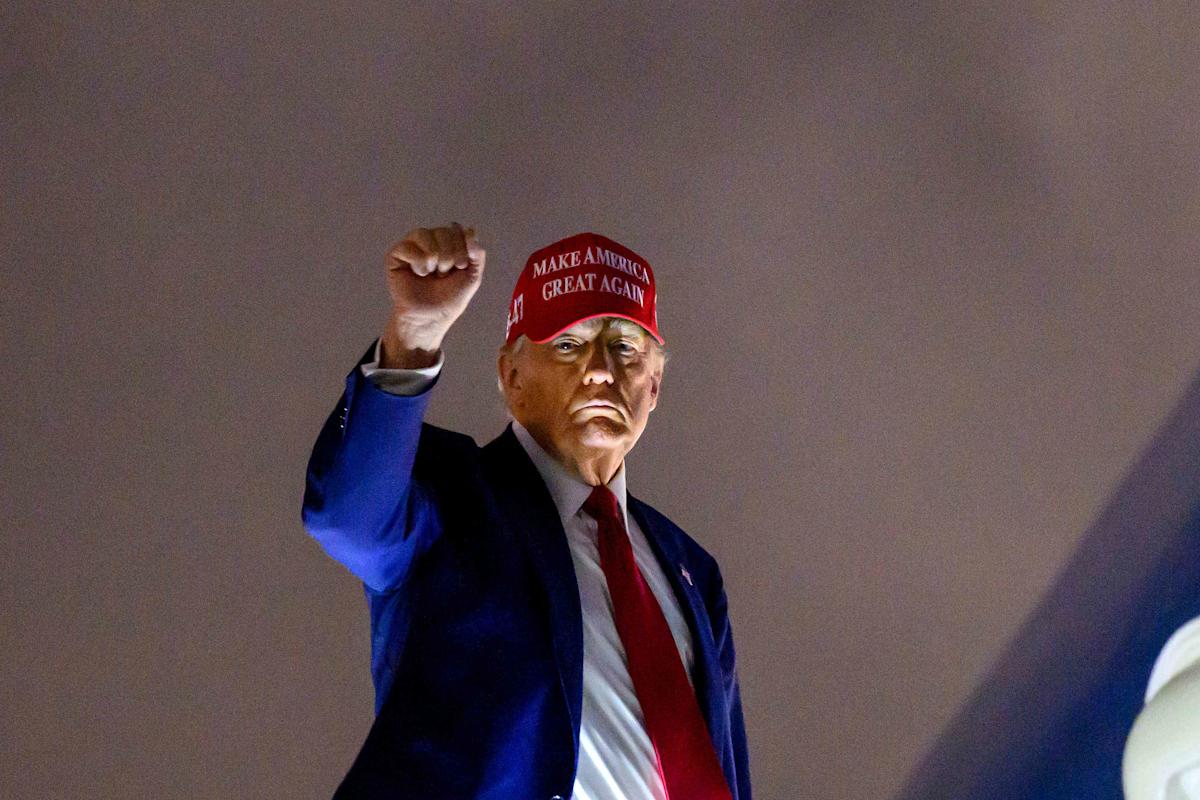
Mandal Ngan /AFP via Getty Images

Mandal Ngan /AFP via Getty Images

  • President Donald Trump’s “reciprocal” tariffs push the effective U.S. tariff rate to its highest since 1909.

  • The tariffs represent a rollback of the post-WWII economic global trade system, which economists credit with raising U.S. living standards.

  • Many experts expect the policy will push up inflation while dragging down economic growth.

President Donald Trump has long dreamed of turning back the economy’s clock. This week he did just that, announcing a trade policy that will push up the effective tariff rate to its highest level since 1909.

In his speech Wednesday announcing wide-ranging and varying tariffs, Trump said he wanted to return the U.S. economy to how it was in the 1870s and through the turn of the century before the creation of the income tax in 1913. During that time, the government was run on revenue from tariffs.

The tariffs mark a sharp reversal from decades of U.S. trade policy. Since World War II, presidents— including Trump in his first term—generally sought to expand free trade, pursuing agreements to open foreign markets to U.S. exporters and mostly keeping tariffs against foreign goods low.

“We have a 20th-century president in a 21st-century economy who wants to take us back to the 19th century,” Douglas Irwin, a trade economist at Dartmouth, posted on X.

In recent years, Trump and former President Joe Biden have imposed tariffs, but on a much smaller scale and targeted at specific industries. Many economists credit the expansion of free trade with raising living standards in the U.S. and abroad. However, some have cited important downsides, including the loss of manufacturing jobs in the U.S.

Economists criticized the new tariffs, with many struggling to understand what they were supposed to accomplish. Multiple forecasters have said the tariffs would raise the cost of living while dragging down economic growth, possibly leading to a recession. Meantime, markets have been thrown into chaos.

Amid those projections, some policy analysts have drawn parallels between the protectionist nature of Trump’s policies and that of the Smoot-Hawley Tariff Act of 1930.

Much like Trump, the senators who sponsored the act wanted to incentivize the production and purchase of U.S. goods. To do so, they increased already-high tariffs by about 20% despite vehement protests from economists.

The tariff increase kicked off a global trade war in which 25 countries retaliated against the U.S. action and global trade shrunk 66% over five years. Economists said the trade war worsened the severity of the Great Depression.

This week, China was the first to announce retaliatory tariffs on U.S. goods. Other countries have threatened to respond as well. There is still time for negotiations, and tariffs could end up being lower than previously announced.

However, if the U.S. goes through with tariffs according to plan and countries enter a tit-for-tat trade war, economists expect an even larger chance of a recession.

Read the original article on Investopedia


Source link

Share. Facebook Twitter Pinterest LinkedIn Tumblr Email
MNK News
  • Website

Related Posts

Rite Aid files for bankruptcy — again

May 6, 2025

How to Track Driver Performance Without Micromanaging

May 6, 2025

Ford says its Q1 profit fell by two-thirds and it expects a $1.5 billion hit from tariffs this year

May 6, 2025
Add A Comment
Leave A Reply Cancel Reply

Editors Picks

Iranian football players hold schoolbags in solidarity with girls killed in strike on Minab school

March 27, 2026

Sabalenka and Rybakina to clash again in Miami semi-final

March 27, 2026

Transgender athletes barred from female category events at Olympics

March 26, 2026

PM urged to postpone ‘unconstitutional’ PHF Congress meeting

March 25, 2026
Our Picks

Bitcoin Analyst Who Bought At $1 Revealed What Really Caused The October 10 Crash

March 27, 2026

Bitcoin Omitted From PARITY Act’s Tax Relief, BPI Urges Inclusion Of Miners

March 27, 2026

An XRP Key Indicator Just Flipped Bullish — and Most Traders Are Not Watching It

March 27, 2026

Recent Posts

  • Bitcoin Analyst Who Bought At $1 Revealed What Really Caused The October 10 Crash
  • Amazon Big Spring Sale 2026: Best Fitness, Wellness, Health Deals
  • Iranian attack on Saudi base wounds at least 10 US troops
  • Bitcoin Omitted From PARITY Act’s Tax Relief, BPI Urges Inclusion Of Miners
  • Verizon waives late fees for federal workers affected by partial DHS shutdown

Recent Comments

No comments to show.
MNK News
Facebook X (Twitter) Instagram Pinterest Vimeo YouTube
  • Home
  • About US
  • Advertise
  • Contact US
  • DMCA
  • Privacy Policy
  • Terms & Conditions
© 2026 mnknews. Designed by mnknews.

Type above and press Enter to search. Press Esc to cancel.