


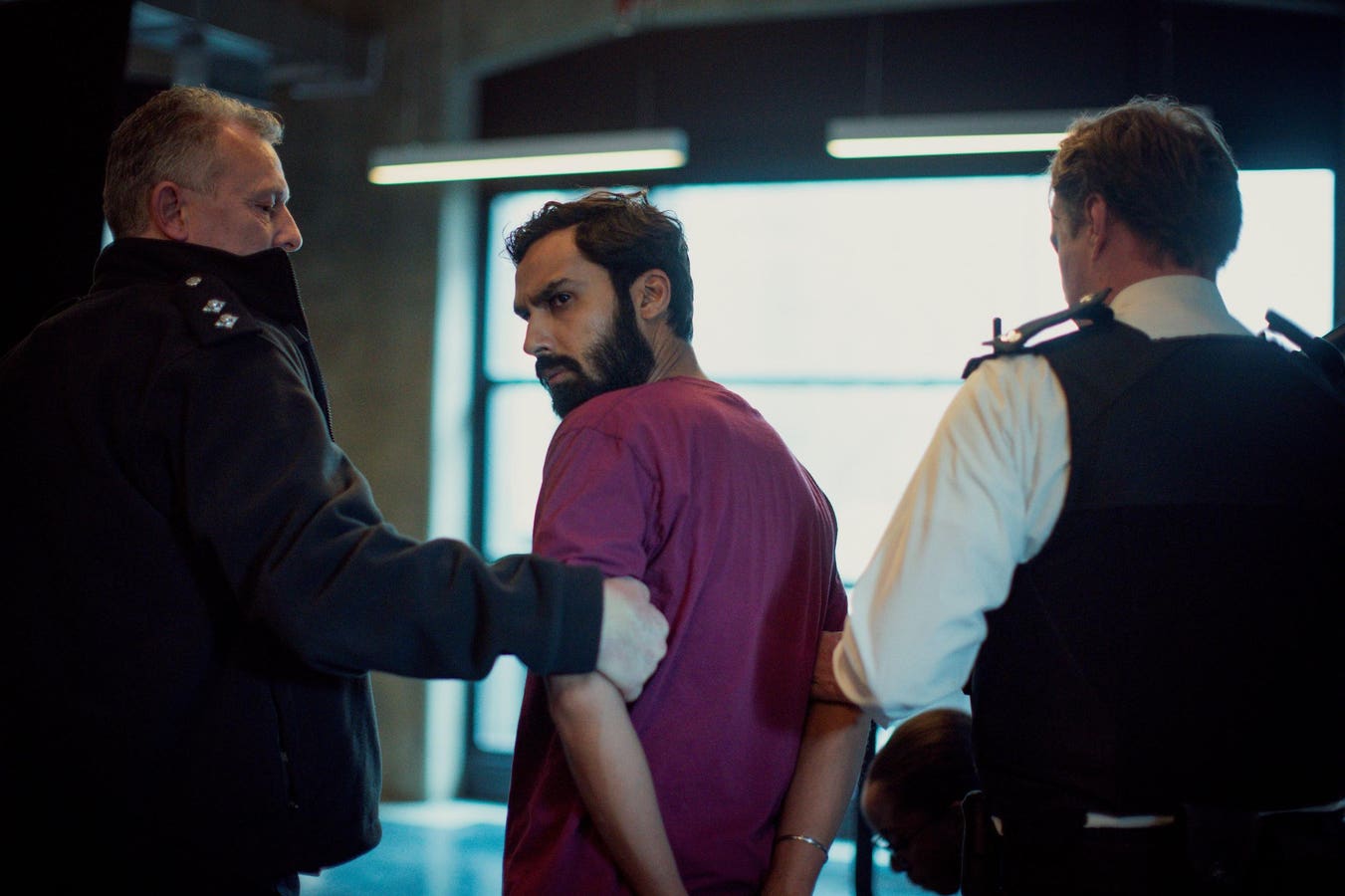
Netflix’s ‘Criminal: UK’ impressed viewers and critics on a budget of just $15 million
For a studio with one of the biggest content budgets in Hollywood, Netflix knows how to keep costs under control. It rarely spends more than $200 million on its movies which is some 30% less than its chief competitors. Streaming shows are no exception as new research has revealed that Netflix was behind a show which delivered some of the best value for money in Hollywood.
Shows are Netflix’s bread and butter as Disney’s visionary former chief executive Michael Eisner explained in an interview with the Daily Mail newspaper. Eisner knows this all too well as his Tornante media firm produced the wildly successful Netflix adult animated comedy series BoJack Horseman about an anthropomorphic self-loathing sitcom actor.
Talking about the history of the streamer, Eisner explained that Netflix’s co-founder “Reed Hastings, who is a genius in this area, took selling DVDs by mail and said ‘well, our real name is Netflix. It is Netflix. We want to stream them now.’ Nobody thought of that. Several companies had the ability to buy Netflix early for nothing and he created a business strategy that was streaming but also buying everybody’s library. Everybody agreed to sell their library to him which was probably a mistake for them but they made a lot of money on it and it kept a lot of companies afloat. So it was the content that made Netflix.”
Eisner added that “Netflix was made by library products then it was made by House of Cards and I’d like to think BoJack Horseman, which was their first animated show, also helped to make it.” There’s no doubt that Netflix has a longer track record of streaming series than any other media giant and it shows.
As this report revealed, Amazon spent over $800 million on two seasons of The Rings of Power while Star Wars spinoff Andor has cost Disney more than $645 million. It stands in stark contrast to Criminal: UK, a gripping British drama which is part of a Netflix anthology series. Split into two seasons with a total of seven episodes, it follows the highly trained members of a special interrogative division of London’s Metropolitan police force.
The first season was released in September 2019 and consisted of three episodes, the same as three foreign shows which were part of the same anthology series but had unrelated stories. The first season earned an 85% critics score on review aggregator Rotten Tomatoes but that was just the start.
The remaining four episodes debuted a year later in the second season which was an even bigger hit. It didn’t just hit the magic 100% number on Rotten Tomatoes but also received nominations for Best Supporting Actor and Best Supporting Actress at the 2021 British Academy Television Awards.
‘Criminal: UK’ takes place in the confines of a police interrogation room
Instead of relying on flashy visual effects and A List actors as other studios do, Netflix knew that a twisting plot was enough to keep viewers hooked. The show is set within the confines of a police interrogation room and its viewing quarters where the interrogation team play intense games of psychological cat-and-mouse with their suspects to find the answers that they need to close the case.
Costs were kept tight thanks to the compact setting combined with the use of largely little-known British actors. Perhaps the two biggest stars were The Big Bang Theory’s Kunal Nayyar and Sophie Okonedo who recently had roles in Amazon Prime’s The Wheel of Time series and the Netflix movie Heart of Stone.
There’s no question about how much Criminal: UK cost to make. Unlike their counterparts made in the United States, the production companies behind shows made in the United Kingdom file annual financial statements as part of the process of getting a cash reimbursement of up to 25.5% of the money they spend in the country.
The companies usually have code names so that they don’t raise attention with fans when filing permits to film on location. Tallying the company names with the productions they are responsible for requires deep industry knowledge which my colleague and I have built up over nearly 15 years. We are the only reporters worldwide who specialize in covering the financial statements of U.K. film production companies for national media and we have reported on them for more than 10 leading titles including The Times of London, The Guardian, The Daily Telegraph, The Independent and the London Evening Standard.
The financial statements have a public interest in the U.K. media as the reimbursement to the studios comes from taxpayers’ money. Outside the U.K. the interest is in the bigger picture matter of the production costs.
The Netflix subsidiary behind Criminal: UK is named Tottenham Productions after a district in London where it was filmed. Its financial statements show that “the principal activity of the company…was the production of broadcast content for distribution throughout the world.”
Sophie Okonedo is one of the bigger names in ‘Criminal: UK’
They reveal that the production company spent just $16.6 million (£12.5 million) between June 2018, when it was incorporated, and May last year when Netflix brought the curtain down on it. There’s no chance that additional costs were hidden in other companies as the terms of the reimbursement state that each U.K. production can only have one production company.
The financial statements add that Netflix received $1.2 million (£0.9 million) of its costs back bringing the net spending on the show to just $15.4 million. The streamer has been contacted for comment on its magic formula for cost containment and this report will be updated if it responds. The benefits of the reimbursement extend far beyond its bottom line.
The latest data from the British Film Institute (BFI) shows that in 2019, every $1.31 (£1) of reimbursement handed to studios generated $10.88 (£8.30) of additional Gross Value Added (GVA) benefit for the U.K. economy. It led to a total of $10.1 billion (£7.7 billion) in GVA being generated by the fiscal incentives for film in 2019.
Released in December 2021, the BFI’s triennial Screen Business report showed that between 2017 and 2019, the fiscal incentives to studios generated a record $17.7 billion (£13.5 billion) of return on investment to the UK economy and created more jobs than ever before.
One of the biggest single areas of expense for Criminal: UK was the $0.4 million (£0.3 million) spent on the staff which peaked at only six people. However, as with any shoot, the vast majority of the crew were freelancers, contractors and temporary workers who don’t appear on the production company’s books as employees. They work in sectors such as security, equipment hire, transport and catering.
In 2019, film making generated 37,685 jobs in London and 7,775 throughout the rest of the U.K. The BFI’s report added that when the wider impacts of the film content value chain are taken into consideration, 49,845 jobs were created in London in 2019 and 19,085 throughout the rest of the U.K.
Last week the BFI released its latest annual data which shows that foreign studios contributed around 87% of the $2.6 billion (£2.1 billion) spent on making films in 2024. Between 2020 and 2023 Netflix alone invested almost $6 billion in the U.K. shooting shows and films. As long as the rich rewards for studios remain in place, that total seems set to soar.
