


Fitness trackers are a solid option if you really want to hone in on tracking, well, your fitness. Some of the best fitness trackers also include additional sensors to track things like stress, sleep and other advanced health metrics. Sure, you could opt for the best smartwatch, but if you’re not interested in all of the extra features they offer, a fitness tracker might be a better (and more affordable) option.
Accurate workout and activity tracking is what fitness trackers do best; most include a pedometer to track your steps throughout the day. They might not look as glamorous as an Apple Watch, but they do a particular job well. We’ve researched and tested a good selection of the most popular fitness trackers out there to help make your decision a little easier.
Table of contents
Best fitness trackers and watches for 2025
Fitbit
Tracker: Fitness, heart rate, ECG, SpO2, skin temperature, stress, sleep | Supported OS: Android, iOS | Max battery life: 7 days | Size: Small, large | Water resistant: Yes
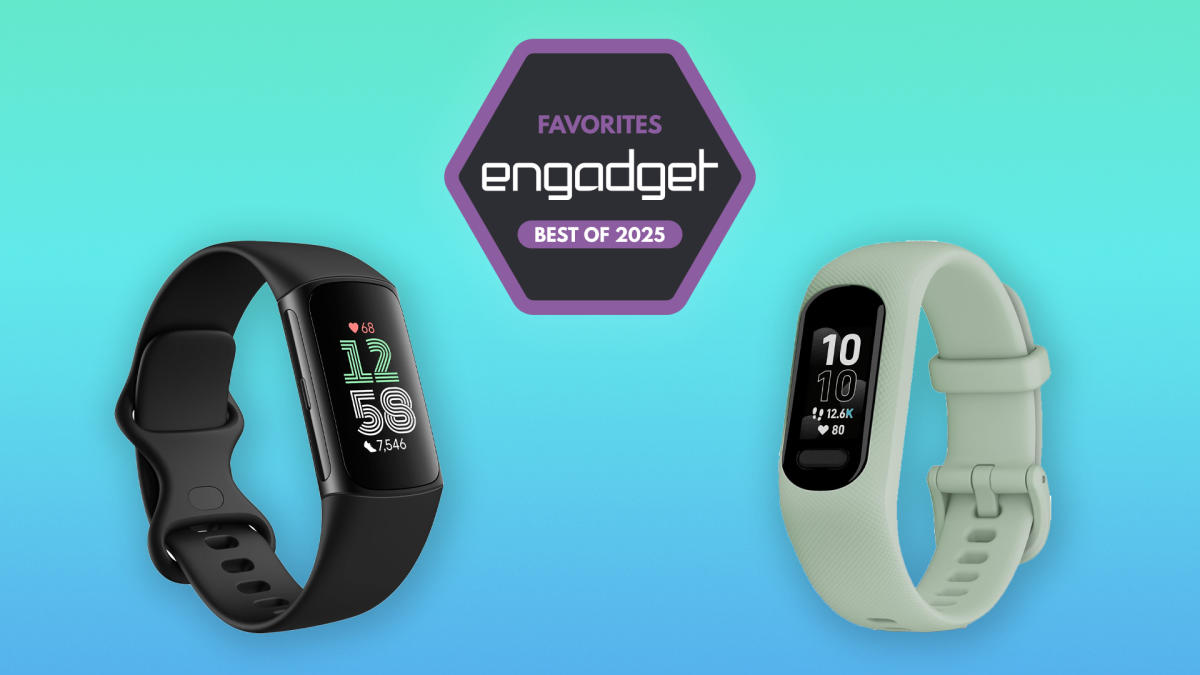
While we haven’t given the Fitbit Charge 6 the full review treatment yet, we feel confident recommending it as the successor to our previous top pick, the Charge 5. The company added a few new features to the mix here, namely a more accurate heart rate monitor, the ability to pair with exercise machines via Bluetooth and a physical side button that can be used in tandem with the touchscreen to navigate the device’s interface. The Charge 6 has 20 exercise modes for tracking, and thanks to Fitbit’s parent company Google, you can skip through and control YouTube Music playback, provided you have a YouTube Music Premium subscription.
Otherwise, the Fitbit Charge 6 is very similar to the Charge 5 that came before it. Key to its appeal is that it’s decidedly not a smartwatch. That means it has a slightly lower profile on the wrist and lasts days on a single charge while tracking activity and monitoring your heart rate, step count and sleep. It also has a full-color AMOLED display and a relatively thin design, which makes it feel fairly premium when compared to other fitness trackers.
Other perks include contactless payments with Fitbit Pay and Google Wallet, plus a handy integration with Google Maps that lets you see turn-by-turn directions on your wrist. But make no mistake — built-in GPS remains the star of the show here. If you’re looking for a wearable that can accurately map out runs and bike rides while also keeping track of your heart rate and other stats during each workout, the Charge 6 is a great option for anyone looking for durability and function in a health tracker.
$120 at Adorama
Garmin
Tracker: Fitness, heart rate, SpO2, stress, sleep | Supported OS: Android, iOS | Max battery life: 7 days | Size: 122-188 mm (small/medium), 148-228 mm (large) | Water resistant: Yes
A more subtle-looking fitness band alternative is the $150 Garmin Vivosmart 5. It’s thinner than the Fitbit Charge 6 and fits in a bit better with bracelets and other jewelry you might wear regularly. But its attractive design is only part of its appeal — Garmin knows how to track fitness, and the Vivosmart 5 is proof that you don’t need to drop hundreds on one of the company’s in-depth fitness watches to get a capable device.
It has a lot of the same features as the Charge 6, except for a built-in GPS. It does support connected GPS, though, so you can map outdoor runs and bike rides as long as you bring your phone with you. The Vivosmart 5 tracks all-day heart rhythm thanks to its heart rate sensor, plus sleep data and workouts, and we’ve always appreciated how many workout profiles Garmin has to choose from, including exercises like strength training. The pedometer function tracks your steps throughout the day, ensuring that even light activities contribute to your fitness goals.
You can customize which show up on your device and change them whenever you want. You’ll also get additional health and wellness information like Garmin’s Body Battery score, which tells you how long after a hard workout you’ll need to wait until you can train at peak performance again, blood oxygen levels, sleep stage data, women’s menstrual cycle monitoring and more. If you’re looking for a well-rounded activity tracker, the Garmin vívosmart 5 has it all.
The biggest disadvantages to fitness tracking with the Vivosmart 5 are the aforementioned lack of built-in GPS, plus its slightly harder to use mobile app. But on the flip side, Garmin devices can sync with Apple Health, whereas Fitbit devices still don’t have that feature.
$150 at Adorama
Xiaomi
Tracker: Fitness, heart rate | Supported OS: Android, iOS | Max battery life: 16 days | Size: 135mm–210mm | Water resistant: Yes
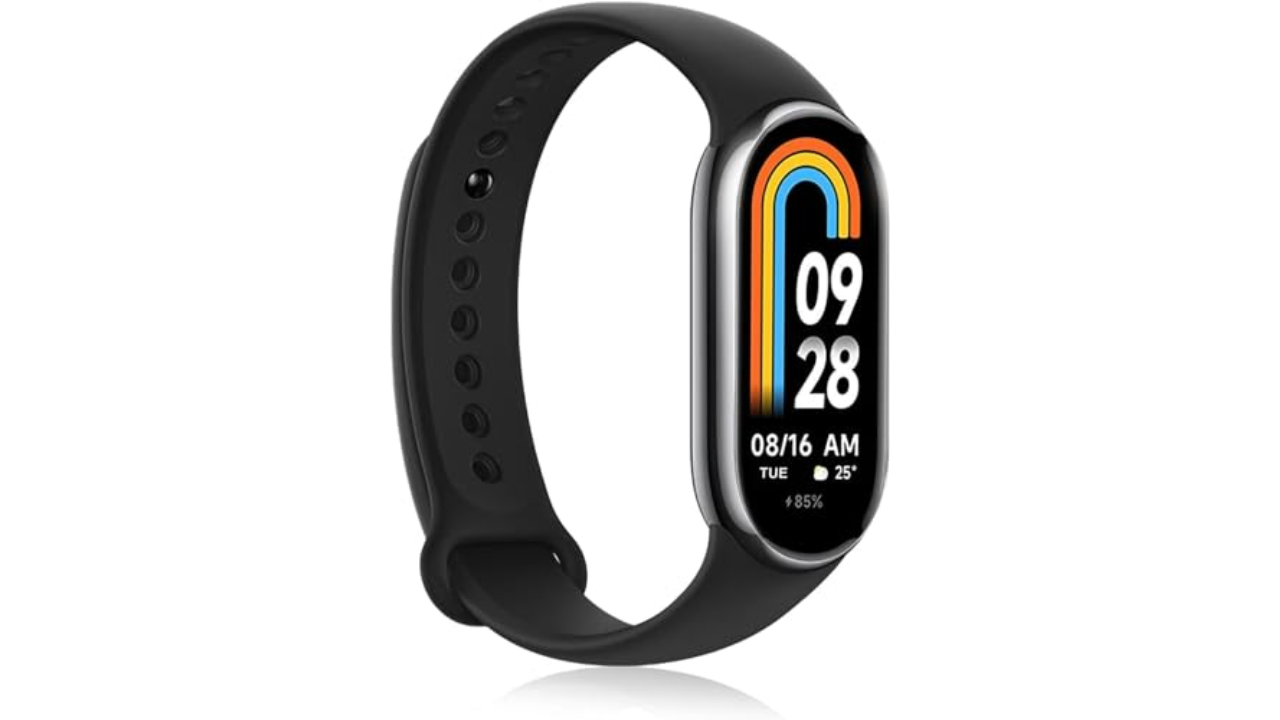
Engadget tested some of the cheapest fitness trackers you can buy, all coming in at under $100. At the top of the list is the Xiaomi Band 8, which beat the Fitbit Inspire 3 and the Amazfit Band 7, namely due to its many sport tracking modes, unique “pebble” running mode and free and accurate sleep monitoring features. It’s also quite comfortable and fairly stylish with its sleek and nimble design. It also has a quick-charge feature that makes it easy to wear for 10 to 14 days (depending on usage) before it runs out of juice. Importantly, the watch made it really easy to track niche exercises straight on the watch face without being too distracting during workouts. And like the other fitness trackers on this list, it works with both Android and iPhone too.
Pebble mode is a standout feature as it lets you attach the tracker to your shoe using the included running clip accessory, and it did a good job of reporting information about your pace and cadence directly on the display upon completing a run. More detailed insights are also viewable on your smartphone through the Mi companion app. When the Band 8 is on your wrist, it makes it easy to set up workout goals related to time, distance or calories burned per session for activities like deadlifting or skateboarding.
While the Amazfit Band 7 was only beaten by a hair in terms of its exercise tracking capabilities, the Xiaomi Band 8 had a real edge when compared to the Fitbit Inspire 3. Whereas Fitbit’s device was limited to only six pre-loaded exercise shortcuts, the Xiaomi Band 8 had more than 150 exercises you could track directly on the wearable straight out of the box. The Inspire 3 also blocked me from getting more detailed insights about my sleep and recovery because that information lives behind the Fitbit Premium paywall. Xiaomi’s devices, on the other hand, provided in-depth sleep reports with curated advice on how to improve your resting hours free of charge. — Malak Saleh, reporter
$43 at Amazon
Photo by Daniel Cooper / Engadget
Tracker: Fitness, sleep | Supported OS: Android, iOS | Max battery life: 18 months | Size: N/A | Water resistant: Yes
All of the previously mentioned fitness trackers are attractive in their own way (bonus points to those that have interchangeable bands), but they share a similar look. There aren’t many alternative designs for these devices anymore. The $70 Withings Move watch is an exception, and one of the most traditionally fashionable fitness trackers you can get. It’s an analog watch face with a couple of health monitoring features including step, calorie, distance and sleep tracking, connected GPS, auto-recognition for more than 30 workouts and a water-resistant design. But we really love it for its long battery life: it’ll last up to 18 months before the coin cell needs a replacement. Although this means there’s no charger to juice the battery back up, you can pick up a replacement coin cell relatively cheaply.
$70 at Withings
What do fitness trackers do best?
The answer seems simple: Fitness trackers are best at monitoring exercise, be it a 10-minute walk around the block or that half marathon you’ve been diligently training for. Obviously, smartwatches can help you reach your fitness goals too, but there are some areas where fitness bands have proven to be the best buy: focus, design, better battery life, durability and price.
When I say “focus,” I’m alluding to the fact that fitness trackers are made to track activity well; anything else is extra. They often don’t have the bells and whistles that smartwatches do, which could distract from their advanced health tracking abilities. They also tend to have fewer sensors and internal components, which keeps them smaller and lighter. Fitness trackers are also a better option for those who just want a less conspicuous gadget on their wrists all day.
Battery life tends to be better on fitness trackers, too. While most smartwatches last one to two days on a single charge, fitness bands offer between five and seven days of battery life — and that’s with all-day and all-night use even with sleep tracking features enabled. Many fitness trackers also slot nicely into your existing ecosystem, syncing seamlessly with your smartphone, other fitness apps and cloud storage to keep all your data in one place.
When it comes to price point, there’s no competition. Most worthwhile smartwatches start at $175 to $200, but you can get a solid smart band starting at $70. Yes, more expensive bands exist (and we recommend a few here), but you’ll find more options under $150 in the fitness tracker space than in the smartwatch space.
When to get a smartwatch instead
If you need a bit more from your wearable and don’t want to be limited to a fitness or activity tracker, a smartwatch may be the best buy for you. There are things like on-watch apps, alerts and even more robust fitness features that smartwatches have and the best fitness trackers don’t. You can use one to control smart home appliances, set timers and reminders, check weather reports and more. Some smartwatches let you choose which apps you want to receive alerts from, and the options go beyond just call and text notifications. Just make sure your smartwatch is compatible with your Android or iPhone, however, before purchasing, as not all of them work with both operating systems.
But the extra fitness features are arguably the most important thing to think about when deciding between a fitness tracker and a smartwatch. The latter devices tend to be larger, giving them more space for things like GPS, barometers, onboard music storage and more. While you can find built-in GPS on select fitness trackers, it’s not common.
If you’re someone who’s seriously training — say for a race or an endurance challenge — a dedicated running watch may be worth considering. These often provide more in-depth cardio analytics, recovery insights, and real-time pace data that go beyond what standard trackers can deliver.
Other fitness trackers we’ve tested
Fitbit Inspire 3
The Fitbit Inspire 3 strips out all the luxury features from the Charge 6 and keeps only the essential tracking features. You won’t get built-in GPS tracking or Fitbit Pay or Spotify control but you do get solid activity tracking, automatic workout detection, smartphone alerts and plenty more. The updated version has a sleeker design and includes a color touch display and connected GPS, the latter of which lets you track pace and distance while you run or bike outside while you have your phone with you. When compared to the Charge 6, the Inspire 3 is more fashionable, too. Its interchangeable bands let you switch up the look and feel of your tracker whenever you want, and it’s slim enough to blend in with other jewelry you might be wearing. We were also impressed by its multi-day battery life: Fitbit promises up to 10 days on a single charge, and that checked out for us. After four days of round-the-clock use, the Inspire 3 still had 66 percent battery left to go.
Fitness tracker FAQs
How long do fitness tracker batteries last?
The battery life of fitness trackers can vary depending on the model and its features. On average, most fitness trackers last between five to seven days on a single charge. Basic models with limited features could stretch up to 10 days or more. However, more advanced trackers with features like continuous heart rate monitoring, GPS, or always-on displays may need recharging after one to three days. If you’re using GPS or streaming music through your fitness tracker, you’ll find that this drains the battery faster. By using these features less, or turning them off, you’ll extend battery life.
