


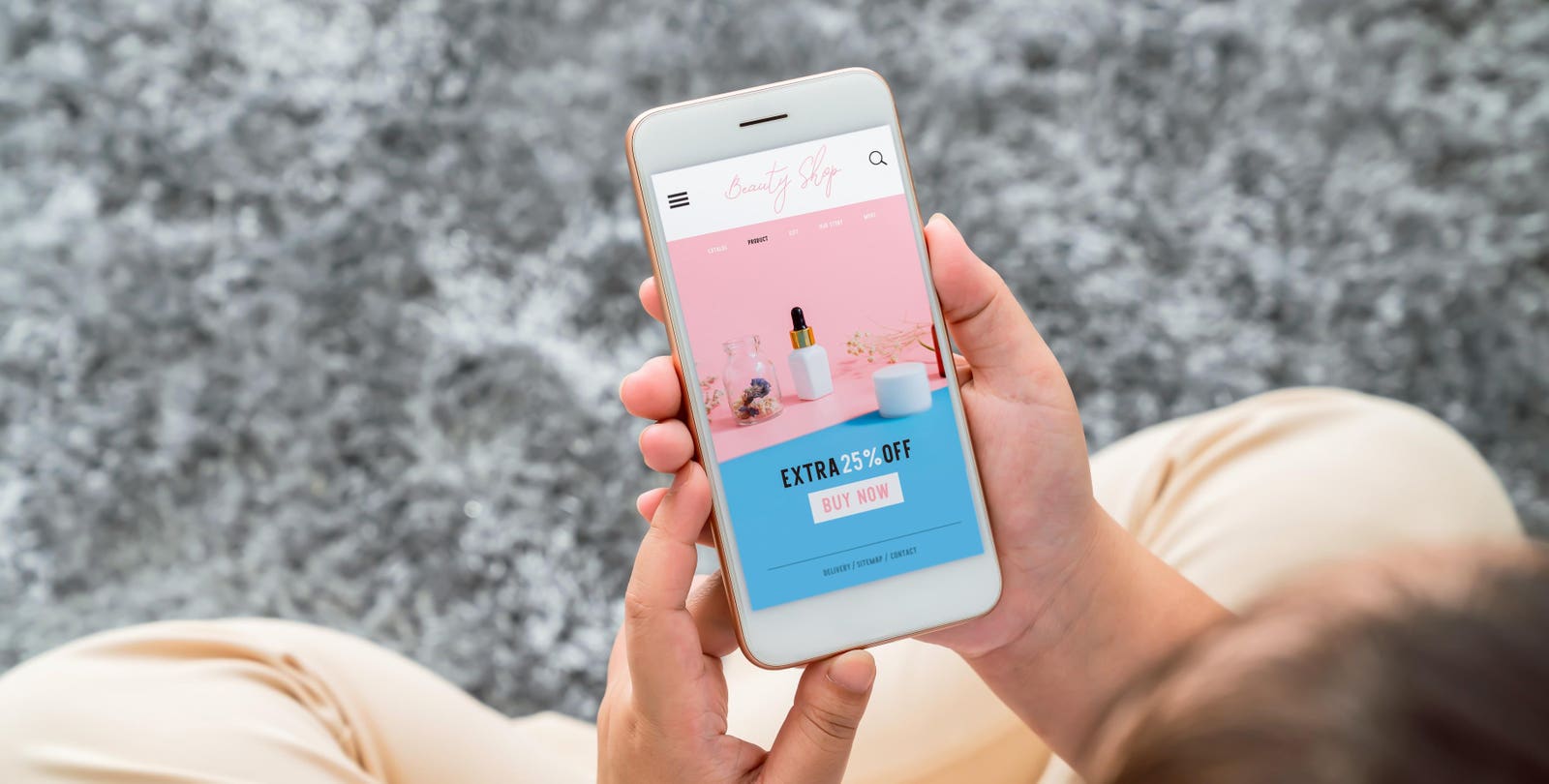
e-commerce sales of beauty products are growing significantly year-on year
The beauty industry is enjoying consistent growth, with a global value increase of+7% in the past year. But this surge isn’t just about rising demand or market premiumization, it is also fueled by substantial shifts that are reshaping the future of beauty retail.
Leading consumer and retail data firm NielsenIQ released a few weeks ago a report confirming just how pivotal e-commerce and social commerce have become for the beauty and personal care sector. All markets across the globe show a strong appetite for the beauty sector, with the Latin American and the Africa Middle East regions leading with the biggest growth, while North America and Western Europe also show strong growth rates of +7.8% and +7.7%.
E-Commerce Now Matches Physical Retail In Beauty Sales
E-commerce has become the leading sales channel for a variety of categories, marking its continuing predominance for the sector. In China for example, 87% of total hair and skincare sales are made online. U.S. online sales continue to significantly outpace in-store purchases, representing 41% of all beauty and personal care sales. Accounting for half of almost all beauty sales, e-commerce has become vital for a majority of beauty brands. Mastering a direct-to-consumer channel is essential, but being present on marketplaces can also be seen as a requirement in some countries like the U.S., where Amazon has gained 7.3 share points in terms of beauty and personal care sales.
The growth of e-commerce is nothing new, but this significant shift to online shopping when it comes to beauty products is one that is here to stay and redefine where consumers shop and what their expectations are when it comes to beauty purchases, also impacting physical retail. Indeed, for physical beauty retail to remain relevant and maintain its 50%+ market share of sales, there is increased pressure from stores to deliver differentiated, engaging and seamless shopping experiences. This is where offering unique services and building a sense of community gives physical retail an edge over e-commerce, while also helping to build brand visibility for first-time shoppers, making Sephora a golden ticket for beauty brands. As Babba, the founder of latinx haircare brand Ceremonia explained to BeautyIndependent.com, “When we think about the bottom line of the business at large, it’s really about winning at Sephora. The store [..]
will enhance brand awareness and brand storytelling in a way that is unconstrained and uncompromised. We can really do it on our terms and continue to blur the lines between commerce and community.”
Despite building consumer fandom and a sense of community through social channels, most beauty … More
There is no question that physical retail remains essential as it fulfils a different, often complementary role to e-commerce: it grows brand awareness and loyalty (thanks to in-person brand interaction), while also driving volume thanks to large scale partnerships with retailers like Sephora.
Social Commerce Is Transforming The Beauty Shopping Journey
Think about this fact for a second: social commerce now drives 68% of beauty sales globally. What does it mean? Basically, brands can no longer afford not to be active on this new channel. Social media platforms have radically transformed the shopping experience by seamlessly integrating brand discovery, research and transaction within the same platform. With TikTok being the 8th largest beauty retailer in the U.S., brands can no longer consider their presence on the platform a nice to have, especially given the opportunity it represents to bring in new customers. Indeed, 3 in 4 TikTok users make a purchase after spending time on the platform, with most of these purchases driven by impulse.
Social commerce excels at introducing consumers, especially those aged 18-34, to products they might not have otherwise considered, particularly in beauty and fashion. Unlike traditional e-commerce, which caters to specific product searches, social commerce thrives on discovery-driven shopping: similarly to TikTok, 50% of Instagram users leverage the platform to discover new brands, emphasizing the huge role of social media for brand discovery.
TikTok is becoming a considerable sales channel through live selling and content creation allowing … More
These relatively new platforms have created new touchpoints for brands to interact with consumers throughout the shopping journey, ultimately bringing in a considerable new sales channel worth investing in. Viewing these digital channels as part of a wider omnichannel ecosystem is therefore crucial and will help businesses create a seamless brand experience for shoppers, both on and offline. Effectively, this requires allocating resources for social commerce to build the necessary content and presence online that will drive consumer engagement and drive either impulse or future purchase. With TikTok shop expanding to more markets, it is no longer a matter of whether or not to invest in the channel but a matter of how.
By blending social engagement with streamlined e-commerce experiences, beauty brands can stay ahead of rapidly evolving consumer behaviors and shopping habits. As social commerce continues to grow and steal share from traditional channels, businesses must invest in social platforms – not as standalone channels but as new, essential parts of a broader omnichannel strategy. Successful brands will understand that the beauty landscape has expanded: e-commerce, social commerce and physical retail are not competing with each other but rather complementary elements shaping these new shopping habits and experiences. With TikTok shop expanding to new markets and social content growing in influence, the question is no longer whether to invest in these channels, but how to do so effectively to capture the new generation of beauty shoppers.
