Close Menu
  • Home
  • AI & Technology
  • Politics
  • Business
  • Cryptocurrency
  • Sports
  • Finance
  • Fitness
  • Gadgets
  • World
  • Marketing

Subscribe to Updates

Subscribe to our newsletter and never miss our latest news

Subscribe my Newsletter for New Posts & tips Let's stay updated!

What's Hot

Samsung will discontinue its Messages app in July and replace it with Google’s

April 5, 2026

Ethereum Net Taker Volume Rises To Most Positive Level Since 2023 – Bullish Reversal Soon?

April 5, 2026

Space Squabble: Elon Musk’s SpaceX Accuses Amazon of Violating Orbital Rules as Satellite Rivalry Escalates

April 5, 2026
Facebook X (Twitter) Instagram
  • Home
  • About US
  • Advertise
  • Contact US
  • DMCA
  • Privacy Policy
  • Terms & Conditions
Facebook X (Twitter) Instagram
MNK NewsMNK News
  • Home
  • AI & Technology
  • Politics
  • Business
  • Cryptocurrency
  • Sports
  • Finance
  • Fitness
  • Gadgets
  • World
  • Marketing
MNK NewsMNK News
Home » Scientists Make Probiotic That Could Help Pregnant Women Reduce Mercury Poisoning And Birth Defects
Business

Scientists Make Probiotic That Could Help Pregnant Women Reduce Mercury Poisoning And Birth Defects

MNK NewsBy MNK NewsMay 7, 2025No Comments3 Mins Read
Facebook Twitter Pinterest LinkedIn Tumblr Email
Share
Facebook Twitter LinkedIn Pinterest Email


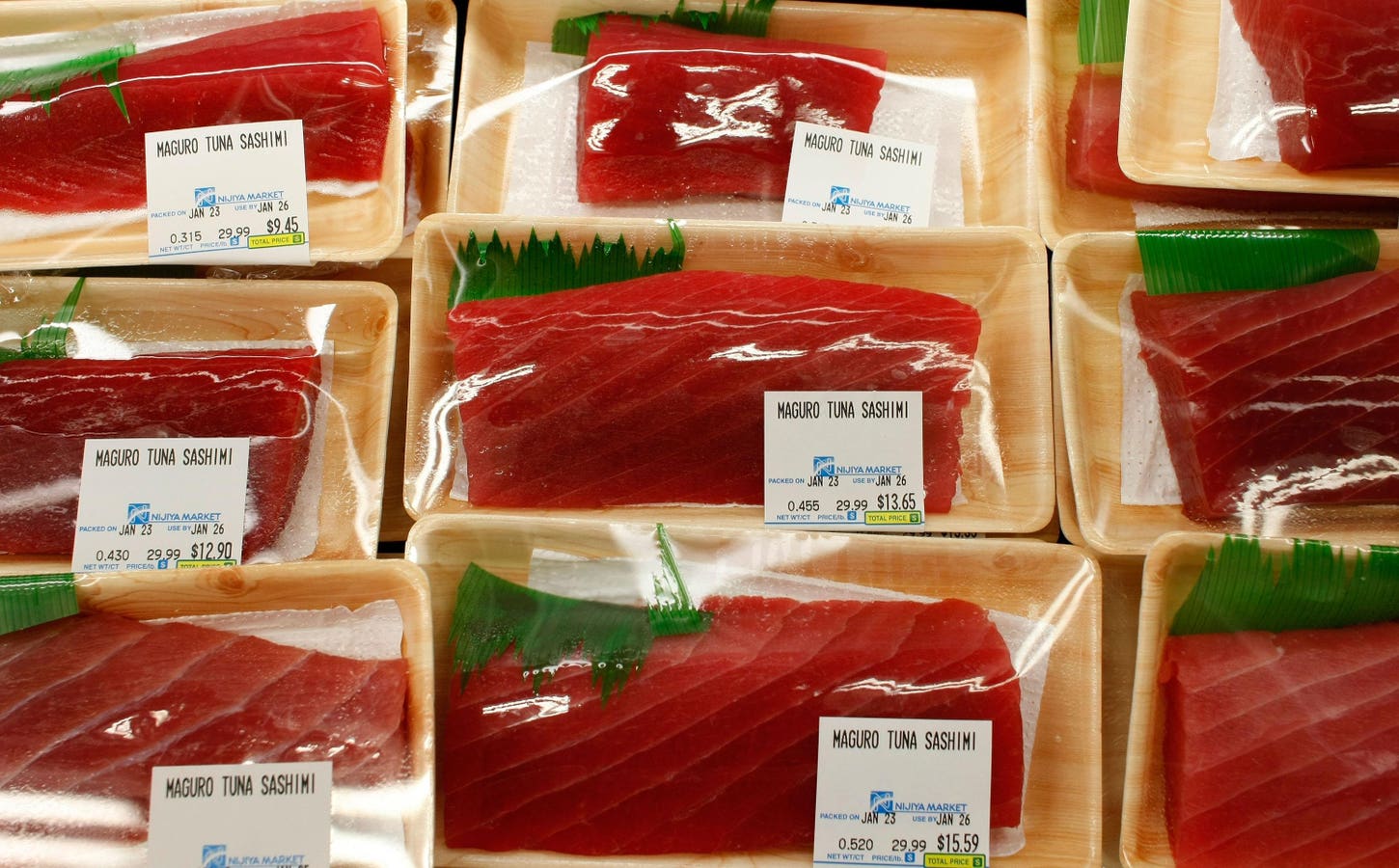
Packages of bluefin tuna sashimi on display. (Photo by Justin Sullivan/Getty Images)

Getty Images

A newly-engineered probiotic can help reduce levels of mercury and make it safer to eat fish, according to new research from UCLA and UC San Diego’s Scripps Institution of Oceanography.

The group of researchers used a gut bacterium to engineer a probiotic fed to mice with a diet high in bluefish tuna and found that it resulted in lower levels of methylmercury – a more concentrated and toxic form of mercury – than would have occurred otherwise. When tested on pregnant mice, the researchers similarly found lower levels of methylmercury in maternal and fetal tissues and lower signs of mercury toxicity in the fetal brain.

While the probiotic didn’t fully prevent methylmercury from accumulating in the mice’s bodies, it reduced the potency of methylmercury enough to prevent adverse outcomes in the fetal brain, said Elaine Hsiao, an author of the paper and a biology professor at UCLA. This means that there’s potential for an engineered probiotic like the one used in the study to make it safer for people, including pregnant women and children, to consume fish typically high in mercury, such as tuna and swordfish, said Hsiao.

Researchers specifically tested the probiotic on pregnant mice because of the potential implications for pregnant humans. Mercury is especially toxic to pregnant women, fetuses and children in early ages, according to the World Health Organization, and is commonly ingested through fish and other seafood. When mercury is in the ocean, it transforms into methylmercury, and as bigger fish eat smaller fish with methylmercury levels, the overall mercury levels compound. This means that when humans consume these bigger fish, they risk consuming mercury levels that are dangerous to human health.

The WHO estimates that between 1 and 17 out of 1000 children in some subsistence fishing populations showed cognitive impacts caused by consuming fish containing mercury. More than 75,000 newborns in the United States each year may have increased risk of learning disabilities associated with exposure to methylmercury in the womb, the Environmental Protection Agency estimated.

“The hope is that in the long run, this microbiome-based treatment can be an option for people who experience high methylmercury exposure,” Hsiao said, pointing to people who rely on fish as a primary part of their diet (one example of this is people who live in Asia and Oceania and depend more heavily on fish than do folks in other parts of the world). Hsiao also said the probiotic could help people who live in areas with power plants and mines and are exposed to mercury through their environment.

The study was funded partially by federal funds from the National Institutes of Health, which Hsiao said is critical to continue research like this. The researchers are now exploring the ways in which the probiotic can be more effective, Hsiao said, with the goal of moving toward human studies.


Source link

Share. Facebook Twitter Pinterest LinkedIn Tumblr Email
MNK News
  • Website

Related Posts

The Price Of Beef Will Come Down ‘Pretty Soon’

October 17, 2025

How To Add Forbes As A Preferred Source On Google

August 29, 2025

Trump Administration Could Target Chicago With New Immigration Operation

August 29, 2025
Add A Comment
Leave A Reply Cancel Reply

Editors Picks

Pegula reaches WTA Charleston Open semi-finals with latest three-setter

April 5, 2026

Rs20 million fine for a deleted tweet: The cost of irreverence?

April 4, 2026

City host Liverpool, Arsenal chase treble in FA Cup quarter-finals

April 3, 2026

Italy’s football chief resigns after World Cup disaster

April 2, 2026
Our Picks

Ethereum Net Taker Volume Rises To Most Positive Level Since 2023 – Bullish Reversal Soon?

April 5, 2026

Bitcoin On-Chain Data Hints At Macro Bottom Near $47,960

April 5, 2026

Bitcoin Sentiment Hits 5-Week Fear Extreme, Is A Reversal Coming?

April 5, 2026

Recent Posts

  • Samsung will discontinue its Messages app in July and replace it with Google’s
  • Ethereum Net Taker Volume Rises To Most Positive Level Since 2023 – Bullish Reversal Soon?
  • Space Squabble: Elon Musk’s SpaceX Accuses Amazon of Violating Orbital Rules as Satellite Rivalry Escalates
  • Devils on the Moon brings the score-chasing of pinball to the Playdate
  • Toilet Troubles Plague Artemis II as It Speeds Toward the Moon

Recent Comments

No comments to show.
MNK News
Facebook X (Twitter) Instagram Pinterest Vimeo YouTube
  • Home
  • About US
  • Advertise
  • Contact US
  • DMCA
  • Privacy Policy
  • Terms & Conditions
© 2026 mnknews. Designed by mnknews.

Type above and press Enter to search. Press Esc to cancel.