


Topline
The Supreme Court on Wednesday upheld the Biden administration’s ban on “ghost guns,” allowing federal regulations for firearms that can be purchased as a kit online and assembled at home, following nearly a decade of growing concerns about the largely untraceable weapons.
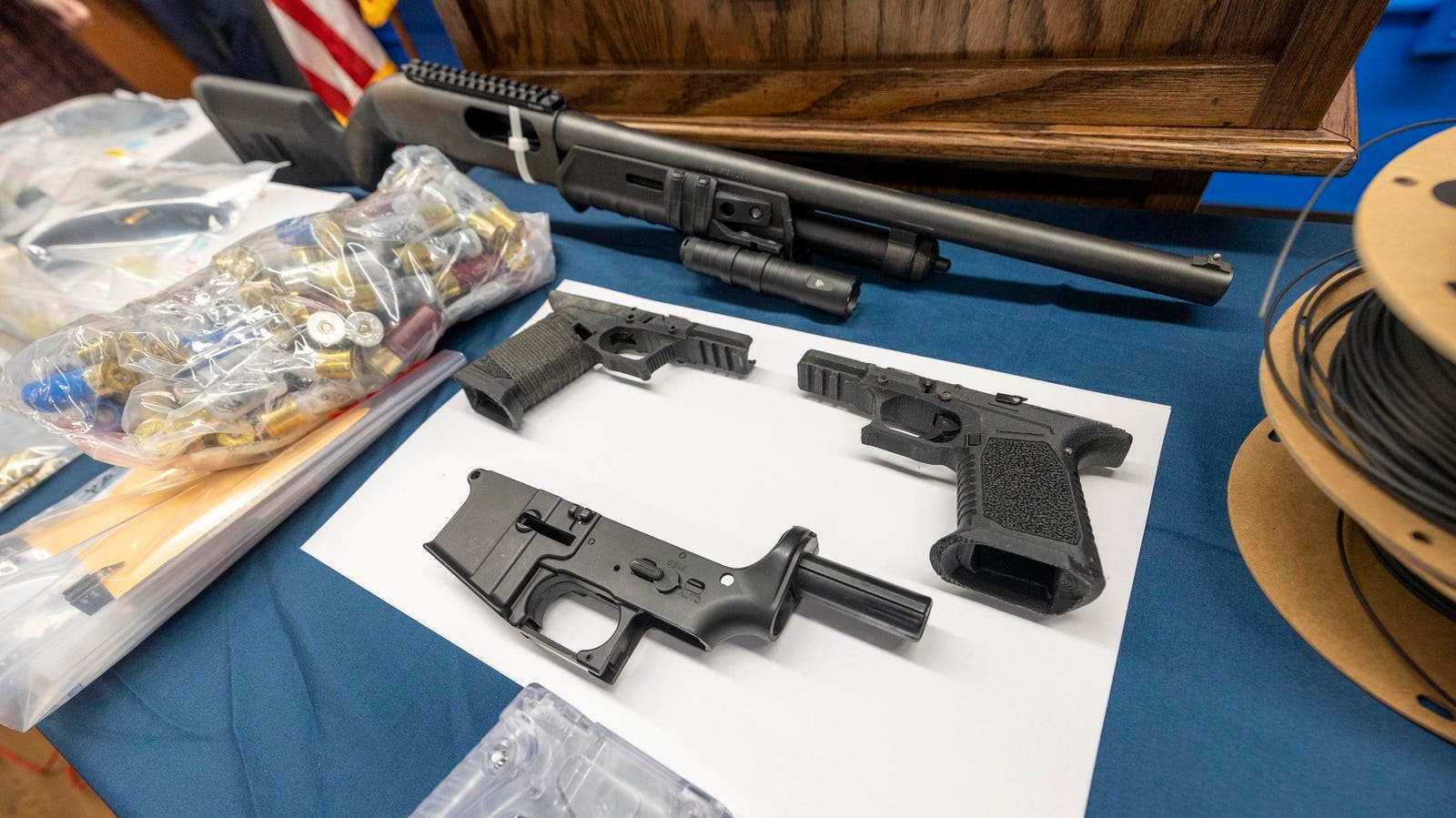
Justices previously ruled to uphold the Biden administration’s regulations on “ghost guns,” or … More
Key Facts
The Supreme Court ruled 7-2 in favor of regulations for “ghost guns” established by the Bureau of Alcohol, Tobacco, Firearms and Explosives in 2022, with conservative Justice Neil Gorsuch—who voted against lifting a ban on the rules in 2023—authoring the court’s majority opinion.
Conservative Justices Clarence Thomas and Samuel Alito dissented, with Thomas claiming the ruling “blesses the government’s overreach based on a series of errors.”
The rules regulate “ghost guns” under the Gun Control Act of 1968, requiring firearms dealers and manufacturers to put serial numbers on guns, and dealers be licensed, conduct background checks and keep records of gun sales.
Gorsuch wrote the ATF’s definition of “ghost guns” as “firearms” as described by the Gun Control Act “embraces and thus permits” the agency to regulate weapon kits sold online, adding the court had “no trouble rejecting” arguments against the regulations.
Gun rights advocates had challenged the regulations and argued weapon kits and partially assembled firearms should not be defined as firearms under federal law because they’re not yet functioning weapons.
The ruling appears to mark a reversal from the Supreme Court’s reluctance to support gun regulations, including a 2022 ruling that struck down a century-old concealed carry law in New York and a ruling last year overturning a Trump-era federal ban on bump stocks, an accessory allowing firearms to mimic automatic rifles.
Get Forbes Breaking News Text Alerts: We’re launching text message alerts so you’ll always know the biggest stories shaping the day’s headlines. Text “Alerts” to (201) 335-0739 or sign up here.
Crucial Quote
Gorsuch, whose opinion included images of weapon kits, referred to “ghost guns” as an “instrument of combat,” and said the kits clearly qualify as “weapons” that are subject to ATF regulations, knocking down a key argument from the plaintiffs. “No one would confuse the semiautomatic pistol pictured above with a tool or a toy.”
What Is A ‘ghost Gun’?
“Ghost guns” are privately made firearms that are typically sold as kits, requiring the consumer to assemble the weapons themselves. The Justice Department previously warned “ghost guns” are “especially attractive to dangerous and prohibited persons” because they are largely untraceable without serial numbers. In a brief to the Supreme Court last year, Biden administration officials argued lifting regulations would allow “anyone [to] buy a kit online and assemble a fully functional gun in minutes—no background check, records or serial number required.” The weapons have been increasingly found at crime scenes in recent years, the Justice Department said. Law enforcement reportedly suspects Luigi Mangione used a “ghost gun” to fatally shoot UnitedHealthcare CEO Brian Thompson last year, and Philadelphia police said a mass shooting in the city was likely carried out by a “ghost gun,” according to the Associated Press.
Big Number
45,240. That’s how many “ghost guns” without serial numbers were recovered from crime scenes between 2016 and 2021, according to the Bureau of Alcohol, Tobacco, Firearms and Explosives.
Key Background
The Biden administration implemented regulations on “ghost guns” in 2022, shortly before an appeals court struck down the rule while arguing Congress could not authorize ATF to regulate weapon kits. The Supreme Court halted the lower court’s ruling in August 2023, with Chief Justice John Roberts and Justice Amy Coney Barrett siding with the court’s three liberal justices in a 5-4 decision. Several states argued the regulations would help curb the distribution of “ghost guns,” after they said more than 19,000 self-made guns were recovered by law enforcement in 2021, a sharp increase from the roughly 1,700 found in 2016. Blackhawk Manufacturing Group—which, among other things, manufactures gunsmithing tools—argued with gun rights advocates the regulations were an overreach by the Biden administration, claiming the definition of a firearm under the Federal Firearms Act of 1938 would not include “ghost guns.”
Further Reading
What Are ‘Ghost Guns’? What To Know As Supreme Court Hears Case Today. (Forbes)
Supreme Court Restores Biden’s ‘Ghost Gun’ Regulations In 5-4 Ruling (Forbes)
