


(Bloomberg) — An Indiana recycling plant that tapped municipal bond investors for capital six years ago has filed for bankruptcy after the facility was marred by design flaws and production sputtered.
Most Read from Bloomberg
Brightmark Plastics Renewal LLC, which converts waste plastic into fuel, filed for Chapter 11 on Sunday, listing assets and liabilities between $100 million and $500 million. The plant employs 113 people and has $172.5 million in outstanding municipal bonds.
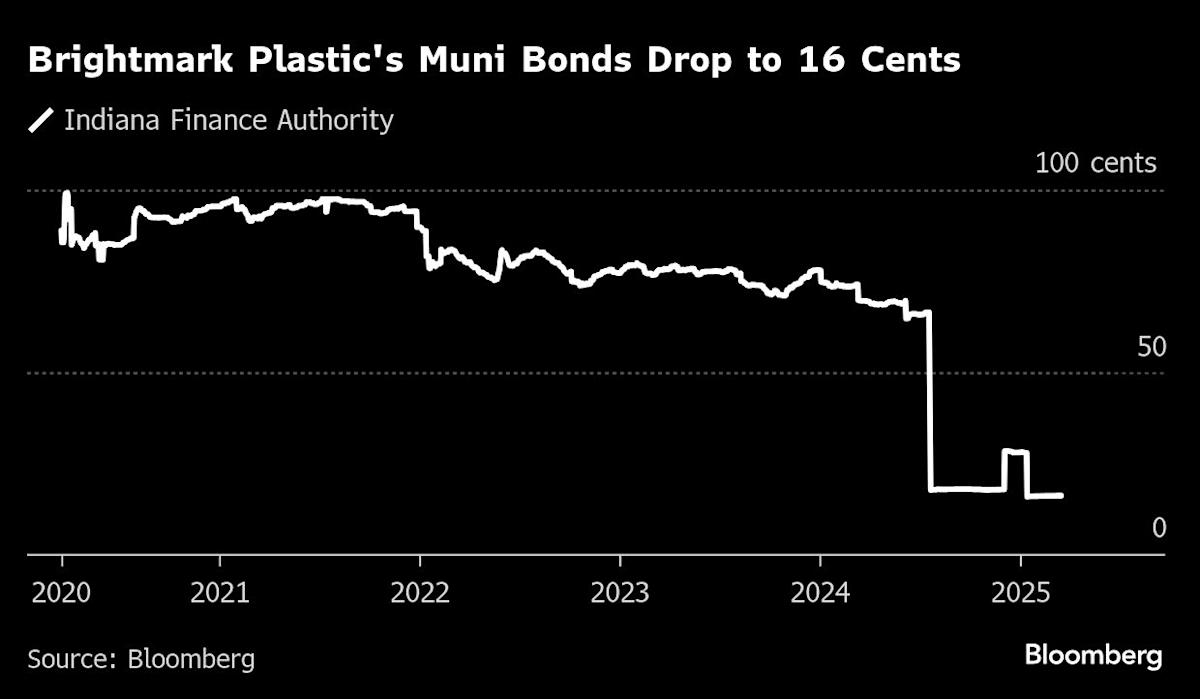
The filing came after Brightmark Plastics missed a roughly $13 million debt payment due March 1. The plant’s owner, San Francisco-based Brightmark Energy, had contributed more than $211 million in equity and determined it couldn’t keep investing in the project, according to a court filing. The company’s bonds last traded at about 16 cents on the dollar on Feb. 10. They were issued in March 2019.
Recycling projects across the US have been plagued by a range of issues in recent years, from lower-than-expected demand to ballooning production costs. About $1 billion of the $9.3 billion in so-called green municipal industrial development bonds are in default, according to data compiled by Bloomberg.
Located in Ashley, Indiana, the Brightmark plant feeds everything from beverage bottles to car seats into reactors and then heats the plastic, in the absence of oxygen, until hydrocarbons turn into vapor. The hydrocarbon vapor is cooled into pyrolysis oil and then cut into various fuels, including diesel.
“Today’s filing allows us to take control of our future,” Bob Powell, Brighmark’s founder and chief executive officer, said in a statement on the company’s website. “This strategic move is designed to ensure the long-term viability of the Ashley facility and enables us to grow our business sustainably. We are excited about the future of our plastics business, and our commitment to it and the Ashley community is unwavering.”
Brightmark, along with a bridge lender, has agreed to provide debtor-in-possession financing to keep the plant open through the bankruptcy and employees won’t lose their jobs, he said.
The facility, which opened in 2022, was beset by a number of problems, according to a court filing by Brightmark Plastics’ chief restructuring officer, Craig R. Jalbert.
The plant required major reengineering and redesign and a unit necessary to turn the oil into wax didn’t work, according to Jalbert’s filing. In addition, Brightmark decided to focus on producing pyrolysis oil after determining that fuel production was unprofitable. The plant, built to process 100,000 tons of plastic waste per year, operates at just 5% capacity.
