


Following the release of President Trump’s February 10 Executive Order implementing a “pause” in FCPA enforcement, a burst of concern emerged – particularly among practitioners who make a livelihood in that arena – that FCPA enforcement would disappear. An evaluation of Trump’s past rhetoric and actions and the FCPA’s benefits for American business suggests that foreign corruption enforcement is not going anywhere soon. Trump’s direction to put prosecution of current FCPA actions on hold and not initiate any new actions while the Attorney General reviews and revises FCPA policies and guidelines supposedly is rooted in “[r]estor[ing] American Competitiveness,” and “[i]t’s going to mean a lot more business for America.” The irony is that FCPA enforcement actually has advanced American businesses’ competitiveness in the global economy. As the author and others correctly predicted eight years ago, Trump’s public statements disapproving of the FCPA—he has called it a “horrible law” and has said FCPA prosecutions are “absolutely crazy”—have meant little for FCPA enforcement. Despite Trump’s supposed effort to kill the act for business reasons during his first term, DOJ remained active in initiating new FCPA enforcement matters. Another indication that Trump’s statements yet again are unlikely to have teeth is that despite Trump’s recent assault on the independence of the prosecutors in the “sovereign district” and other elite institutions such as the Public Integrity Section, as of the date of publication he has yet to touch federal prosecutors in the FCPA Unit with primary jurisdiction over prosecuting FCPA matters. Trump’s attack on the FCPA is not unexpected, but may end up being nothing more than a jump scare to keep people off balance, especially because good compliance makes for good business, and Trump touts that he acts in the name of American business.
Although the tea leaves indicate that FCPA enforcement is likely to live on, the “pause” and review period may generate new approaches for targeting foreign corruption consistent with Trump’s approach of decentralizing government and imposing fewer restrictions on U.S. businesses. As Former Deputy Attorney General Richard Donoghue stated at the March 2025 ABA White Collar Crime Institute, following the FCPA pause, the DOJ may empower U.S. Attorneys’ Offices to enforce the FCPA, rather than keep prosecutorial authority within the elite D.C. office. Further, rather than strictly using the FCPA to prosecute corrupt foreign transactions, prosecutors may use another recent law, the Foreign Extortion Prevention Act (“FEPA”), which complements the FCPA and focuses on criminalizing the demand side of foreign bribery. Although DOJ may be restricted from initiating or continuing with FCPA actions under Trump’s mandated FCPA “pause,” a business-centric administration would be foolish to do away with foreign corruption enforcement for the long term.
“Pausing” the FCPA
The title of Trump’s February 10 EO, “Pausing Foreign Corrupt Practices Act Enforcement to Further American Economic and National Security,” sounded the alarm to some that foreign corruption would be allowed to run rampant. The EO among other things, establishes a 180-day period for the Attorney General to review FCPA guidelines and policies and all existing FCPA investigations and enforcement actions to restore “proper bounds” for enforcement, and creates new guidance to promote foreign affairs and “American interests,” including “competitiveness with respect to other nations.” During the 180-review period, the Attorney General shall cease initiating new FCPA investigations or enforcement actions, absent exception. The fact sheet accompanying the EO makes the conclusory assertion that “U.S. companies are harmed by FCPA enforcement,” which creates an “unlevel playing field” with international competitors. Trump claims that his pause will help eliminate the “growing cost” enforcement places on the U.S. economy.
The EO and fact sheet follow on the heels of a memo issued by AG Bondi five days earlier with a paragraph narrowing FCPA enforcement. The memo instructs the FCPA Unit to prioritize investigations related to foreign bribery that “facilitate[]
the criminal operations of Cartels and TCOs,” such as cases involving bribery of foreign officials to facilitate human smuggling and trafficking of narcotics and firearms. FCPA enforcement actions rarely have involved human smuggling and narcotics trafficking, but the government previously has recognized the connection between foreign bribery and these issues, and has brought a limited number of cases relating to the arms industry. House Democrats sent a letter to AG Bondi on February 21, 2025, opposing the administration’s actions to “remove institutional safeguards against corruption and malfeasance” and to “request[] information on the Trump Administration’s rapid fire efforts to give free rein to corruption.”
The Trump Administration’s successive hits to corruption enforcement have drawn the public’s attention, but the instructions and concerns expressed within the EO and memo are really nothing new. The FCPA and corruption enforcement have been criticized for being costly and a waste of resources across parties, for at least the past 20 years. Even the New York City Bar Association has questioned the compliance costs incurred by businesses as a result of enforcement, but FCPA enforcement has continued to be a top priority of other presidential administrations because maintaining the integrity of the U.S. business system and global market outweighed any alleged costs to business.
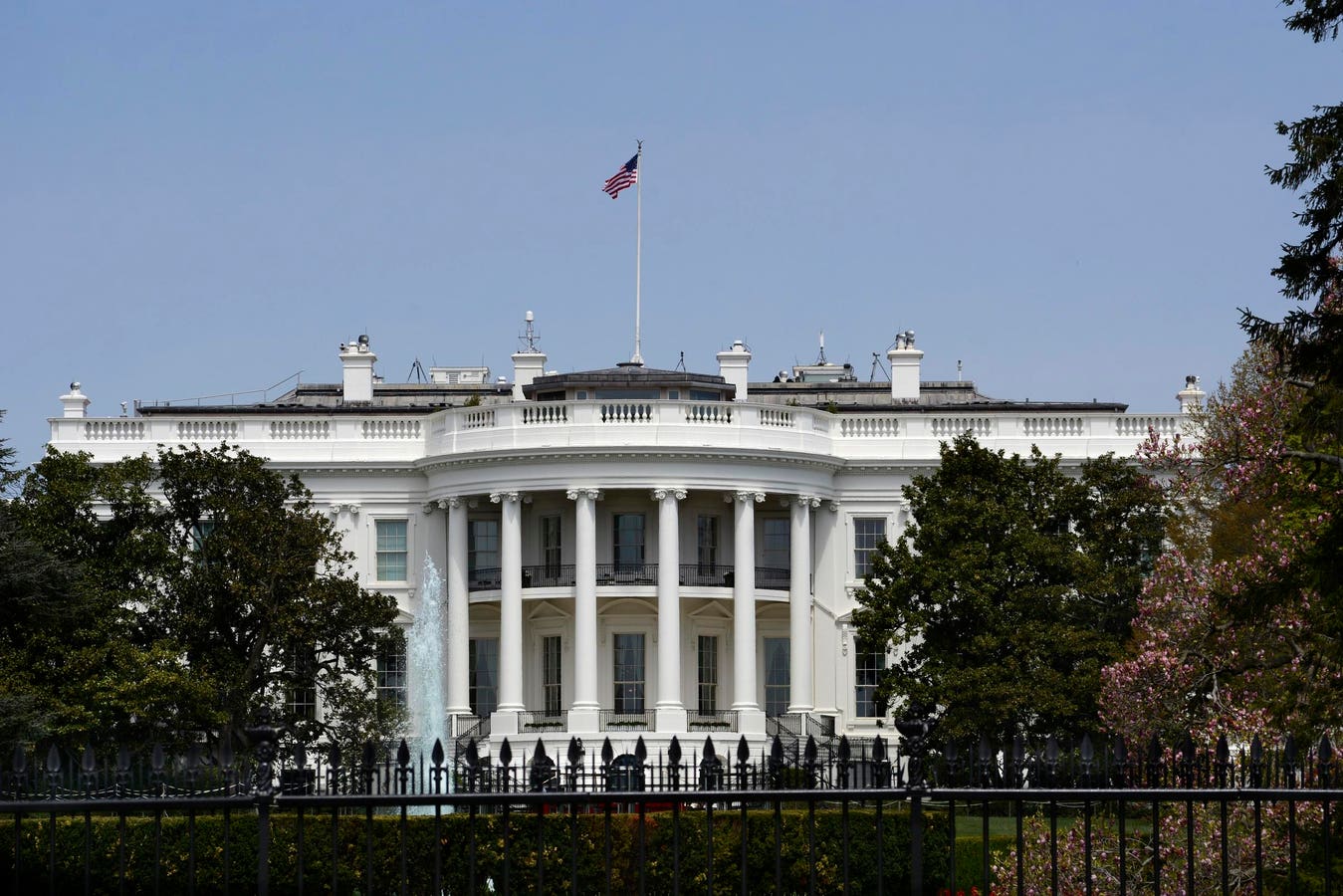
WASHINGTON, D.C. (Photo by Robert Alexander/Getty Images)
Trump’s Past Belies an Upcoming FCPA Draught
Although Trump publicly disapproved of the FCPA prior to and during his first term, the number of enforcement actions initiated by the DOJ during his first four years actually rose, demonstrating that his statements meant little in practice. According to statistics from the FCPA Clearinghouse, from 2017 through 2020, the DOJ initiated an average of 33 FCPA actions per year, compared to averages of 16.75 during the Biden term and 22.25 during Obama’s years. In 2019, two years into Trump’s first term, the DOJ initiated a record-breaking 37 FCPA actions. The SEC followed a similar trend. Many factors contribute to enforcement numbers, however, including that investigations often build up years prior to the DOJ or SEC initiating actions, making it difficult to assign all of the FCPA actions during his term to Trump alone. The irony remains, nonetheless, that although Trump complains about how FCPA actions “drain[]
resources from both American businesses and law enforcement,” more DOJ-initiated FCPA actions took place, on average, during Trump’s first term than during any other presidential term in history since the FCPA’s enactment in 1977.
The Business Case for Continued FCPA Enforcement
Trump may contend that FCPA enforcement is a financial burden on U.S.-based and U.S.-centric businesses, but FCPA enforcement over the last decade likely has benefitted, not undermined, American companies. The United Nations reports that “[o]
f the approximately $13 trillion in global public spending, up to 25 per cent is lost to corruption.” FCPA enforcement has protected American companies’ competitiveness in the international marketplace as enforcement priorities increasingly have focused on overseas companies and DOJ remains committed to “vigorously prosecute bribery cases to protect domestic companies that follow the law.” According to FCPA Clearinghouse statistics, in the last 10 years approximately 71% of FCPA sanctions were brought against foreign companies, and 9 out of the 10 largest U.S. monetary sanctions by entity group levied in FCPA actions were against foreign companies. The FCPA has helped honest American companies to compete in a free and fair market, and at least 46 other countries have joined in by adopting local laws modeled on the FCPA. Economics scholars that have studied the impact of the FCPA on competition for U.S. firms in a foreign market have concluded that the FCPA “can reduce bribery and increase investment while maintaining U.S. competitiveness” if other countries also implement anti-bribery efforts.
Further, companies that have adopted the U.S.’s strong compliance culture or have been the subject of FCPA investigations have the types of compliance programs sophisticated companies and purchasers of services want in a business partner to reduce their own risk and increase their profits. Bribery is expensive and corruption takes away from the quality of a product or service, and ultimately a company’s profit. Robust compliance programs protect companies from the business and legal ramifications of illegal conduct. Such programs help ensure that employees behave ethically and minimize disruptions to business operations—an attractive feature for building and maintaining intercompany relationships. For example, compliance-focused companies such as General Electric (some might say recent converts to this way of thinking), who tout that “security and compliance are top priorities” and “follow the highest ethical standards in conducting business with governments,” have found that “effective compliance is a competitive advantage.” GE states that it will only work with suppliers that uphold the same values when it comes to compliance and ethics. The company appears to have learned from its past FCPA investigations and settlements, and following a restructuring of its business to focus on aerospace engine servicing and maintenance, continues to be a sought-after company worldwide with its share price rising by more than 63% in 2024.
The Immediate Effect of the “Pause”
Thus far, Trump’s instruction to AG Bondi to “review in detail all existing FCPA investigations . . . and take appropriate action . . .”, has led courts to put proceedings on hold in the few extant FCPA indictments, but not without some resistance from some quarters of the government. In the prosecution of former Cognizant Technology Solutions executives Gordon Coburn and Steven Schwartz indicted for allegedly authorizing a third party to pay bribes in India, prosecutors in the District of New Jersey contended that “[f]ollowing its review of this case pursuant to the Executive Order, the Government . . . intends to proceed to trial on March 3, 2025.” On March 5, after being sworn in as New Jersey’s U.S. Attorney, however, USA John Giordano requested a 180-day pause of the case, which defense counsel supported. As of now, the court is open to postponing the trial, but questions how long the delay should be. In the Western District of Pennsylvania in the prosecution of former Corsa Coal executive Charles Hunter Hobson for allegedly making unlawful payments to an individual involved with an Egyptian state-owned and -controlled entity for business contracts, the court granted the defendant’s motion for a six-month continuance of the April 21, 2025 trial date, despite prosecutors arguing that trial should proceed within the originally scheduled timeframe.
Defense counsel seeking to delay trial and potentially have charges dropped against their clients may utilize the pause as counsel have done in the cases described above. Although the EO-mandated FCPA pause is understood to apply to anti-bribery actions, the EO does not specify as much and speaks of the FCPA generally, meaning that defense counsel may attempt to use the pause for FCPA books and records violations as well. Further, although the EO and AG’s memo do not expressly apply to the SEC, Antonia Apps, Regional Director for the New York Office of the SEC, stated at the March ABA White Collar Institute that it is too early to tell, but “obviously we’re going to follow the lead of DOJ” to enforce the FCPA.
Existing FCPA indictments may hang in the balance for at least the next 144 days, but overall enforcement against foreign corruption is unlikely to decrease dramatically, if at all, as a result of Trump’s EO. Prior administrations also have issued policy guidance to review and revise FCPA enforcement, including promises to “vigorously enforce” foreign bribery cases, with little effect on enforcement statistics. Aside from a proven disconnect between statements and statistics, Trump’s claim to “Restore[] American Competitiveness” through curbing FCPA enforcement already has been widely criticized as incorrect by legal scholars and experts in public private partnerships. New ideas for prosecuting foreign corruption may come out of the EO’s mandated review and revision of FCPA guidelines, such as decentralizing enforcement from the FCPA Unit or using FEPA to prosecute foreign corruption by focusing on the public officials who demand or accept the bribe. For a business-focused administration, however, substantially doing away with enforcement would not be wise.
To read more from Robert Anello, please visit www.maglaw.com.
Emily Smit, an associate at the firm, assisted in the preparation of this article.
