


(Bloomberg) — Sign up for the India Edition newsletter by Menaka Doshi – an insider’s guide to the emerging economic powerhouse, and the billionaires and businesses behind its rise, delivered weekly.
Most Read from Bloomberg
Indian Prime Minister Narendra Modi faces a tougher challenge this time in pitching the country as an attractive investment destination for President Donald Trump and US investors.
The climate around Indian financial assets has shifted dramatically since Modi last visited the US nearly two years ago. Then, he touted the nation’s booming economy, soaring stock markets, and its potential to rival China as the world’s factory. Now, his case is harder to make.
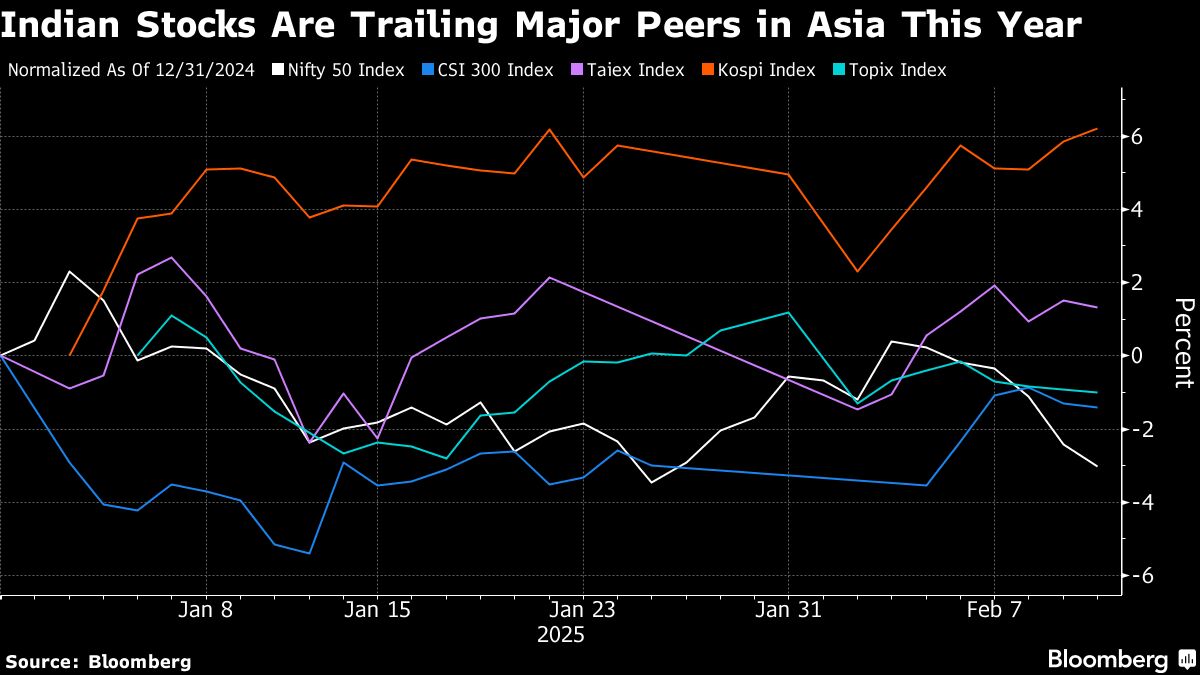
Modi’s visit comes as foreigners have pulled $21 billion from Indian shares since the end of September, the rupee has hit fresh lows, and the nation’s $4.1 trillion stock market is Asia’s worst performer this year among the region’s major economies. Trump’s threats of reciprocal tariffs are only making matters worse.
“PM Modi’s visit to Washington comes at a pivotal time” for India’s markets, said Vikas Pershad, a portfolio manager at M&G Investments Singapore Pte. While the country is more insulated than its peers to trade tensions, “clarity on tariff directions would help ease investor concerns,” he said.
The need to reignite investor interest in India has never been greater. China’s growing technological prowess, underscored by DeepSeek’s rise, is accelerating a rotation to North Asian markets, particularly among US funds.
India, in contrast, is set for its weakest economic growth since the pandemic, and its shares remain more expensive than any other emerging market in Asia despite the recent correction. Meanwhile, the rupee has gone from being one of the best performing in emerging Asia to among the worst so far this year.
That’s not to say Modi doesn’t have much to showcase. The nation is still the world’s fastest-growing large economy, with a rising base of wealthy consumers. A record personal income tax cut this month is expected to boost spending, while the government has also pledged more than 11 trillion rupees ($128 billion) in fiscal 2026 to upgrade infrastructure.
“A weaker outlook for India is not the strong supportive factor originally hoped for,” Ian Hui, global market strategist at JPMorgan Asset Management said in a note Tuesday. Still, the strategist believes “near-term prospects are improving,” he wrote, adding that “India still remains promising despite a loss in near-term momentum.”
