


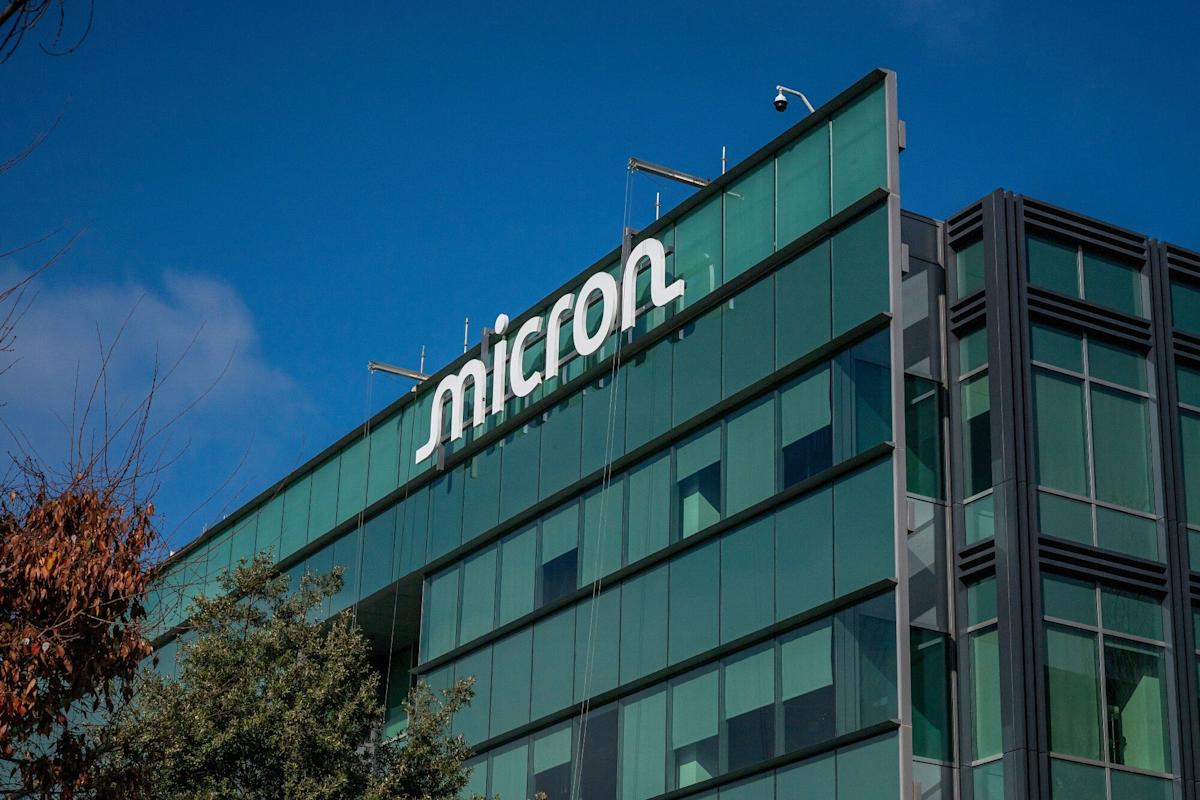
(Bloomberg) — Micron Technology Inc., the largest US maker of computer memory chips, gave a strong sales forecast for the current quarter, bolstered by demand for artificial intelligence products.
Most Read from Bloomberg
Fiscal third-quarter revenue will be about $8.8 billion, the company said in a statement Thursday. That compares with an average analyst estimate of $8.55 billion. Profit will around $1.57 a share, excluding certain items, compared with the $1.48 analysts expected on average.
Micron shares, up 22% this year through Thursday’s close, jumped about 2% in extended trading following the announcement.
Micron is seeing strong demand for components used in data center machines that develop and run artificial intelligence software. Its traditional markets — chips for phones and PCs — have been weaker. But they have been showing signs of recovery.
Second-quarter sales climbed 38% to $8.05 billion, Boise, Idaho-based Micron said. Analysts had predicted $7.91 billion. Earnings grew to $1.56, minus certain items, topping the $1.43 prediction.
“Data center revenue tripled from a year ago,” Chief Executive Officer Sanjay Mehrotra said in the statement. “We are on track for record revenue and significantly improved profitability in fiscal 2025.”
The company’s high-bandwidth memory, or HBM, has become a vital piece of AI systems. Revenue from that technology crossed $1 billion in the second quarter, Micron said, citing “strong execution and robust AI demand.”
One weak spot was the company’s gross margin, the percentage of sales remaining after deducting the cost of production. It was 37.9% in the second quarter on an adjusted basis, missing the 38.4% estimate. The forecast for the current period, roughly 36.5%, also fell short of predictions.
“We’re expecting that we’ll see margins in the fourth quarter that could be somewhat better, and conditions in the market are improving,” Manish Bhatia, executive vice president of global operations, said in an interview.
(Updates with more results and executive remarks in final two paragraphs.)
Most Read from Bloomberg Businessweek
©2025 Bloomberg L.P.
