


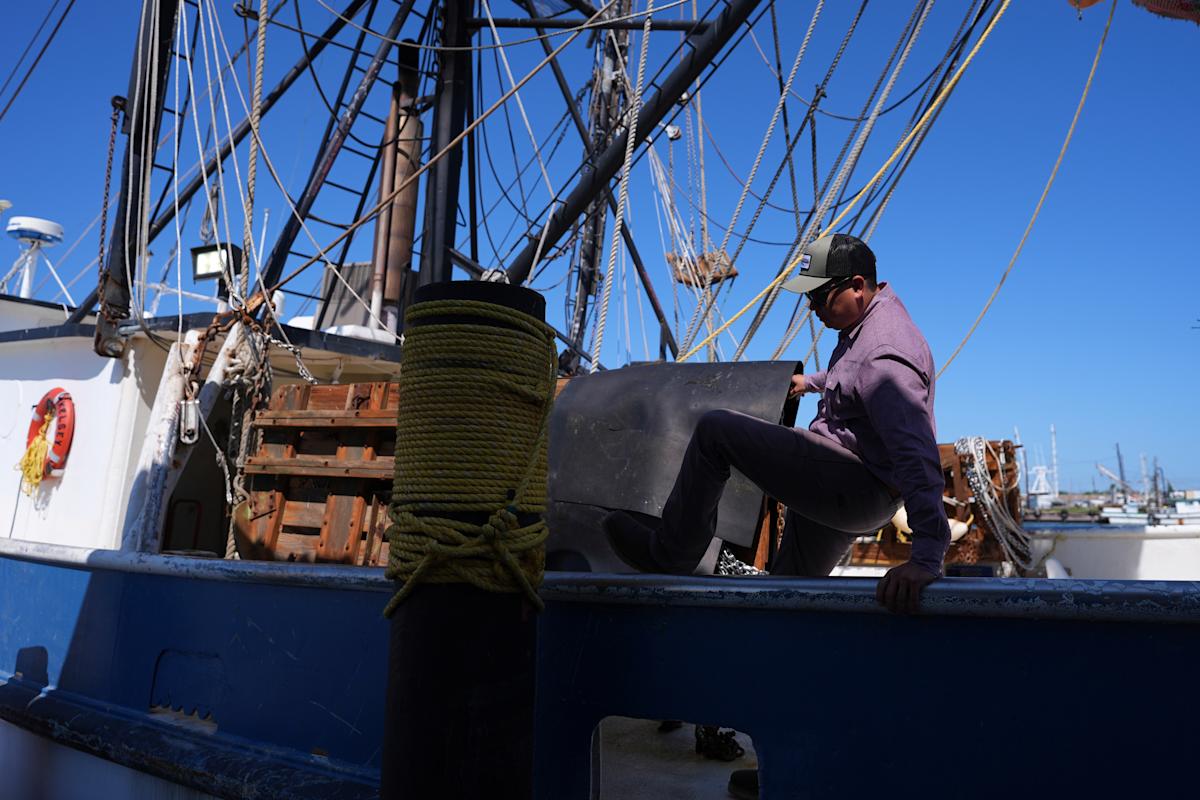
PALACIOS, Texas (AP) — While American consumers and markets wonder and worry about President Donald Trump’s on-again, off-again tariffs, there’s one group cheering him as they hope he’ll prop up their sinking business: Gulf coast shrimpers.
American shrimpers have been hammered in recent years by cheap imports flooding the U.S. market and restaurants, driving down prices to the point that profits are razor thin or shrimpers are losing money and struggling to stay afloat.
Tariffs, they hope, could level the playing field and help their businesses not just survive but thrive.
“It’s been tough the last several years that we’ve tried to fight through this,” said Reed Bowers, owner of Bowers Shrimp Farm in Palacios, Texas. Tough times meant difficult choices for many. “Cutting people off, laying people off, or reduce hours or reduce wages … whatever we can do to survive.”
Foreign competition
Since 2021, the price of imported shrimp has dropped by more than $1.5 billion, according to the Southern Shrimpers Alliance trade association, causing the U.S. shrimp industry to lose nearly 50% of its market value.
The shrimpers alliance complains that the overseas industry has benefitted from billions of dollars invested in shrimp aquaculture, cheap or even forced labor, use of antibiotics banned in the U.S., and few or no environment regulations.
More than 90% of shrimp consumed in the U.S. is imported, according to the alliance.
“I’m not a believer in free trade. I’m a believer fair trade,” Bowers said. “So if you’re gonna sell into the United States, I think it’s very important to get the same rules and regulations that I have to have as a farmer here in the United States.”
Craig Wallis, owner of W&W Dock & Ice, has been in the business since 1975 and noted that back then shrimpers would run their trawlers 12 months a year.
Not anymore. That’s no longer affordable as Gulf shrimpers compete with cheaper product coming in from South America, China and India.
Wallis says he’s only able to run his shrimp boats about half the year, yet “the bills keep coming every month.”
“We don’t get any subsidies here. We don’t need any help from the government. What we get for our product is what we have to make it on,” he said.
Wallis, who noted he voted for Trump, has watched the back-and-forth on tariffs in recent weeks.
“I don’t know where the tariffs are going to be settled at,” he said, “but it’s definitely going to help.”
The rising costs of tariffs
But Trump’s tariffs will also force shrimpers to balance the higher costs of equipment, such as trawl cables, webbing, chains and shackles. Some of those items have recently been increasing in price, Wallis said.
