



Longevity science is now bridging the gap between human and animal, and there’s a burgeoning market for dog wellness as more brands create products made to support healthy aging amongst beloved pets.
At the forefront of that space is the Dog Aging Project, led by longevity tech company Optispan co-founder and CEO Matt Kaeberlein.
Kaeberlein’s team is humanely studying dogs through the clinical trial, and how their aging can be applied to research on aging in people, all while finding solutions to extending the lives of dogs. Over 52,000 dogs are enrolled in the trial, as owners track their pet’s weight, age, diet and more.
“At its core, it’s about taking rigorous science and applying it in a way that meaningfully improves the lives of both dogs and the people who care about them,” Kaeberlein told Athletech News.
Longevity insights can crossover, too. The science being applied to human aging could help provide what any dog-owner longs for: more time with their pet.
“We already knew that certain interventions, like rapamycin, could slow aging and extend lifespan and healthspan in laboratory animals,” Kaeberlein explained. “And because the biology of aging is so highly conserved, there was every reason to believe that some of those same interventions would work in dogs.”

The Dog Longevity Market Grows
The progress in understanding how dogs age is already being met with products and interventions toward canine lifespan and healthspan.
One of the leaders in that sector is Fi, a pet-tech company that makes a smart dog collar and companion app for GPS location tracking, activity monitoring, sleep and behavior insights and escape alerts. And now, the company has launched Fi Intelligence, an AI-powered health companion built into its app.
The machine learning software draws upon the dog’s individual data to highlight meaningful patterns and flag anomalies, as well as being trained on Fi’s proprietary dataset to contextualize insights, showing how a dog compares to others of the same breed, age and size.
Users can also turn to Fi’s AI tool to answer questions about if their dog is getting enough exercise, sleeping properly or if any behaviors are indicators of larger problems.
“Our collars have been quietly building one of the most comprehensive canine health datasets in the world,” said Fi CEO and co-founder Jonathan Bensamoun. “Now we’re giving that information back to our members as the ultimate health insight tool for their dogs.”
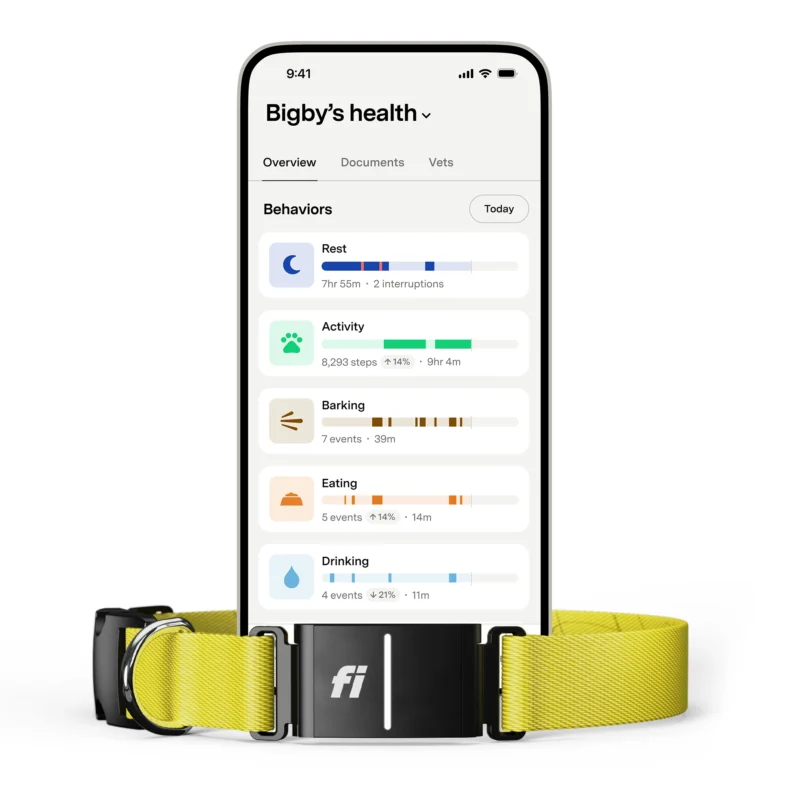
The AI-powered insights offer additional support for vet visits, as owners are equipped with a better baseline knowledge of what’s going on with their dogs and know what questions to ask.
PureStrong is a new probiotic developed exclusively for a dog’s gut health, from health and bioscience company IFF, which is capitalizing on the $3.2 billion U.S. pet supplement market.
“PureStrong is sourced directly from the microbiome of healthy canines and designed to support how dogs actually live — how they eat, travel, age and adapt to change,” said senior vice president of health sciences for IFF, Allyson Fish. The product comes in powders, capsules, tablets and sticks.
What the Future Holds for Canine Wellness
Kaeberlein’s project has already uncovered meaningful information into how dogs age, especially about brain health, oral health and exercise, which he envisions will shift how dogs are cared for in the coming years — and the market that will continue growing from that.
The data that Kaeberlein is uncovering through the trial is figures to dictate how the market develops. For starters, he sees a huge opportunity for better biomarker testing and screening approaches to predict or detect disease risk earlier and more accurately.
“Veterinary medicine still lags far behind human medicine here,” he noted.
Secondly, he predicts we’ll likely see more drugs for dogs that target aging to delay or prevent multiple age-related conditions by slowing biological aging.
“There’s a mix of high-quality, evidence-based approaches and many products that lack strong supporting data — especially in the supplement space,” Kaeberlein pointed out. “The key is helping consumers differentiate between the two. Veterinarians will play an important role here, and owners should be cautious about marketing claims that outpace the science.”
That being said, he is excited to see the field moving in the right direction, and product innovations will only improve as the research does.
“I’m very confident that we will develop interventions that improve both lifespan and quality of life for dogs, and that will have important implications for human aging as well,” Kaeberlein said.
