


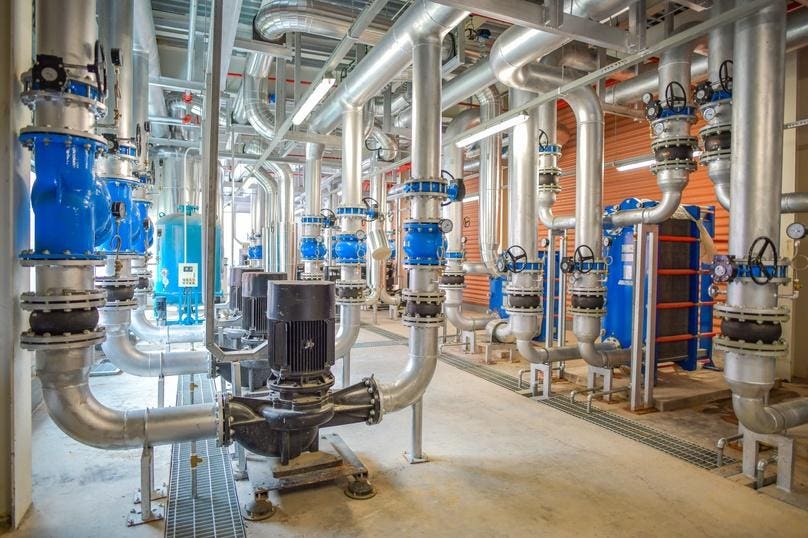
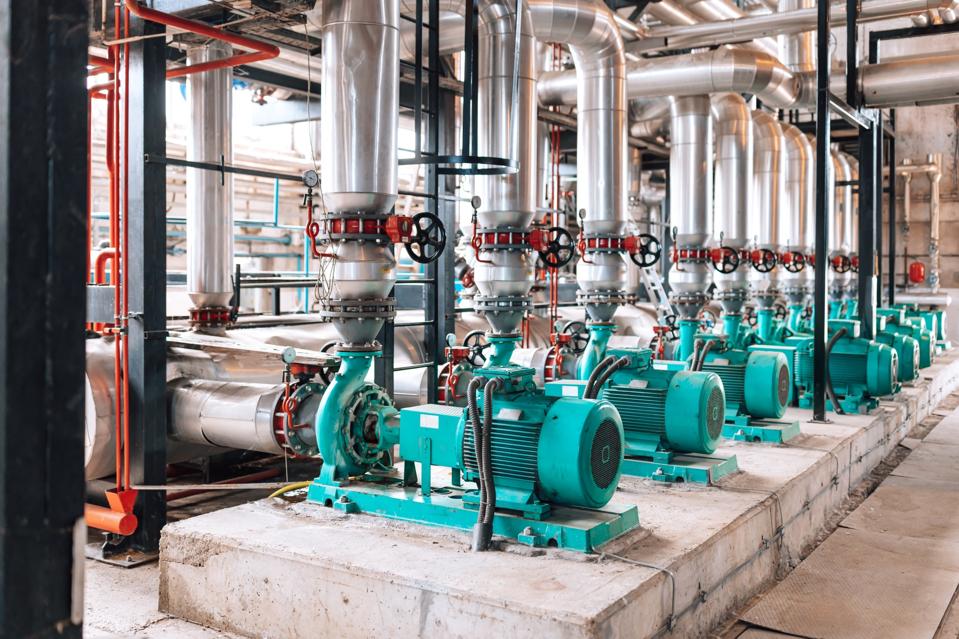
A sector in a heating plant, containing a system of boilers and pipes.
When New Belgium Brewing in Colorado committed to being carbon neutral by 2030, the company needed to change how it made its beer. The process of making beer requires a lot of steam, which is usually made by burning natural gas, exposing brewers to volatile price spikes. Fortunately, New Belgium found a solution with AtmosZero, a company specializing in industrial electric boilers which swap out expensive and dirty fossil fuels for clean electrons with stable prices.
Industry – everything from making steel and cement to chemicals and beer – is the world’s largest energy consumer, and its energy demand has soared 70% since 2000. To help protect against price volatility and cut climate pollution, industries around the world are embracing electric technologies in lieu of burning fossil fuels —also called industrial electrification—to create truly cleaner products.
That’s critical for manufacturers looking to succeed: Industrial producers won’t remain competitive in a global marketplace that increasingly values clean products, so countries and companies that don’t evolve will get left behind by those who do.
Until recently, cutting industrial emissions was considered difficult because of the sector’s reliance on burning fossil fuels for various processes. Fortunately, all-electric technologies—many already commercially available and ready to deploy at scale—can meet industry’s heat needs without compromising performance, while providing secondary benefits including cleaner air, a stable climate, and improved worker health.
Electric technologies are to poised power the next industrial revolution, but overcoming all barriers to industrial electrification requires policy leadership and industry’s embrace of technological innovation.
Electrifying industrial heat is the next step in manufacturing innovation
Industry is integral to our daily lives, economic health, and quality of life. The industrial sector produces nearly everything in our lives—from beverages and food to paper products and plastics, and even electric vehicles and solar panels. Manufacturing uses enormous amounts of fossil fuels to create those products, making industry the largest energy consumer in the world and responsible for a third of greenhouse gas emissions.
These energy demands fall into three primary categories:
- Process uses, which is the energy used directly in industrial equipment, such as in boilers that generate steam for heating materials or distilling liquids or in kilns and blast furnaces that make cement and steel
- Feedstocks used as chemical inputs that cannot be replaced with electricity directly, such as ammonia in fertilizer
- Non-process uses required for industry to operate but not part of manufacturing, such as building heating, cooling, and lighting, or transportation equipment.
Process uses account for 84% of industrial non-feedstock fossil fuel use globally, and each industrial subsector requires different temperatures for their bespoke processes.
Percentage of industrial process heat demand by temperature range in the European Union in 2012
Today, industries rely on burning large volumes of fossil fuels to achieve these temperatures.
Subindustries within the global industrial sector and their non-feedstock energy use in 2020
Fortunately, many untapped opportunities exist to reduce industrial energy demands by improving the overall efficiency of industrial operations. This can be done through energy and material efficiency measures, as well as reducing demand for new products. However, sizable industrial heat needs require scalable technology solutions to mitigate the sector’s outsized impact on climate change and air pollution. Fortunately, viable technologies and policy solutions are primed to tackle this challenge.
Powering industrial heat with electric technologies and a clean grid
Because electricity can be generated from carbon-free resources—like solar, wind, batteries, and geothermal—swapping electric technologies for burning fossil fuels can reduce and ultimately displace emissions. Though no one-size-fits-all solution exists for industrial heat, electrified technologies can meet nearly all industrial heating demands, including industrial heat pumps, electric boilers, thermal batteries, electric arc or induction furnaces, electric resistance heating, dielectric (radio or microwave) heating, and infrared heating.
Industrial electrified heating technologies and their temperature ranges
However, shifting industrial processes from dirty fuels to clean electrons requires overcoming three primary categories of barriers—economics, grid readiness, and technology maturity and awareness—with a suite of policy solutions.
Primary barriers to industrial electrification and policy solutions to overcome them
Electrification can deliver many long-term economic, environmental, and societal benefits, but the higher cost of electricity relative to fossil fuels in many places and the capital expenditures needed to switch to electric technologies can be a deterrent to change. In addition, the costs to connect to the grid can add expenses.
Policymakers can pursue a combination of incentives to increase deployment of renewable and carbon-free electricity and create incentives to encourage clean industry and electrification. Creative financing tools will help fill market gaps, and clean heat emissions standards will help level the playing field for industrial electrification technologies, allowing them to compete with fossil fuel alternatives.
Widespread industrial electrification will also require a robust and reliable electricity grid capable of supporting more demand. New capacity additions must be carbon-free, alongside new transmission and distribution infrastructure. Slow and costly interconnection processes and outmoded grid planning can prevent meaningful progress. In order to overcome grid readiness barriers, policymakers should pursue greater energy efficiency as well as flexible industrial demand. This combined with interconnection and grid planning reforms that can reduce demand on the grid, while also reducing the costs for other ratepayers.
Finally, many electric technologies have been commercially available and in use in specific applications for decades, but not all have been deployed at scale or applied to traditionally fossil-fueled industrial processes. Industries, the workforce, and investors need experience with these technologies to gain confidence in industrial electrification. Government officials should support foundational research development and demonstration policies to ensure continued technology evolution and support for projects that yield cost and performance improvements across different geographies and jurisdictions. Workforce training and education programs are also necessary to attract, train, and support the people charged with their effective deployment and maintenance.
Policy solutions for industrial electrification
Catalyzing industrial electrification today
No one-size-fits-all policy package exists to electrify the industrial sector, and each sub-industry and jurisdiction faces unique challenges and priorities. Overcoming all barriers to industrial electrification can help government officials revitalize and modernize their region’s industrial base—one that is cleaner, more economically competitive, and aligned with a stable climate future.
