


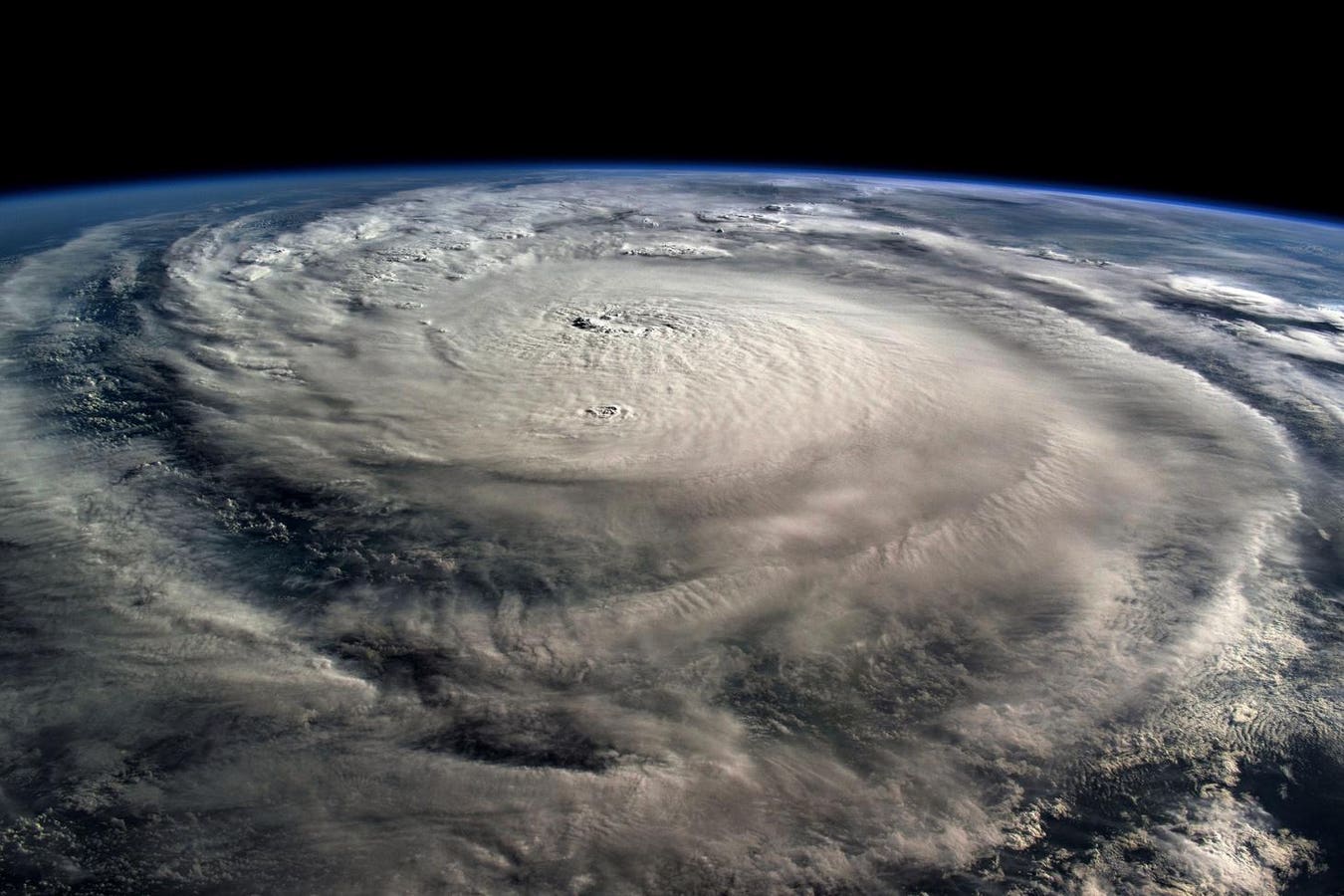
(Photo by NASA via Getty Images)
Warren Buffett has made billions of dollars over the years by ensuring all sorts of perils. If the risk is priced correctly, insurance companies can earn attractive returns by taking in premiums today while assuming a small probability of a large payout down the road. Still, insurance companies are exposed to tail risk, which is the occasional outsized loss due to an extraordinary event that causes huge losses.
That’s where catastrophe bonds, also known as insurance linked securities, come into play. These bonds allow insurance companies to offset some of the tail risk in their portfolios, providing them with regulatory capital relief and allowing them to earn a higher return on equity. By removing some potential losses in a catastrophic situation — think of a category five hurricane that wipes out hundreds of multimillion-dollar mansions along Florida’s east coast between Miami and Palm Beach — insurance companies can hold less capital in reserve to pay claims.
Investors in catastrophe bonds receive periodic payments similar to those in other types of bonds, but the return of principal is dependent on whether or not an extreme natural disaster creates total losses beyond a certain point.
The structure is relatively straightforward. An insurance company issues bonds through an investment bank, which are then sold to investors with maturities typically ranging from one to five years. Investors receive their principal plus coupon payments if no qualifying catastrophe occurs during the bond’s term.
However, if a predefined disaster happens, the principal may be partially or wholly forgiven, allowing the insurance company to use these funds to pay policyholder claims. Like other structured credit bonds, catastrophe bonds are issued with varying degrees of risk, ranging from AAA-rated to below investment grade.
It’s important to note that every natural disaster does not lead to losses for investors in catastrophe bonds. Investor losses are only triggered in extreme situations, such as Hurricane Katrina. Even the recent California wildfires — where projected losses are expected to be $35 to $50 billion — are not likely to result in losses for most bondholders.
Cat Bond Performance And Correlation With Stocks
Historically, cat bonds have delivered attractive risk-adjusted returns for investors compared to other assets. The Swiss Re Cat Bond Index has demonstrated strong performance in recent years, notably achieving a 17.29% return in 2024 and a record 19.69% in 2023. Between 2002 and 2023, the annualized return was 6.7%, a premium over 5.4% over one-month Treasury bills.
Perhaps the most compelling feature of catastrophe bonds for investors is their remarkably low correlation with traditional financial markets. According to Morningstar, cat bonds have delivered stable returns with a 0.24 correlation to stocks over the last two decades.
Access to the market has generally been contained to institutional investors. That changed with the April 1st launch of the Brookmont Catastrophic Bond ETF, ILS. The ETF claims to exclusively hold catastrophe bonds linked to natural disasters driven by randomly occurring climate and weather-related events such as hurricanes, earthquakes, and floods.
“ILS delivers a low-correlation, high-yield alternative to traditional bonds at a time when investors are seeking new sources of income and diversification,” said Ethan Powell, Principal & Chief Investment Officer of Brookmont Capital Management, in a press release about the launch of the new fund. The ETF will hold a portfolio of up to 75 catastrophe bonds, providing investors with diversified exposure across different perils, regions, and trigger mechanisms.
The California wildfires in January caused some weakness in the catastrophe bond market, creating a buying opportunity for new investors. According to Artemis, catastrophe bonds yielded 10.43% at the end of March. With expert modeling loss predictions of 2.23%, investors still have a significant excess spread. Compared to the yield of 7.5% for high-yield bonds, cat bonds offer an attractive potential total return that has historically been uncorrelated with other risk assets.
With a total expected expense ratio of 1.58%, the fund has considerably higher costs than stock or bond ETFs. However, it appears to be competitive with mutual fund alternatives, such as the SHRIX, Stone Ridge’s High Yield Reinsurance Risk Premium Fund. By comparison, SHRIX has an expense ratio of 1.76%.
For investors seeking to build all-weather portfolios that can withstand diverse market conditions, catastrophe bonds offer meaningful diversification benefits. While investors must account for the risk of natural disasters, they can worry less about stock market volatility.
