


(Bloomberg) — Revaluing the US gold stockpiles might look tempting under debt-ceiling constraints, but it would have far-reaching implications for the financial system, boosting liquidity and prolonging the Federal Reserve’s balance-sheet unwind, according to Wrightson ICAP.
Most Read from Bloomberg
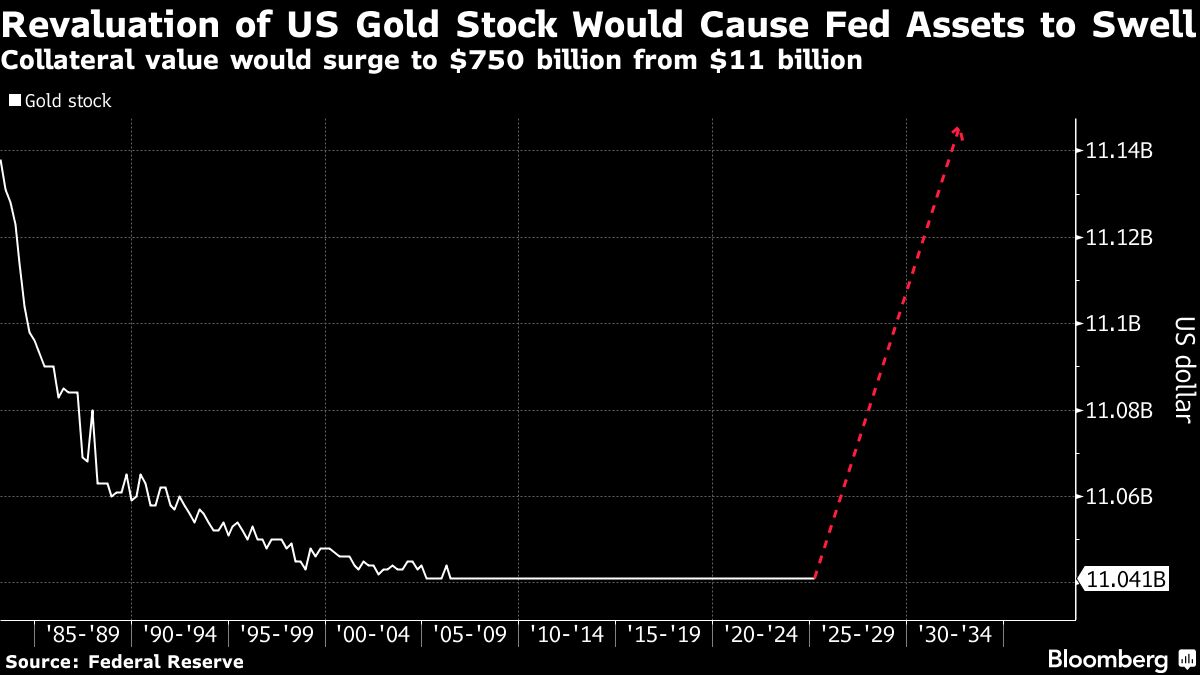
Treasury is allowed to pledge its holdings of physical gold to the Fed in exchange for cash. The proposal, which was also floated in 2023, centers around the idea that the government should revalue gold reserves from the $42.22 per ounce — the legacy Bretton Woods price — to market value. That would put the collateral value of the Treasury’s gold reserves at roughly $750 billion, up from about $11 billion, according to Wrightson ICAP.
While the idea reportedly isn’t under serious consideration by the current administration, the debate over such a move has gathered steam in recent weeks as it’s seen extending Treasury’s ability to borrow under the debt ceiling before an agreement is reached.
The increase in Treasury’s account at the Fed means that the department could spend this amount without the need to issue as many bills, according to Barclays Plc. Strategist Joseph Abate said in a note to clients on Tuesday it would reduce bill supply by about 12% and push the date at which the government exhausts its borrowing authority — or X-date — past February 2026 from current forecast of around August 2025.
Related story: US Gold Revaluation Idea Attracts Market Attention, Skepticism
For the Fed, though, this price adjustment would cause the gold certificate account on the asset side of its balance sheet to rise, and simultaneously increase the amount of cash in the Treasury General Account, or TGA, on the liability side of the ledger on day one, Wrightson ICAP economist Lou Crandall wrote in a note to clients on Monday.
“From a narrow balance sheet perspective, this would be the functional equivalent of a new round of quantitative easing,” Crandall said. “Over time, cash would flow out of the TGA and into bank reserve accounts as Treasury spent the proceeds.”
While any plan for the US government to monetize its assets is speculative at this point, a revaluation of gold holdings would also run counter to the Fed’s ongoing policy of reducing its balance sheet, a process known as quantitative tightening, which started in June 2022.
