IN 2023 THINGS were not looking good for Justin Sun, a billionaire crypto-mogul. The Securities and Exchange Commission had accused him of fraud. The regulator claimed that the companies he founded and controlled had issued unregistered securities (two crypto tokens, Tron and BitTorrent); had manipulated the markets in those securities by “wash trading” to make the tokens look active and useful; and had paid celebrities to endorse them without disclosing they were being compensated. In the wake of the allegations he stepped down from a diplomatic post he held as a trade representative for Grenada, an island in the Caribbean. He was afraid to set foot in America, lest he get arrested. By the end of the year two other kings of crypto would be toppled: Sam Bankman-Fried, the founder of FTX, was convicted of fraud; and Changpeng Zhao, the founder of Binance, pleaded guilty to violating American money-laundering laws.
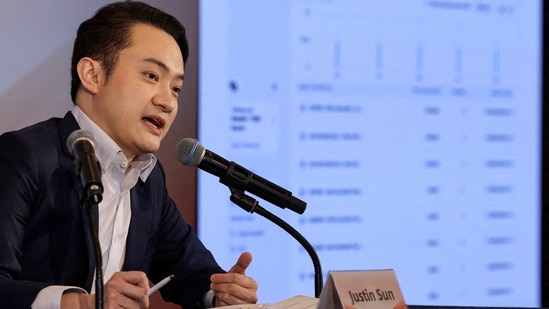
FILE PHOTO: Justin Sun, founder of Tron, speaks during a press conference in Hong Kong, China April 3, 2025. (REUTERS)
The case was supposedly a strong one—but by November 2024 it had not yet been litigated. Then, less than three weeks after Donald Trump won the election, Mr Sun began to buy some $75m-worth of tokens from World Liberty Financial (WLFI), a crypto project in which the Trump family would receive 75% of the proceeds of any crypto-token sales. In March 2025 the case the SEC had brought was suddenly settled, with no admission of wrongdoing and a $10m fine (small, given the gravity of the charges). Eleven days later the head of enforcement at the SEC resigned.
Now Mr Sun is alleging he was duped. On April 21st he filed a federal lawsuit in California against World Liberty, alleging various forms of mistreatment. Mr Sun says his tokens were frozen, meaning he could not sell them. At first, buyers were not allowed to sell their holdings—but this blanket restriction was lifted in September 2025. At that point Mr Sun should have been able to sell his tokens, along with everyone else, but he could not, a restriction he claims has cost him $276m, as the tokens have since dropped significantly in value. He also says he was stripped of his right to vote on the rules for how the tokens were managed—a common feature of decentralised finance projects—and that World Liberty Financial had “threatened to permanently destroy my tokens by ‘burning’ them”.
The lawsuit marks an implosion in a relationship that once seemed mutually beneficial. Mr Sun was the first major backer of WLFI, helping it to gain momentum. The World Liberty project allowed Mr Sun to go into business with the Trumps as his fraud case loomed (World Liberty has denied there was any quid-pro-quo involved with his purchase). But, according to the lawsuit, World Liberty eventually wanted more from Mr Sun. Come the summer of 2025 World Liberty was launching a stablecoin—a token pegged to the dollar—and the firm wanted Mr Sun to buy $200m-worth and promote its use on Tron, his crypto network. When he refused, the lawsuit alleges, the firm began to retaliate by freezing his tokens.
On social media Zach Witkoff, World Liberty’s chief executive, said Mr Sun’s claims were “entirely meritless”. But Mr Witkoff, the son of Steve Witkoff, Mr Trump’s special envoy, is facing a scandal of his own: on April 22nd The Newsground, a website, published footage of Mr Witkoff junior being arrested in 2022 on a cocaine charge outside a nightclub in Miami. (The charges were later dropped. He has said he is “deeply embarrassed” and is a changed man.)
None of this looks good for anyone involved. One of crypto’s most powerful men still standing has, he claims, been diddled out of his investment in a crypto scheme. The Trump family is tangentially implicated in an alleged swindle involving a MAGA princeling. Still, the episode may not do much damage to anyone’s reputation. The last time Pew surveyed Americans on their sentiments about crypto, around 60% reported they had little to no confidence in it. Roughly the same share now says the same about Mr Trump.