



Alex Bores, a Democratic congressional candidate in New York, is unveiling a proposal to establish an “AI dividend” program designed to distribute wealth generated by the technology and mitigate potential mass unemployment. The plan sounds suspiciously close to the universal basic income (UBI) plans favored by tech tycoons.
Axios reports that Bores is positioning his campaign around growing public unease regarding how AI could transform the American workforce. His proposal for an “AI dividend” arrives at a moment when AI-focused PACs are reportedly escalating their spending against his candidacy.
The core premise of Bores’ plan, detailed in a policy memo shared first with Axios, centers on ensuring ordinary Americans benefit economically if AI produces significant productivity gains while simultaneously eliminating large numbers of jobs. “At its core, the AI Dividend is simple: if AI dramatically increases productivity and concentrates wealth, the American people have a stake in those gains,” the memo states.
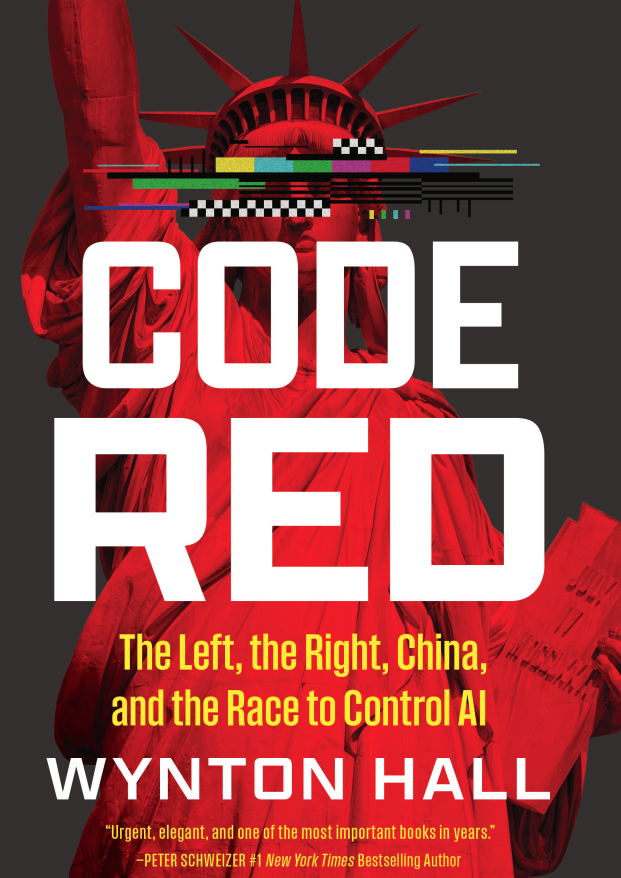
Wynton Hall predicted the Democrats’ plans in a recently published piece that outlines the Democrat strategy of weaponizing voter fears over AI job loss and other factors before the midterms. Hall’s instant bestseller book, Code Red: The Left, the Right, China, and the Race to Control AI, explores the wide-ranging implications of AI and how the conservative movement can create an effective approach to this revolutionary technology.
Hall explains that the Democrat plan on AI hinges on four variables:
1) The Money Battle: Massive spending by pro-AI Super PACs like the $125 million Leading the Future, backed by Trump donor heavyweights like Open AI president Greg Brockman and Andreessen Horowitz, will support a pro-AI innovation, light-touch regulations agenda and square off against pro-AI regulation groups, such as the $50 million Public First 501(c)4, which received a $20 million donation from Anthropic. Both groups will support candidates across the political aisle.
2) AI-Washing: Another factor will be whether voter perceptions will be swayed between now and the November elections by so-called “AI-washing”—the business practice of blaming layoffs on artificial intelligence instead of traditional business factors that may embarrass executives or expose their mismanagement.
3) Bipartisan Opposition to Higher Electricity and Water Costs from Data Centers: Third, the Trump Administration’s handling of growing bipartisan affordability concerns over data center construction’s toll on electricity and water costs for local communities will have a major impact. President Trump is currently developing a compact to make sure power-hungry data centers don’t stick working class Americans with the tab. MAGA loyalist and White House Senior Counselor for Trade and Manufacturing Peter Navarro summed it up best: “All of these data center builders,” he said, “need to pay for all, all of the costs,” including electricity, water, and grid strain. “I just want to assure people that we’re on it, we also feel your pain.”
4. Advancements in Agentic AI and Recursive Self-Improvement (RSI): Finally, and perhaps most importantly, much will hinge on the warp-speed developments of the technology itself. Over the next nine months, much can and will accelerate with agentic AI (i.e. agents that can perform real work) and recursive self-improvement (RSI) (AI that autonomously enhances itself). Factors like these could have significant impacts. A single update this month to Anthropic’s Claude Cowork AI agent sparked a nearly $300 billion market sell-off, accelerating the ongoing debate over whether AI agents will eat into Software as a Service (SaaS). Similarly, gains in RSI could prove pivotal. “If the predictions for recursive self-improvement in 2026 is true,” says influential AI expert and Moonshots podcast host Peter Diamandis, “every prediction curve we have accelerates dramatically—and every governance framework, safety protocol, and regulatory approach is already obsolete. We’re building brakes for a car that’s about to become a rocket.”
Under the proposal, the AI dividend would serve dual purposes. It would provide direct cash payments to Americans and simultaneously finance workforce retraining initiatives, educational programs, and enhanced governmental capabilities to regulate artificial intelligence effectively. The funding mechanism would also support independent oversight of the technology.
Bores employed an insurance analogy to explain his rationale during an interview with Axios. “You don’t take out fire insurance because you expect your house to burn down — you have insurance in case something goes awry,” he said. He emphasized the unprecedented nature of the current situation, noting that “for the first time, a technology where the makers of the technology are explicitly saying that their goal is to replace all human labor.” He added that this explicit acknowledgment from industry leaders obligates government to respond proactively.
The policy memo characterizes the AI dividend specifically as a direct payment program that would activate only upon meaningful worker displacement actually occurring. The document emphasizes that this approach “is not a punishment for innovation — it is an insurance policy.”
Three primary revenue sources would fund the initiative. First, a token tax, defined in the memo as a relatively small levy on AI consumption. Second, government equity participation in leading-edge AI companies. Third, modifications to tax policy that would diminish financial incentives for AI investment when such investment results in reduced employment.
Bores argues that establishing this framework carries particular urgency because opportunities for effective policy intervention may diminish or disappear entirely once widespread job losses and wealth concentration have already taken place.
The proposal bears notable similarities to concerns and concepts previously articulated by chief executives of AI companies themselves, who have publicly warned about potential employment impacts and suggested mechanisms for broader wealth distribution from their enterprises. Ideas such as UBI are popular amongst the Silicon Valley elite.
Read more at Axios here.
Lucas Nolan is a reporter for Breitbart News covering issues of AI, free speech, and online censorship.
