


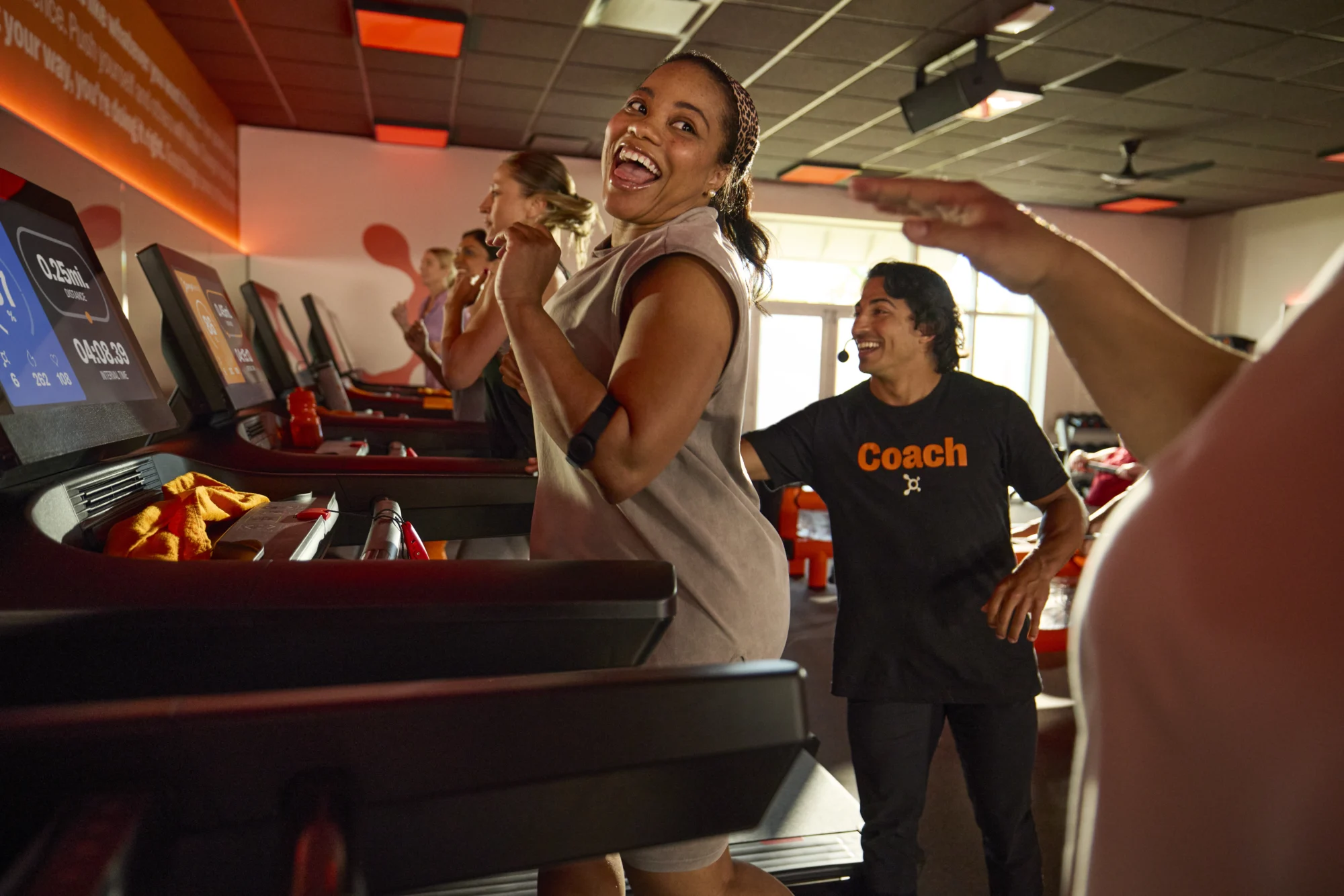
The fitness and wellness industry is one of many that know how to talk to women. It markets to them, studies their habits down to the last class booking and dollar spent.
What it has been slower to do (as with most industries) is hand them the keys.
But that dynamic is beginning to shift, with women in fitness carving out visible, influential roles.
Such is the case at Orangetheory Fitness, a franchisor that operates more than 1,500 studios globally and that has outlasted more trends than most care to count. At OTF, two women are helping define where the brand is headed next.
Here’s what Orangetheory creator and co-founder Ellen Latham and brand president Lauren Cody had to say to Athletech News.
The Pivot
Latham didn’t set out to build a global fitness brand. Like most great ideas, it started with a problem she was trying to solve.
She was in her 40s and admits she knew more than she gave herself credit for — and it took being laid off from her job to force her to confront the reality that she had what it takes. It started simple enough, with her teaching fitness classes at a Pilates studio in Florida. She listened to her clients, who would share that they were getting stronger but weren’t seeing the cardiovascular and metabolic results they wanted.
In turn, she developed a system that combined strength training and cardiovascular intervals in one session, guided by heart rate and built around measurable progress. It was a solid idea, but at the time, using heart rate monitoring in a group setting was not common.
It was a lightbulb moment.
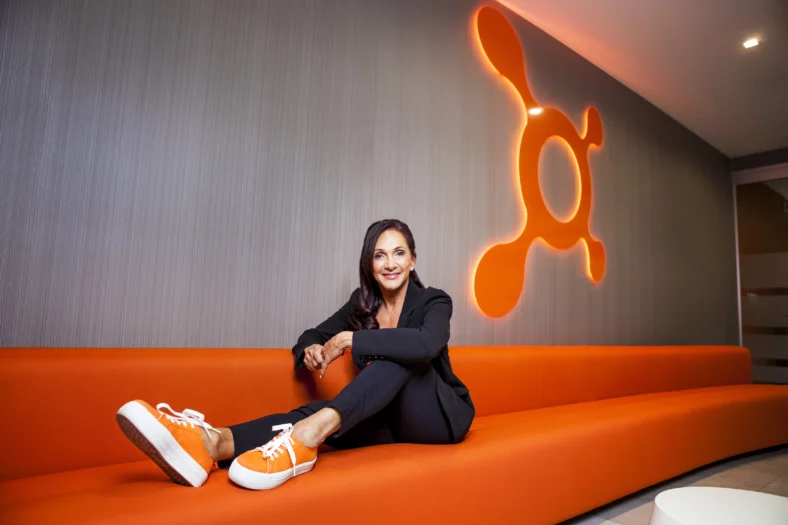
“I realized I did not need to follow what the industry was doing,” she said. “It was not confidence that came first. It was clarity. Once I had that clarity, I was able to move forward with conviction and a much stronger sense of purpose.”
Of course, there were still doubts.
“There were questions about whether it would be too complex or too data-driven,” she recalled. “I have always believed that if you can measure effort, you can improve it. Once clients began seeing real progress in their endurance, energy and overall health, that became the validation.”
The rest, as they say, is history. Once members started sharing how their lives were changing, reporting more energy, feeling stronger and more in control, that’s when it became clear to Latham that this was not just a workout.
“We had created a system that supports longevity and helps people take ownership of how they age,” she said. “And that is when I understood the true impact of what we built.”
The Long Game
Though Latham has seen the industry evolve over the years, she is still surprised by how quickly it moves toward trends, which she says can create a lot of noise and confusion for consumers who are simply trying to take care of their health.
But that is also why Orangetheory has stood out over the years, one of the first to incorporate data and personalization into the group fitness experience meaningfully.
“People want to understand their bodies and see their progress in real time, which is something we built into Orangetheory from the beginning,” she points out.
Still, there’s another major change that has occurred in the industry: GLP-1s. While Latham notes that weight-loss medications have a place for certain individuals, she is quick to point out that they don’t replace the need for regular exercise, especially when it comes to preserving muscle, supporting cardiovascular health and maintaining independence as people age.
“Strength, cardio, coaching and measurable results will always matter,” she said. “And that foundation is what allows us to stay relevant.”
Golden Arches to the Orange Glow
Cody came to Orangetheory in 2024 from brands at a very different scale than boutique fitness, having served in leadership roles at McDonald’s, Walgreens and BCG.
It didn’t take long for her to get the brand’s pulse. Once inside, she said she was impressed by the intentionality of the programming, coaching and performance data — all of which create a level of engagement that keeps members meeting their goals and coming back for more.
“I knew the strength and efficacy of the Orangetheory product, but the level of integration between those elements, and the impact that has on member results, is unique in the industry,” she said. “The other big contributor to results is accountability and community. This is not a passive fitness experience.”
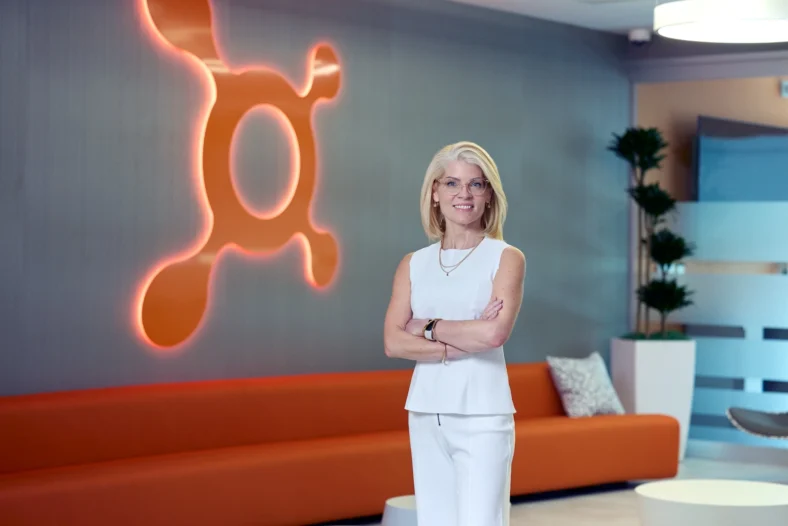
It’s not just talk. A recent Orangetheory campaign ditched the ripped-body marketing play in favor of real members and progress over perfection.
More to Come
As Latham noted (and Cody echoes), the overwhelming amount of information swirling around the market is even more reason to offer structure with clear outcomes, while still sprinkling in new things.
“People also want to have fun with their fitness routine, so keeping it fresh is also important,” she said.
Part of that has resulted in Orangetheory partnering with fitness racing giant Hyrox at select studios as competitive fitness finds a wider audience. The move offers Orangetheory members access to Hyrox Training Clubs and custom-built classes for those who want to train for upcoming races or level up their weekly routines.
“What we are seeing is a broader shift toward performance-based fitness, where people want clear goals to train for beyond the day-to-day workout,” Cody said, adding that this has been part of Orangetheory’s model for more than 10 years through DriTri, the brand’s in-studio, three-part “dry triathlon.”
“Our approach has been to build on that foundation while also meeting demand through partnerships like Hyrox, which bring race-inspired training into our studios in a way that aligns with how we coach and program,” she added.
Even with the addition of Hyrox training, Orangetheory has more in the works, a vision to make the experience even more personalized and effective for each member.
“That includes helping members better understand their performance over time, so they know when to push, when to recover and how to make real progress toward their goals,” Cody said.
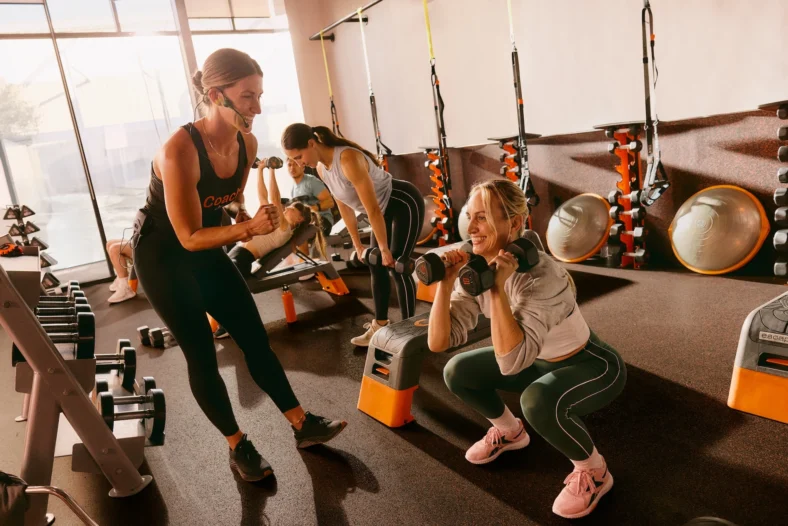
Notably, roughly 80% of Orangetheory’s member base is female, Cody said, making a deep understanding of those members’ perspectives and goals central to the brand’s success.
Although she noted Orangetheory isn’t ready to share all the details yet, she said the boutique fitness franchise is piloting several new things this year.
“You will also see us continue to evolve the in-studio experience in meaningful ways through programming, technology, equipment and new approaches to how we train,” Cody said. “We will build on what members already love about Orangetheory, and include elements that reflect market trends, including a deeper emphasis on strength as part of a well-rounded fitness routine.”
Founder’s Wisdom
For Latham, watching Orangetheory grow beyond her has required something founders rarely talk about openly: trust.
“When you build something from the ground up, it becomes very personal and deeply connected to who you are,” she said. “It was important for me to ensure that the structure and the purpose were clearly defined and protected, because those are the elements that make Orangetheory what it is. Once that foundation is strong, the right people can carry it forward and build on it.”
Her advice to other founders is to remain anchored in their mission while being willing to share responsibility.
“Growth requires different strengths, and surrounding yourself with people who complement your skill set is what allows your vision to expand and ultimately reach far more people than you could on your own,” she said.
