


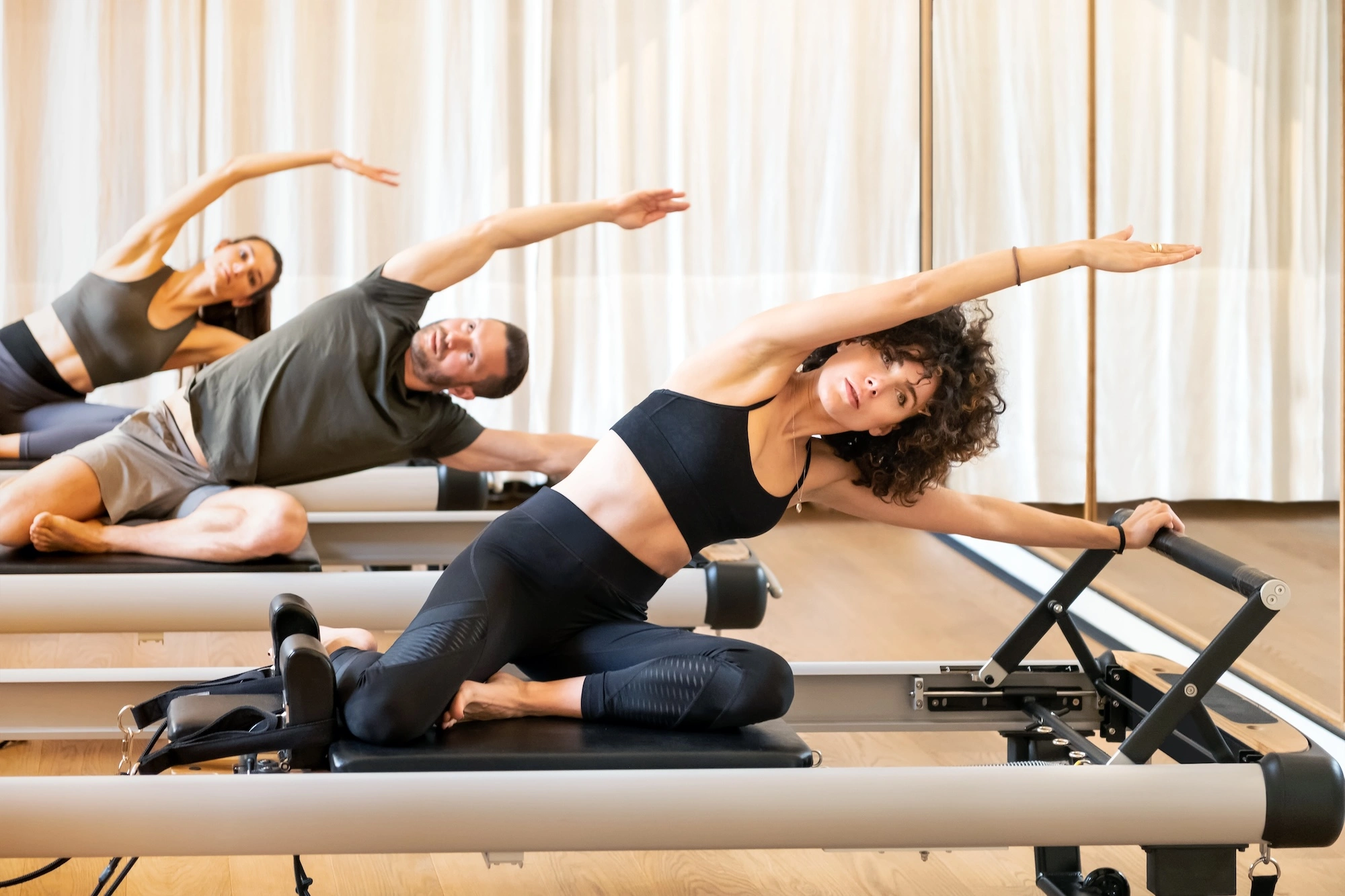
Jamie Weeks, the founder and managing partner of Founders Row, had a nearly twenty-year career on Wall Street before becoming one of the biggest franchisees in the Orangetheory Fitness system and founding SweatHouz, a nationwide operator of contrast-therapy studios
Before I became an operator, I spent nearly twenty years on Wall Street, at UBS, Barclays, and Morgan Stanley, advising family offices and high-net-worth clients. That career didn’t teach me how to run businesses. What it taught me was how to read cycles and spot where consumer demand is heading before the rest of the market catches up.
In 2014, I left the advisory world and put that instinct to work — first with Orangetheory Fitness, where I built the largest franchise operation in the system, and then with SweatHouz, which I founded and scaled before selling a majority stake. Two companies. Two exits, both in categories most people didn’t take seriously until it was too late. Founders Row exists because of that pattern.
In September 2025, I launched Founders Row, an early-stage operating platform built to partner with founders in health, wellness, and consumer.
The thesis was simple: private equity has gotten too big for early-stage deals, and early stage is where the greatest returns are made. There’s a widening gap between what PE can do and what founders actually need in an early stage. Founders Row was built to fill that gap — with real operating experience, aligned deal structures and a founder-first mentality that parts of the industry have been missing.
Six months in, we’ve closed eight deals across six consumer verticals. No fund. No advertising. Just a thesis, a track record, and founders who want a different kind of partner, someone who values the founder vision.
That’s the backdrop of myself and our firm. Here’s what we’re seeing.
The Pilates/Sculpt Thesis: Why These Brands Are Winning
If you’re looking for the category in health and wellness that’s checking nearly every box right now, it’s the wide variety of Pilates and sculpt concepts. The growth is real, and more importantly, the fundamentals behind that growth are durable.
Start with accessibility. Pilates and Sculpt can be done by virtually anyone — young, old, fit, de-conditioned, rehabbing, or training at an elite level. That alone separates it from most boutique fitness modalities, which tend to skew toward a more narrow demographic or a specific fitness level. The addressable market is enormous because the barrier to entry for the consumer is low.
Then look at the format. Pilates studios typically run smaller class sizes — twelve to twenty-four people — compared to the thirty to forty-five you’d see in an Orangetheory, SoulCycle or CrossFit. Smaller classes create a more intimate, community-driven experience: they’re less intimidating for first-timers, which drives trial, and they allow for more instructor attention, which drives retention. Most importantly, these studios are attracting the most valuable demo of all, women 18-35. A demo that has proven that if you build what they want, they’ll spend the money.
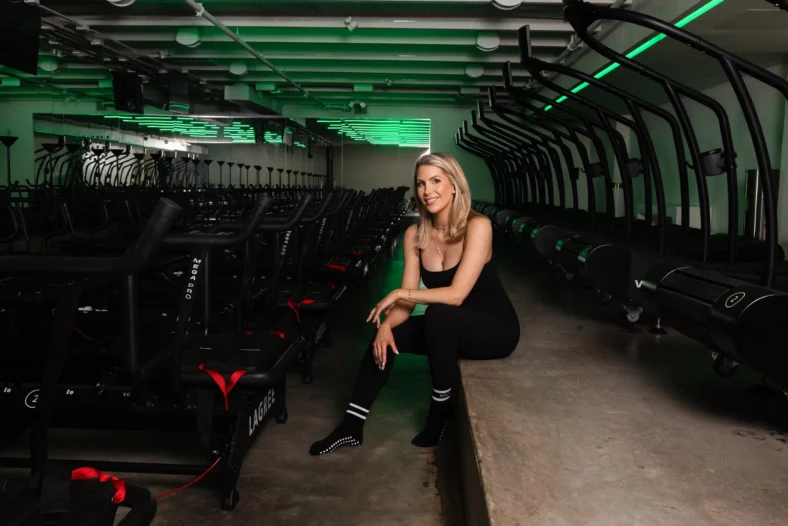
The music matters. The community matters. The feeling of belonging to something matters. These are the same dynamics that built the boutique fitness wave over the last decade — but Pilates delivers them in a format and environment that doesn’t scare people away.
What makes the category especially interesting from an investment standpoint is how much brand diversification is possible. SolidCore and BodyRok both fall under the Pilates umbrella, but they are fundamentally different experiences — varying energy, similar clientele, different positioning. That kind of brand-level demarcation within a single category has historically been rare in fitness. It means the market can support multiple winners, each owning a distinct lane.
Our view: the upside in Pilates and similar modalities like Lagree are going to continue. We’re still in the early innings of what this category can become. The consumer demand is deep, the format is scalable, the unit economics work, and the brand defensibility is real. At Founders Row, we invested in SculptHouse because we believe it’s one of the most differentiated concepts in the space, combining the MegaFormer with the Woodway treadmill for an incredible strength meets cardio workout. But we also believe that the distinction from studio to studio is what’s going to drive the category’s growth. Be different. It’s actually great for category growth — plus it’s just more fun to be different.
The Scaling Challenge: The Urban Corridor Trap
There’s an under-appreciated dynamic in wellness we are watching: how quickly innovation creates local oversaturation before a clear category leader ever emerges.
We’re seeing a pattern where every breakout concept, from recovery studios to longevity clinics, launches in the same few affluent, trend-forward urban pockets. They end up cannibalizing each other, competing for the same narrow cohort of high-frequency consumers. This often leads to inflated acquisition costs and a hard ceiling on unit growth.
The real win isn’t just launching a better version of what already exists; it’s widening the aperture. To scale beyond the fitness and wellness “elite,” brands need to build models that resonate with broader demographics and deliver repeatable, durable outcomes. In a market now shaped by GLP-1 adoption and outcome-driven expectations, the consumer’s definition of “results” is shifting from purely aesthetic to deeply functional.
This forces a critical realization: the most significant barrier to health right now isn’t a lack of physical intensity – it’s the mental friction of modern life. If we only solve for the body while ignoring the cognitive overload we all are feeling, we are only solving half the problem. This need to move beyond mere “sweat” is the catalyst for the next major structural shift in the industry.
The Next Frontier: Brain Health & Intentional Disconnection
The wellness industry is entering its next structural shift, and it has nothing to do with fitness, recovery, or optimization. It’s about the brain. Specifically, it’s about what happens when you stop.
The pendulum is swinging. For a decade, the status signal in wellness was intensity — harder workouts, colder plunges, longer fasts, more data. That era produced incredible companies, and it’s not over. But underneath it, a quieter and more sustainable need is taking root. The need to turn off.
Run the numbers. Thousands of corporate wellness programs are sold out. Digital detox retreats have year-long waitlists. Overwhelm is the defining behavioral epidemic of our time. Spending on mental health has outpaced every other wellness category for three consecutive years. The consumer is telling us something, and the market is just beginning to respond.
The neuroscience supports it. Research on the Default Mode Network — the brain’s system for rest, self-reflection, and emotional processing — shows that constant digital stimulation suppresses the very functions that keep us resilient. Since 2007, when the smartphone became an extension of the human hand, we have systematically eliminated the moments of silence and boredom that were once productive parts of the day. Screen time among teenagers has doubled. Anxiety and burnout are at record levels across every occupational category. This is not a trend; this is a structural phenomenon.
And yet, the response from the wellness industry has been more technology — more apps, more wearables, more dashboards telling you how stressed you are. We think that’s backwards. The brands that define this next era won’t add another screen to your life. They’ll help you put one down.
This is where Founders Row is placing its next bets.
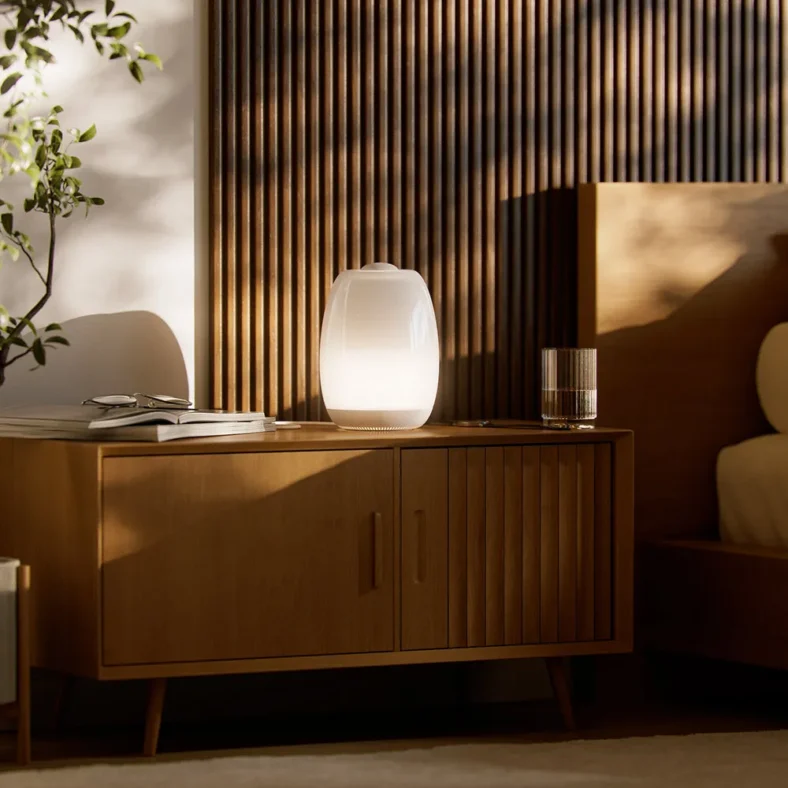
Our investment in Ohm Health — a neuroscience-backed device that uses biofeedback to guide nervous system regulation through light, sound, and touch, with no screen — is the first expression of this thesis. It will not be the last.
We are actively incubating a brick-and-mortar concept centered on structured digital withdrawal and nervous system recovery, designed to give people a physical space to practice the skill of disconnection.
For years, the status signal was being “always on.” We believe the next era will reward those who know how to turn off. The companies that build the tools, spaces, and rituals around that behavioral shift will define the next chapter of wellness, and we are excited to play a part in this evolution.
