Close Menu
  • Home
  • AI & Technology
  • Politics
  • Business
  • Cryptocurrency
  • Sports
  • Finance
  • Fitness
  • Gadgets
  • World
  • Marketing

Subscribe to Updates

Subscribe to our newsletter and never miss our latest news

Subscribe my Newsletter for New Posts & tips Let's stay updated!

What's Hot

Analyst Identifies $63,000 As Key Support For Next Bitcoin Move

April 5, 2026

The UK government reportedly wants Anthropic to expand its presence in London

April 5, 2026

Samsung will discontinue its Messages app in July and replace it with Google’s

April 5, 2026
Facebook X (Twitter) Instagram
  • Home
  • About US
  • Advertise
  • Contact US
  • DMCA
  • Privacy Policy
  • Terms & Conditions
Facebook X (Twitter) Instagram
MNK NewsMNK News
  • Home
  • AI & Technology
  • Politics
  • Business
  • Cryptocurrency
  • Sports
  • Finance
  • Fitness
  • Gadgets
  • World
  • Marketing
MNK NewsMNK News
Home » Smartwatch Stress Scores Rarely Match Reality, Researchers Say
Fitness

Smartwatch Stress Scores Rarely Match Reality, Researchers Say

MNK NewsBy MNK NewsAugust 19, 2025No Comments3 Mins Read
Facebook Twitter Pinterest LinkedIn Tumblr Email
Share
Facebook Twitter LinkedIn Pinterest Email


The findings raise questions about whether wearables can reliably measure mental states, even as sleep tracking offered a modest bright spot

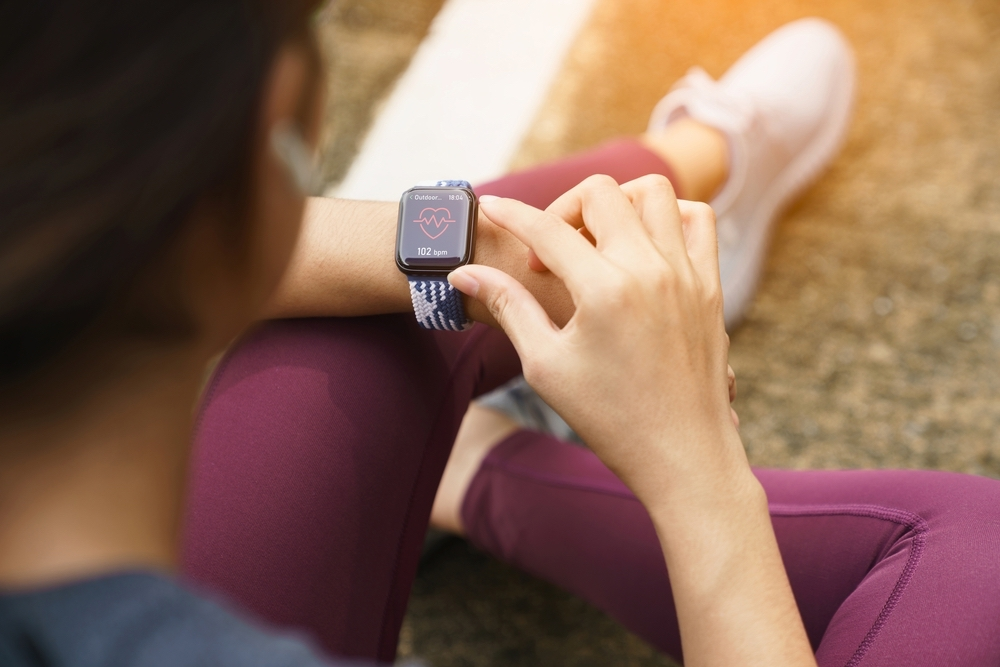
Consumer-grade smartwatches may be less reliable than many users think when it comes to tracking stress and fatigue, according to new research accepted for publication in the Journal of Psychopathology and Clinical Science.

The surprising findings land in a booming wearables market, where devices promise insights into sleep, energy levels and stress by measuring heart rate and other biometrics. However, when it comes to stress and tiredness, a group of researchers note that the numbers often don’t match what users actually experience.

For the study, a team led by Björn Siepe tracked nearly 800 university students over a three-month period, all of whom wore Garmin Vivosmart 4 devices while completing smartphone-based ecological momentary assessments (EMAs) four times a day. Each evening, they reflected on their best or worst experiences.

The data revealed that the overlap between smartwatch readings and self-reported states was minimal, particularly for stress. For example, stress readings on the devices seldom matched what participants reported.

One reason, co-author Eiko Fried explained, is that wrist-worn devices rely heavily on heart rate and its variability, which can rise for many reasons.

“Changes of heart rate alone tell us little about a person’s context: your heartbeat could be increased due to experiencing not only a negative, but also a positive emotion,” he said in a release. “For example, you could be afraid or excited, stressed or sexually aroused.”

As he told The Guardian, his wearable flagged him as stressed while he was working out and again when he was excitedly catching up with a friend at a wedding.

Fried said the findings also raise questions about the role of wearable data in understanding mental states and what it can or cannot reliably show. It’s an important aspect, as the work is part of WARN-D, a broader effort to build an early warning system for depression.

See Also


“Not only is this relevant for individuals who rely on information provided by smartwatches to guide their life habits,” he said. “It’s also important for clinical and social sciences, given the common belief among researchers that wearables can replace traditional self-reports to reduce research participant burden.”

While the wearables showed little consistency in stress or fatigue, sleep tracking proved more reliable, providing one bright spot. For about two-thirds of participants, better self-reported nights corresponded with roughly two extra hours of sleep recorded on the watch, though the devices measured duration rather than quality.

Ultimately, he suggested consumers take a cautious approach.

“Be careful and don’t live by your smartwatch – these are consumer devices, not medical devices,” he told The Guardian.


Source link

Share. Facebook Twitter Pinterest LinkedIn Tumblr Email
MNK News
  • Website

Related Posts

The Best Sports Bras for Running, From Under-$50 Bestsellers to Moisture-Wicking Heroes

April 4, 2026

F45, Reebok Debut Co-Branded Apparel Collection

April 3, 2026

Whoop Makes Biggest Sports Push Yet With PSG DEal

April 3, 2026
Add A Comment
Leave A Reply Cancel Reply

Editors Picks

Pegula reaches WTA Charleston Open semi-finals with latest three-setter

April 5, 2026

Rs20 million fine for a deleted tweet: The cost of irreverence?

April 4, 2026

City host Liverpool, Arsenal chase treble in FA Cup quarter-finals

April 3, 2026

Italy’s football chief resigns after World Cup disaster

April 2, 2026
Our Picks

Analyst Identifies $63,000 As Key Support For Next Bitcoin Move

April 5, 2026

Ethereum Net Taker Volume Rises To Most Positive Level Since 2023 – Bullish Reversal Soon?

April 5, 2026

Bitcoin On-Chain Data Hints At Macro Bottom Near $47,960

April 5, 2026

Recent Posts

  • Analyst Identifies $63,000 As Key Support For Next Bitcoin Move
  • The UK government reportedly wants Anthropic to expand its presence in London
  • Samsung will discontinue its Messages app in July and replace it with Google’s
  • Ethereum Net Taker Volume Rises To Most Positive Level Since 2023 – Bullish Reversal Soon?
  • Space Squabble: Elon Musk’s SpaceX Accuses Amazon of Violating Orbital Rules as Satellite Rivalry Escalates

Recent Comments

No comments to show.
MNK News
Facebook X (Twitter) Instagram Pinterest Vimeo YouTube
  • Home
  • About US
  • Advertise
  • Contact US
  • DMCA
  • Privacy Policy
  • Terms & Conditions
© 2026 mnknews. Designed by mnknews.

Type above and press Enter to search. Press Esc to cancel.