


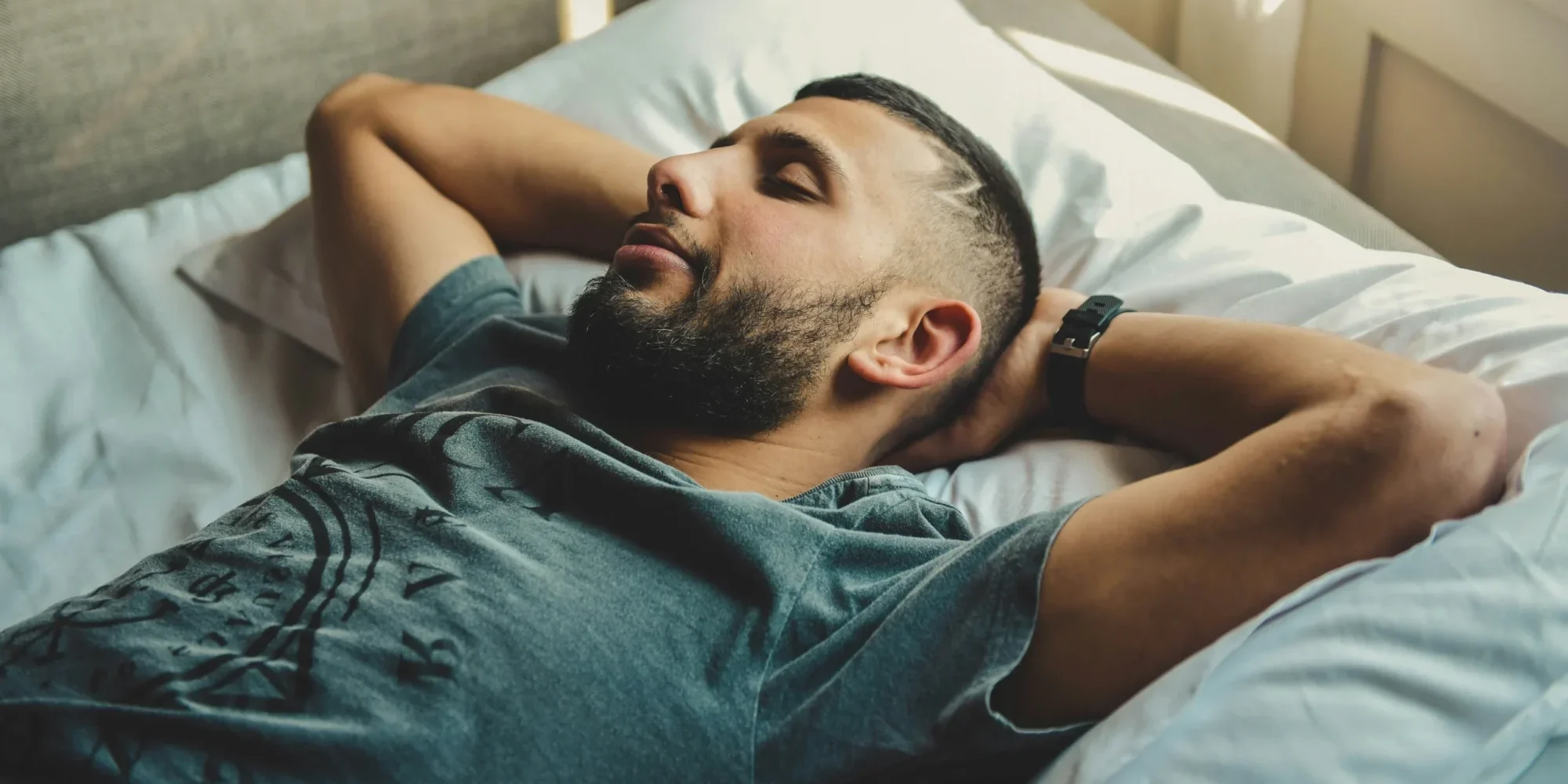
Hitting the hay earlier might be the simplest way to boost your movement
Want to move more tomorrow? Try going to bed a little earlier tonight.
That’s the takeaway from a new study by researchers at Monash University, Harvard Medical School and Brigham and Women’s Hospital, who found that even modest shifts to an earlier bedtime can lead to significantly more physical activity the next day.
Published in Proceedings of the National Academy of Sciences, the study, conducted from 2021 to 2022, draws on nearly 6 million nights of sleep and activity data from 20,000 Americans wearing Whoop fitness trackers.
The data showed a clear pattern: earlier bedtimes were linked to more moderate-to-vigorous physical activity the next day. For example, participants who typically went to bed at 9 p.m. logged about 30 more minutes of exercise than those who stayed up until 1 a.m., and 15 minutes more than those who typically went to bed at 11 p.m. (the average bedtime for participants).
Interestingly, when people went to bed earlier than their usual time but still got the same amount of sleep, they tended to log their highest levels of activity the following day, a combination that can be especially impactful.
“Even small changes in when you go to bed may be linked to how active you are the next day,” said Josh Leota, a research fellow at Monash University and lead author of the study, in the Harvard Gazette. “Rather than viewing sleep and exercise as competing for time, we should think about how they can support each other.”
To validate the findings, researchers turned to data from the National Institutes of Health’s All of Us Research Program, in which a demographically representative cohort was given a free Fitbit device to participate. While the effects were slightly smaller, likely due to fewer fitness-focused users than Whoop users, the pattern held steady: earlier sleep, more movement.

The study adds to a growing interest in understanding and encouraging the interplay between rest and performance. Equinox Hotels, for instance, is focusing on better rest as the future of hospitality. The brand recently partnered with renowned sleep scientist Dr. Matthew Walker to launch the Equinox Hotels Sleep Lab, an immersive experience at its New York City property designed to optimize guests’ sleep through smart tech, sleep-driven spa rituals and recovery-focused amenities.

Other companies are following suit. Eight Sleep’s new Pod 5 mattress system uses AI to adjust temperature based on biometric signals, while wearables like Somnee, also co-founded by Walker, are designed to help users fall asleep faster and sleep longer. In addition to wearables, mouth tape and sleep-focused experiences, supplements are increasingly being marketed as a way to improve sleep.
Looking ahead, the research team hopes to build on these findings by testing whether earlier bedtimes can cause an increase in physical activity, not just correlate with it.
“We would like to test whether encouraging earlier bedtimes directly leads to more physical activity the next day, within an experimental paradigm,” Leota told the publication. “This would provide strong evidence for updating public health messaging to improve population physical activity levels.”
