


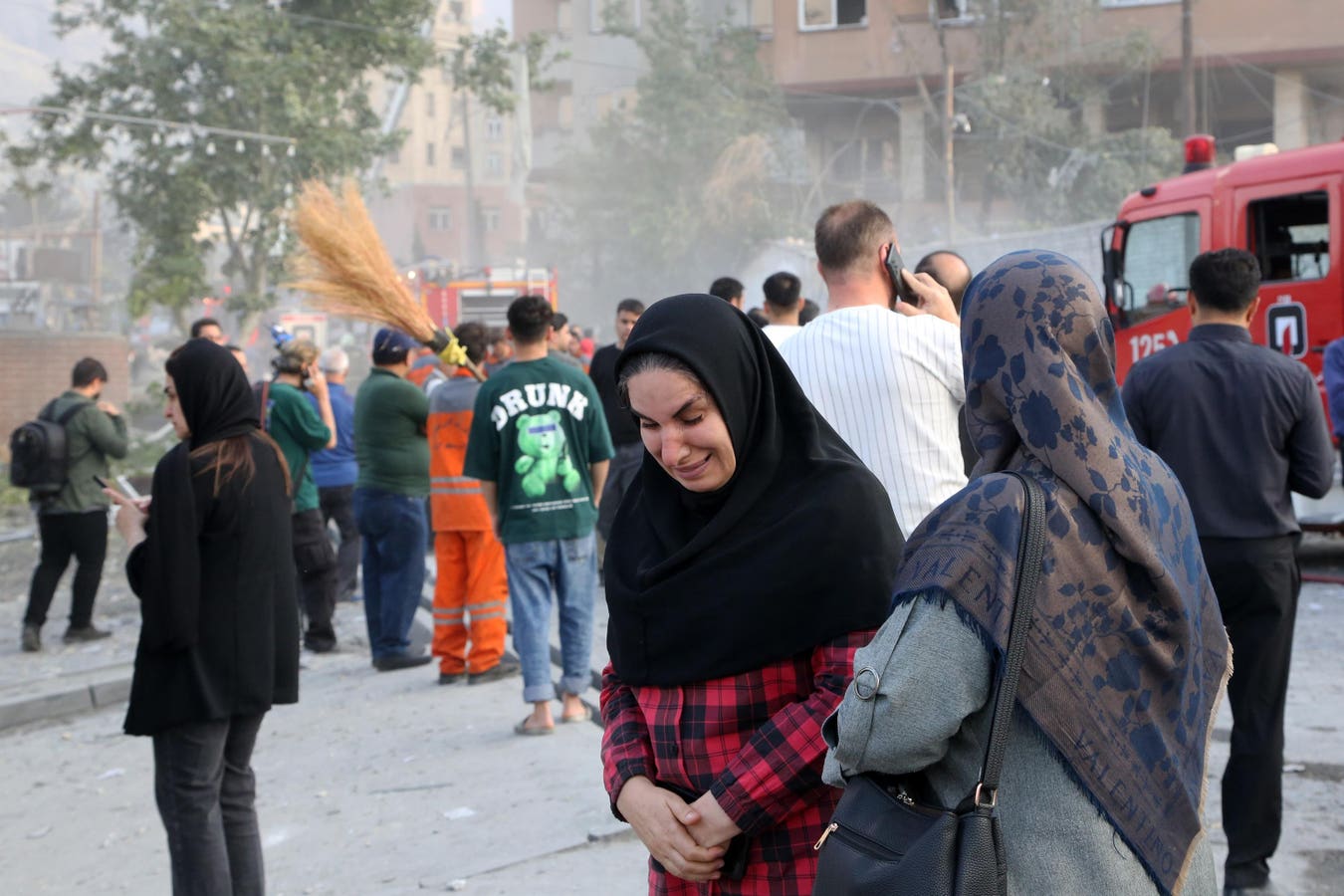
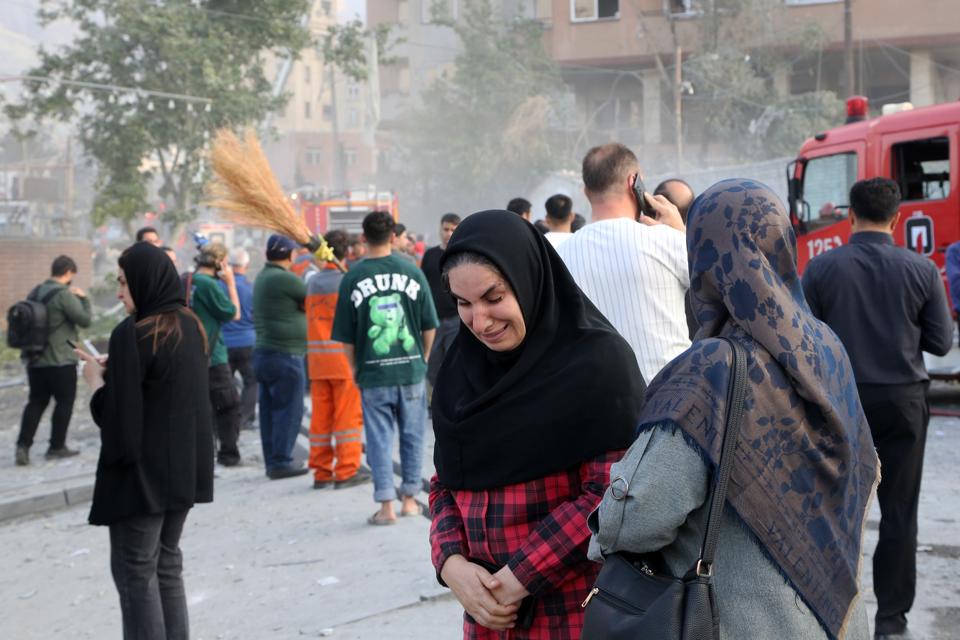
TEHRAN, IRAN – JUNE 13: A view of a damaged building in the Iranian capital, Tehran, following an … More
Even if the U.S. and Israel have obliterated Iran’s nuclear program, which is still an open question, the legal and strategic fallout is just beginning. Both the Israeli strikes and the U.S. bombings of Iran’s nuclear facilities have attracted accusations of illegality. The U.S. domestic legal arguments involve complicated and important questions of executive power. Under international law, however, Israel’s attack on Iran was lawful. Yet debates over the legality of Israel’s attack reveal gaps in international law that have consequences for the future of warfare.
To determine the legality of Israel’s actions, we must first ask whether Iran and Israel were in an armed conflict before Israel’s strikes on June 13. The law of war only applies within armed conflict. However, international law does not clearly define how armed conflict begins and ends. Rarely do states mutually declare war and then sign an unbreakable ceasefire. Israel and Iran are in a decades-long hostile relationship punctuated by direct engagement and attacks by Iranian proxy forces. For example, Iran began backing Hezbollah in 1982, after Israel’s invasion of Lebanon.
Hezbollah has repeatedly attacked Israel and engaged in terrorist attacks against Jewish and Israeli sites worldwide. Hezbollah and the Houthis (in Yemen) are often considered Iranian proxy forces, and Iran’s support for Hamas is also well documented. Legally, to be considered Iran’s proxy, Iran must exercise some control over a group, such as giving direct orders. Funding and supplying arms to a group alone do not make an armed group a state proxy. At times, these groups may act independently against Israel.
However, diverse actions over decades have often been conducted in coordination with Iran–and many would not have happened without Iranian support. These groups’ combined efforts support the argument that Israel was in armed conflict with Iran long before June 13.
When Did the Israel-Iran War Start?
Israel and Iran have also traded kinetic and cyber attacks for decades, intensifying in recent years. Iran launched drones and missiles into Israel in 2018. Israel fought back with air and drone strikes against Iranian positions in Syria and Iraq, and eventually within Iran itself in 2023 and 2024. Tit-for-tat attacks on ships occurred in the 2020s. In 2024, Israel bombed the Iranian consulate in Damascus, killing a general in the Iranian Revolutionary Guard’s Quds Force. Iran responded by launching over 300 missiles and drones into Israel. Israel then struck an air defense radar and ballistic missile facility near Isfahan.
Given these direct and proxy attacks over decades, Israel and Iran can reasonably be considered to be in armed conflict. However, the failure of international law to define when armed conflict begins reveals a critical gap in international law. Many states are involved in on-again, off-again kinetic conflict. The lack of clarity of international law on this issue leaves states vulnerable to charges of illegality.
Israel’s Strikes Against Iran Were Lawful Due to an Imminent Threat
Even if no armed conflict existed between Israel and Iran, Israel’s strikes may be considered justified as an act of self-defense. Article 51 of the United Nations Charter says states have the right to self-defense. Under customary international law, a state may engage in anticipatory or pre-emptive self-defense when an armed attack is imminent. However, imminence is undefined in international law. Imminence need not mean immediate or instantaneous, and must be determined based on all facts and circumstances known at the time.
States may use pre-emptive force when (1) evidence shows that an aggressor has committed itself to an armed attack, and (2) delaying a response would hinder the ability to meaningfully defend itself. Anticipatory self-defense is permissible “where attack is imminent and no reasonable alternative means is available,” according to international law.
To assess the legality of Israel’s strikes, we must consider whether an armed attack by Iran was imminent, whether Iran had committed itself to an armed attack, and whether delaying a response would have hindered Israel’s ability to meaningfully defend itself. Intelligence estimates involving Iran’s nuclear program are disputed. U.S. Director of National Intelligence Tulsi Gabbard testified before Congress in March that Iran was not trying to build a nuclear weapon. However, the International Atomic Energy Association reported on May 31 that Iran had breached its non-proliferation obligations, citing undeclared locations, materials, and activities which could be used to make nuclear weapons.
The IAEA Director General stated in April that Iran was months away from having a nuclear weapon. One study, published in early June, estimated that Iran’s breakout time was just one week. Iran appears to have committed itself to an armed attack. Iran’s leaders have called for the complete destruction of Israel for decades. Negotiations had failed. In Israel’s view of the facts and circumstances, it could reasonably conclude that it had a mere week to defend itself from the threat of destruction—and that the law would justify a pre-emptive strike. In a June 17 letter to the Security Council, Israel stated that its strikes were a measure of last resort to thwart imminent Iranian attacks, and that it was the last window of opportunity to ensure Israel’s survival.
What the Israel-Iran War Tells Us About the Future of War
Under international law, Israel’s strike was legal. However, it raises important questions about the future of international law and the future of war itself. As I often tell my students, we don’t have law for the world we live in. But the law still matters.
International law does not tell us when armed conflict begins and ends. The “imminence” standard for self-defense requires rethinking in an age of cyber attacks and weapons that threaten a state’s survival. The law of war exists to make war more just and less brutal, and to ensure a better peace in its wake. It has served this purpose since the end of World War II, when all modern states agreed to say “Never Again” to the atrocities of that war. For the law to continue to do so, the international community must reach consensus on what the law requires–and the very definition of war itself. Without clarity as to what the law requires, we risk living in a constant state of unrestrained warfare where no rules apply.
