


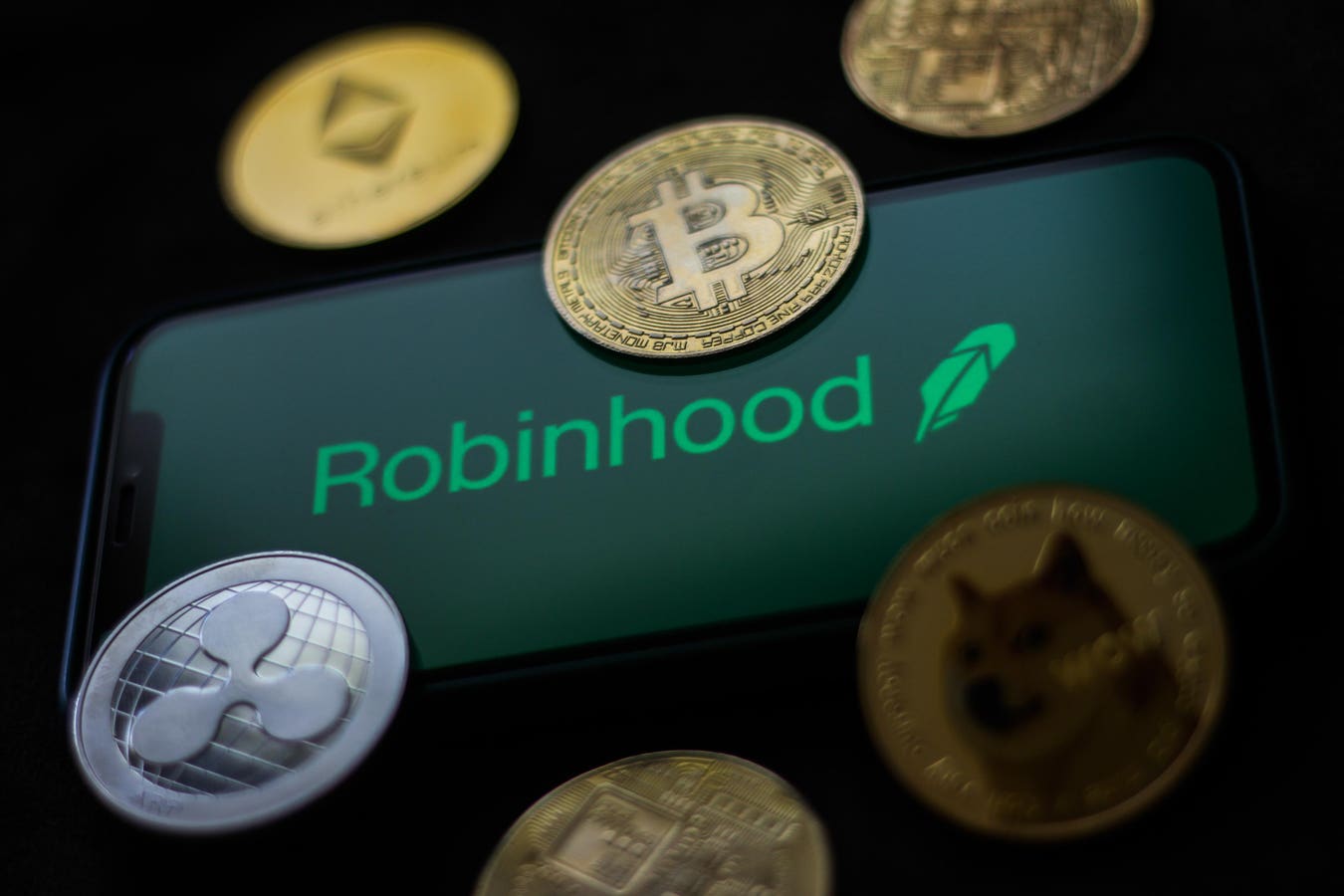
Robinhood Seeks To Bring Wallstreet Onchain (Photo Illustration by Jakub Porzycki/NurPhoto via … More
Robinhood submitted a 42-page SEC proposal to create a federal framework for tokenized real-world assets, aiming to modernize U.S. securities markets.
For years, the financial world has talked about tokenizing real-world assets (RWAs). RWA tokenization is projected to become a $30 trillion market by 2030, according to research from The Trading View. This surge is driven by rising institutional interest in onchain financial products, offering faster settlement, greater transparency, and broader asset access.
The vision has always been tantalizing: frictionless trading of everything from Treasury bills to real estate, recorded transparently on a blockchain, available to all. But despite the headlines and hype, most of the progress has been confined to controlled pilots, sandboxes, and siloed platforms—largely disconnected from the regulated core of finance.
That may be about to change.
Robinhood submitted a formal 42-page proposal to the U.S. Securities and Exchange Commission (SEC) requesting the creation of a federal regulatory framework for the issuance and trading of tokenized RWAs. This is more than just a compliance tweak—it’s a structural rethinking of how assets can be issued, settled, and tracked in the U.S. financial system. If accepted, it could signal the beginning of a scalable, legally sound foundation for tokenized markets in America.
The Innovation Isn’t the Token—It’s the Trust Framework Written By Robinhood
Robinhood’s proposal introduces some of the most important legal infrastructure yet seen in the RWA space. It calls for a unified national framework to replace the fragmented, state-by-state compliance approach that currently governs securities. It proposes that tokens representing assets—like equities or government bonds—should be legally equivalent to the underlying asset, not classified as derivatives or synthetic products.
That one change, if approved, would eliminate the need for duplicate systems and ambiguous ownership rights. It would also allow broker-dealers like Robinhood to custody and trade tokenized assets using existing regulatory guardrails, not separate, uncertain structures.
The platform, dubbed the Real World Asset Exchange (RRE), would feature off-chain matching for speed and on-chain settlement for transparency. It integrates identity verification and anti-money-laundering tools via Jumio and Chainalysis, designed to meet global KYC/AML requirements.
The proposal embeds laundering tools via Jumio and Chainalysis, designed to meet global KYC/AML … More
Why Legal Clarity Is the Real Breakthrough For Robinhood
In blockchain, technical innovation tends to outpace regulatory acceptance. But this time, the real advance is on the legal side. Robinhood isn’t inventing new technology—it’s anchoring existing capabilities to firm legal ground. By seeking asset-token equivalence and regulatory interoperability, the company is building what could become a common framework not just for startups and DeFi protocols, but for banks, hedge funds, and asset managers as well.
Crypto expert and founder of Quantum Economics, Mati Greenspan put it plainly: “This proposal could mark the first time a U.S.-regulated broker has laid out a viable path for bringing trillions of dollars in assets onchain—without compromising regulatory integrity. If the SEC embraces this, it will mark a watershed moment in the journey toward full asset tokenization, enabling new market participants and ushering in a new era of transparency, efficiency, and inclusive wealth creation.”
Mati Greenspan, Founder of Quantum Economics
It’s a move that marries innovation with institutional comfort—something the crypto industry has long struggled to do.
Robinhood Is Moving From Meme Stocks to Market Infrastructure
Robinhood is best known for its role in the GameStop saga and the explosion of retail trading and meme coins. But this proposal shows a different face of the company—one positioning itself as a serious infrastructure player in the next phase of digital finance.
Its RRE platform wouldn’t be a sideshow to equities trading. It would offer 24/7 access to tokenized assets that reflect the diversity of global capital markets—from funds and bonds to commodities and real estate.
Robinhood is best known for its role in the GameStop saga and the explosion of retail trading. … More
This marks a transition for Robinhood, from a mobile brokerage to a potential regulatory blueprint builder. It also potentially creates a new revenue model based on trading, custody, and compliance services in tokenized markets—distinct from the spread-based retail model of its early years.
Why Robinhood’s Proposal Might Not Matter
Of course, not every bold proposal reshapes the system. The SEC has yet to respond, and the agency has historically taken a cautious—often adversarial—approach to digital assets. Token equivalence could raise new questions about taxation, investor protections, and international jurisdictional conflicts. Even with legal clarity, there’s no guarantee of adoption by other institutions. Some might still prefer existing frameworks and settlement rails for reasons of trust, scale, or inertia.
Moreover, the current U.S. regulatory climate remains divided. Without legislative alignment between the SEC and other bodies like the CFTC, there’s still a risk that even well-designed frameworks could be undermined by fragmented enforcement or political pushback.
There’s also the broader question of market timing. Institutional capital has warmed to tokenization in theory, but many remain on the sidelines awaiting proof points at scale. If Robinhood launches the RRE platform without significant asset partners or volume, it may struggle to prove immediate utility—regardless of regulatory progress.
Robinhood’s Proposal Could Be The Precedent That Shapes the Future
Still, even if the SEC drags its feet, the importance of Robinhood’s proposal shouldn’t be underestimated. It’s the first full-throated attempt by a major U.S. broker to bring tokenized RWAs into the mainstream—and to do so by rewriting the rules of engagement. Whether the SEC accepts the blueprint in its current form or sends it back with revisions, the very act of submitting it moves the conversation forward.
If approved, Robinhood will gain more than first-mover advantage. It will help define what “compliant tokenization” means in the U.S.—and give other players the legal scaffolding to follow.
That’s what the RWA space has been missing: not another blockchain, not another asset wrapper, but a bridge to real regulation. Robinhood may have just laid the first stone.
Did you enjoy this story about Robinhood and RWA? Don’t miss my next one: Use the blue follow button at the top of the article near my byline to follow more of my work
