


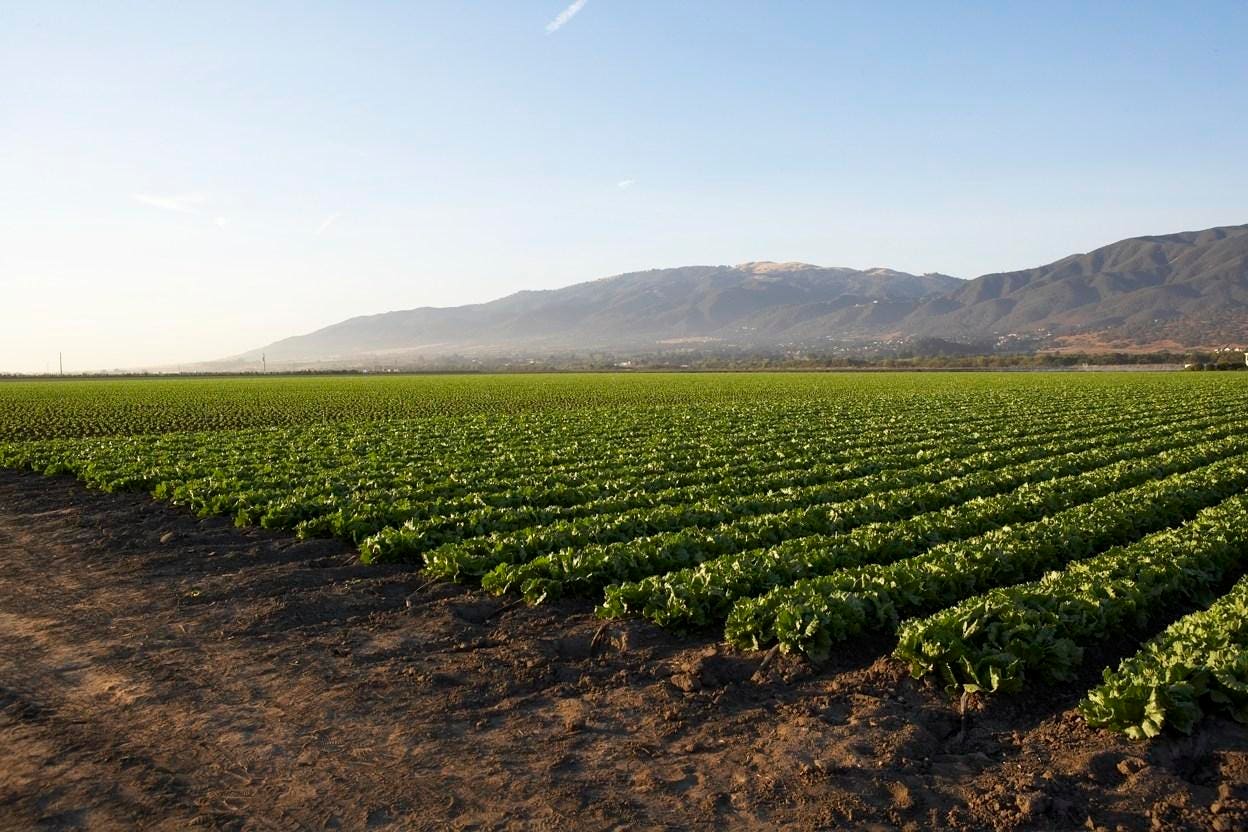
LGMA’s Romaine Test and Learn data-sharing program is now aggregating 40,000 pathogen tests … More
Fresh produce industry frontlines its own rigorous, science-driven standards – epitomized by a self-funded enforcement model and data sharing program to keep lettuce safe, with broad applications.
Despite chaotic multi-agency overhauls and unprecedented cuts to food safety oversight and scientific research under the Trump Administration, the safety of U.S. lettuce remains stringently regulated independently.
That autonomy to self-impose industry food safety mandates is paramount in context of a complex produce supply chain system and innate safety issues due to the nature of growing produce, says Tim York, CEO of the California Leafy Greens Marketing Agreement. This landmark self-funded food safety coalition outpaces FDA regulations to prevent and handle outbreaks and recalls that go back decades, according to York.
Rigorous Standards Come At A Steep Price
“LGMA has been an impactful effort. Here’s an example of a program the industry put in place, knowing full well it will be expensive,” says Dr. Max Teplitski, chief science officer at the International Fresh Produce Association. “Academic studies1,2 highlight the significant cost of the program,” one showing growers’ costs for LGMA compliance doubled, averaging $21,500 per acre, following its implementation.
LGMA standards are specific, measurable, and verifiable through self-funded mandatory California Department of Food and Agriculture certified audits. These third-party auditors work for and are paid by the State of California. LGMA then reimburses the State via LGMA member assessments, which avoids conflicts of interest, says York.
LGMA Mandates Shape Food Safety Across Row Crops
LGMA members that grow other commodities apply the regulatory mandates for leafy greens throughout their operations as a matter of course. LGMA standards inform the rest of their food safety practices and apply across all their row crop vegetables “because you can’t train your people, do all these great things when you’re growing leafy greens but if it’s broccoli, don’t worry about it,” adds York.
A USDA Economic Research Services study2 confirms: “Firms preferred to use LGMA standards on all their production rather than have different practices for different crops.”
LGMA’s mandated structure is groundbreaking and rare, says York, noting the California Cantaloup Advisory Board and Florida tomato industry have instituted member-mandated USDA state inspections and auditing programs.
LGMA Covers 55 Billion Servings Annually
California LGMA members (companies that ship and sell California-grown lettuce, spinach and other leafy greens products) with sister LGMA program in Arizona that is almost identical, cover an estimated 98% to 99% of their respective state production (based on USDA census data), or some 90% to 94% of the nation’s production. This equates to more than 55 billion servings of leafy greens consumed in the U.S. per year, in contextualizing foodborne illness risks [The servings calculation is based on production weight of leafy greens by LGMA members and then estimating a serving of leafy greens to average 3-ounces].
Widespread Safe Lettuce Consumption Doesn’t Negate Minimal Risk
FDA considers an outbreak as few as two people that got sick. U.S. consumers safely eat millions of servings of leafy greens daily, but the category has been repeatedly associated with incidents of foodborne illness, including a few serious, high-profile outbreaks. “Even though it’s a statistical anomaly or rounding error, that one person getting sick is still important to us,” says York. “An outbreak is a horrible thing. We need to find out how and why that happened, and then how do we prevent it in the future,” he says.
Smaller Farmers Can’t Afford To Join LGMA, Creating A Loophole
York is upfront about a loophole: “The remaining 1% to 2% of non-LGMA members are small independent growers primarily that are simply not capable, quite frankly, of adhering to our metrics and doing the kind of testing, the kind of analysis that’s required within our program.” They’re not equipped or it’s not economically viable on the scale in which they’re growing to implement those programs, albeit LGMA ensures they have access to all the resources to inform their own decision making. These are typically small local producers, farmers markets and direct to consumer business models, he explains.
Bottomline, “We’re in a commodity business, unless it’s in a packaged salad, romaine is romaine and spinach is spinach, so we can be affected, and that’s the lesson we talk about within LGMA is we’re all in this together. One guy gets tagged with bad romaine; it impacts virtually everybody.” In fact, the origin of a romaine outbreak in 2018 was traced to a non-LGMA member farm in Santa Barbara County, CA.
Buyers Must Restrict Purchases To Higher-Cost LGMA Products
Robust food safety measures cost more, and in a low-margin business, require buy-in down the supply chain. Getting retailers, food service operators and intermediary buyers to restrict their purchases to LGMA-certified products is challenging, yet critical to mitigate risk, says York.
LGMA meets once a month with the Leafy Greens Safety Coalition, which includes Walmart, Kroger, Costco, Wegmans, and Yum! Brands (KFC, Pizza Hut and Taco Bell), says York, also referencing other big players, such as Sysco and McDonald’s, to seek alignment in food safety standards and policies. “We don’t always align,” he says. It’s an open two-way dialogue to address food safety concerns and find common ground solutions.
FDA Rules Are Overly General When Specificity Matters
FDA is charged with developing a minimum standard that can be adhered to across 50 states, says York. Scientific, risk-based specificity is critical in the produce industry because of myriad variables, topography, agricultural production systems, weather patterns, etc., and overall unpredictability of growing in open environments. Even if you determine the likely cause of an outbreak, inherently complicated, the solutions may be narrowly directed.
LGMA Continues To Elevate Water Standards
For instance, FDA recently issued its first registered preharvest water treatment rule for produce — “It took 13 years (FDA’s Food Safety Modernization Act signed into law in 2011), York qualifies, an earlier version “was so bad, the industry complained, they withdrew it and went back to the drawing board.” LGMA has been ahead on water standards all along because it’s a potential vector for harmful pathogens and will be upgrading metrics further this year based on scientific learnings honed to variances in California and Arizona water systems and farming operations.
Romaine Pathogen Testing Model Sets New Safety Bar
LGMA is beginning aggregated data analysis of more than 40,000 pre- and post-harvest pathogen tests taken from 75,000 acres by its members since the 2023 launch of its Romaine Test and Learn data-sharing program, inspired by the FAA Aviation Safety Information Analysis and Sharing Program used to revolutionize commercial aviation. “When USDA or FDA does an investigation, typically they’ll take 50 samples they break down into 500 subsamples, and that’s across the entire season,” says York. “When talking about testing requirements around the acreage of romaine in California, you’re looking at millions of dollars, when the incidence of a problem is so very, very low,” he adds, “It’s like finding a needle in the haystack.”
