


Topline
Ancient DNA from the dire wolf, a species that has been extinct for at least 10,000 years, now lives on in three pups whose genes were edited by Colossal Biosciences to restore the “once-eradicated species through the science of de-extinction” in what the company says is its latest genetic breakthrough.
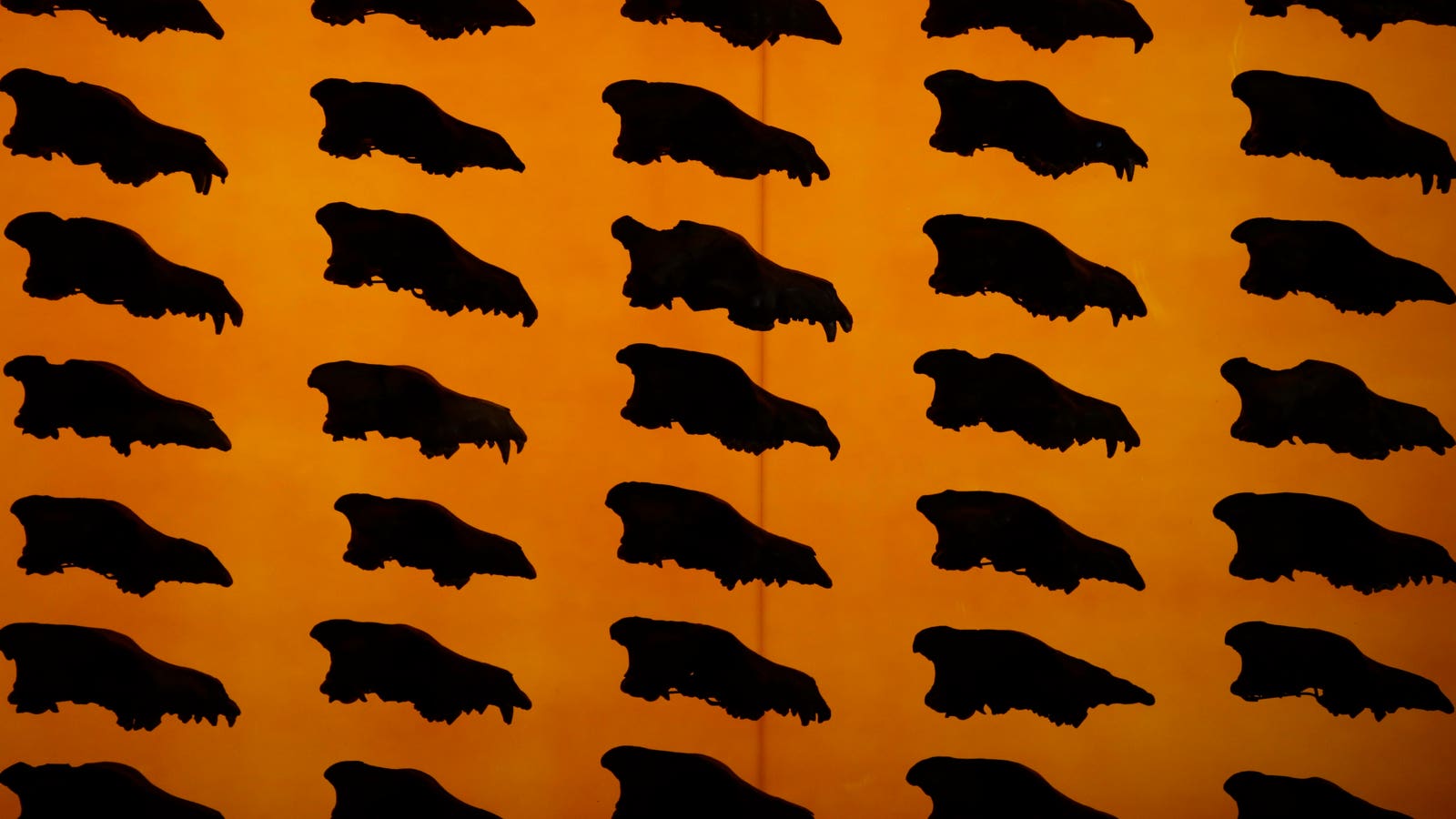
Dire wolf skulls found in La Brea Tar Pits are on display at the George C. Page Museum on Wednesday, … More
Key Facts
Scientists from Colossal said they rewrote the common gray wolf’s genetic code to match the dire wolf genome from preserved DNA, and used domestic dogs as surrogate mothers to birth three pups: Romulus, Remus and Khaleesi.
The dire wolf’s claimed return is being lauded by some as the first successful de-extinction effort of an animal whose live gene pool has been gone for thousands of years, though some experts are skeptical, with NewScientist reporting the wolves are really just genetically modified gray wolves that look kind of like dire wolves based on the limited gene edits made.
In March, the Dallas-based lab genetically engineered a brand new animal, the woolly mouse, to test connections between certain DNA sequences and specific traits of the extinct woolly mammoth, such as shaggy fur and accelerated metabolisms for cold weather.
The woolly mouse was a step toward bringing the woolly mammoth back to life, which has been a goal of the company since its founding in 2021, along with reviving the dodo and Tasmanian tiger.
What Is The Dire Wolf?
The dire wolf was the largest mammal in the dog family during the Late Pleistocene period, 129,000 to 11,700 years ago. The first fossils were found in the Ohio River in 1854, according to the National Parks Service. The wolf’s skull could reach 12 inches and while its size mimicked today’s largest gray wolves, its teeth were larger.
Forbes Valuation
Colossal, valued at $10.2 billion after a January funding round, was founded by Ben Lamm, whom Forbes values at $3.7 billion, and Harvard geneticist George Church, who does not have an equity stake in the company.
Conservation Value In De-Extinction
Colossal is researching how it can provide conservation value by using similar techniques to preserve endangered species. The company told Time it is in advanced discussions with the state of North Carolina about “conservation tools that can be used to help rescue the red wolf and accelerate its recovery.” The National Wildlife Federation classifies the red wolf as an endangered species. Colossal told Forbes in March it is also in talks with an island nation about biodiversity contracts to use the controversial science for the preservation of endangered species, but it did not specify which country and said no agreements were signed yet.
Contra
While bringing a species back from extinction using genetic engineering is significant, experts remain skeptical about using the tactic to address biodiversity or climate change. “I think that bringing back the mammoth is ill-advised, ill-thought-through and a stunt to attract investments in their company,” Karl Flessa, a professor of geosciences at the University of Arizona, told Forbes in February. “Releasing genetically modified organisms into the environment—what could go wrong?”
Further Reading
Meet The Billionaire CEO Trying To Resurrect The Woolly Mammoth (Forbes)
The Return of the Dire Wolf (Time)
What Is a Dire Wolf? How Formerly Extinct Species Compares to Gray Wolves (Newsweek)
