


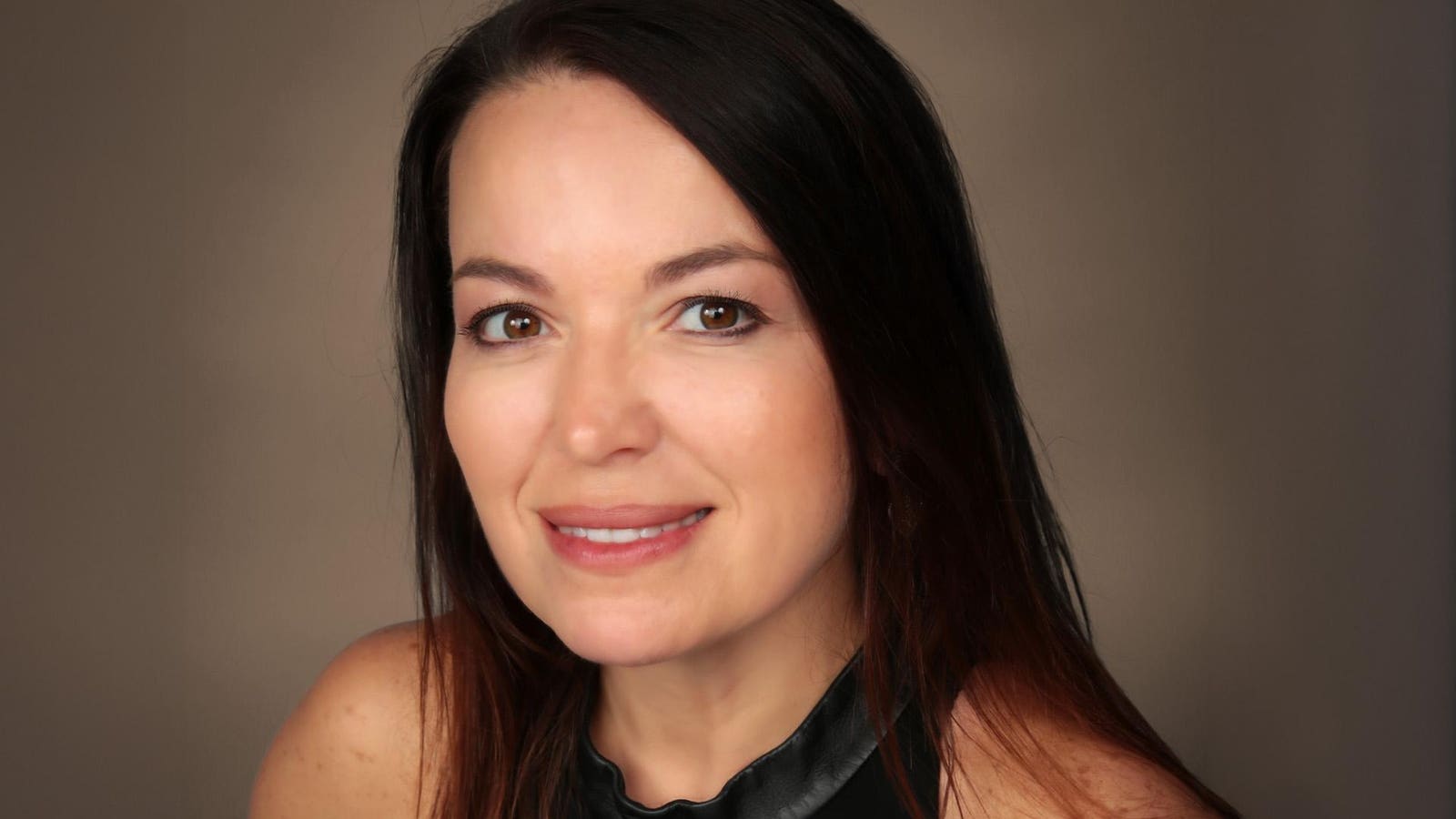
The publicly traded kefir company Lifeway is fighting a takeover by the French dairy giant, its partner of more than 25 years. But for CEO Julie Smolyansky, the Ukraine-born daughter of Lifeway’s founder, it’s personal—and her mom and brother are not on her side.
Last September, Julie Smolyansky, the CEO of kefir brand Lifeway Foods, saw an ominous email at 4 a.m. Chicago time (11 a.m. in Paris) from Danone, the French-based dairy giant that had first invested in her father’s business back in 1999 and currently owns just under 25%. Danone was requesting a meeting in three hours. During the call, the executives revealed that they intended to buy a controlling stake in the Nasdaq-listed business—and they didn’t seem to care much about what Smolyansky thought about it.
“I didn’t even get the courtesy of ‘let’s have lunch’ or ‘let’s talk,’” says Smolyansky, who has run the fermented beverage business—a cousin of drinkable yogurt—since 2002 and, who, along with her mother and brother, controls some 45% of Lifeway’s stock. “I’m not going to be bullied,” she says. “I’m not afraid.”
The phone call was the culmination of years of acrimony between Smolyansky and Danone, which Lifeway accuses of a host of nefarious behavior aimed at undermining the business including blocking the Illinois-based company from expanding internationally and refusing to help it source cheaper raw ingredients. Smolyansky also believes that Danone used their seat on Lifeway’s board to access competitive information and trade secrets after Danone acquired Wallaby Yogurt in 2017. Danone denies these criticisms, and says that Lifeway regularly utilized its right to shield information from its board representative, though Lifeway didn’t know about the acquisition until it was announced publicly.
Smolyansky contends that Lifeway has been hamstrung for decades by her father’s 1999 agreement with Danone, when the French company invested $6.5 million (or about $12 million in today’s terms) for an initial 15% stake in the company. She insists that the agreement, and a “support agreement” signed in conjunction, took advantage of her immigrant father’s lack of a formal business education. She calls Danone “predatory” and says she believes a Danone takeover could ruin the family business—and recipe—that she’s fought so hard to preserve.
Danone pushes back, responding that, despite the founding family’s involvement in Lifeway, it must uphold the rights of all shareholders. “Lifeway is a publicly owned company and not a ‘family business,’” a Danone representative tells Forbes. “Lifeway sought Danone’s investment, and without it Lifeway would not be the company it is today.”
Back From The U.S,S.R.: As a Soviet refugee in America, Michael Smolyansky founded Lifeway in 1986. Two years later, he became the first Soviet to take a company public.
Lifeway
Following their September call with Smolyansky, Danone offered shareholders a full buyout at $25 per share, a 19% premium over the share price. Lifeway’s board, which is chaired by Smolyansky, rejected the offer. Two months later, Danone upped its bid to $390 million or $27 per share. Lifeway’s board also rejected that offer, maintaining that despite the hefty premiums, that those prices undervalued the business. Lifeway’s only analyst, Ben Klieve at Lake Street Capital Markets agrees, saying that “a competitive bidding process would likely be well above.” Deals for natural foods, he notes, have commanded multiples of more than three times sales, and Danone’s offers are less than two times. Lifeway shares are currently trading at around $24.
Prior to the second bid, the Lifeway board agreed to a hostile takeover defense known as a “poison pill”— which gives existing shareholders the right to buy additional shares, if any shareholder that owns more than 20%, like Danone, upped its stake, diluting any takeover attempt. The poison pill also prevents Smolyansky’s mother Ludmila and her brother Edward from selling their shares to Danone, the largest individual shareholder with nearly 23% ownership.
Currently, Smolyansky owns nearly 18% of Lifeway shares. Edward owns nearly 21% and Ludmila owns 6%. (Edward disputes his sister’s total share count and believes more than 300,000 shares are invalid). The combined family stake had been over 50% for years but fell under the threshold as shares have been sold. The family can only sell up to 2% of shares annually, according to the 1999 shareholder agreement. If they sell more, Danone has the right of first refusal.
Danone disputes that its takeover attempts have been hostile. The $29 billion (2024 revenue) dairy conglomerate filed a lawsuit last month in Illinois state court alleging that Lifeway violated its shareholder agreement with Danone by issuing about $7 million worth of shares to Smolyansky in December 2024. “This was a flagrant breach of the shareholder agreement between Danone and Lifeway, which Lifeway had adhered to, acknowledged as valid, and cited in its SEC-filed documents for more than 25 years,” the Danone representative says. “This litigation is intended to safeguard Danone’s rights as a significant Lifeway shareholder and is unrelated to Danone’s good faith attempts to negotiate an agreement to acquire Lifeway.”
Lifeway filed a countersuit last week, denying it breached its contract or its fiduciary duty with Danone, and claiming that the French giant has “unclean hands” by having “caused damage to Lifeway and its shareholders.”
Complicating matters – as if they needed to be more complex – is the fact that Smolyansky’s mother and brother are not on her side. After the board fired her younger brother, Edward, in 2022, Smolyansky has been dealing with a three-year-long proxy battle led by Edward and their mother to replace her as CEO. In November of last year, two months after Danone’s initial offer, Edward and Ludmila publicly proclaimed that they favor the buyout. “We just want this to be wrapped up with no more bloodshed,” says Edward, 45.
Their dispute took another turn in January when Smolyansky filed a lawsuit against her brother over 1.3 million shares, representing about 8.5% of the company. According to the lawsuit, their father’s will split his shares evenly between her, Edward and their mother. But the then-20-something siblings, who lacked legal representation outside of the company’s lawyers, allegedly agreed to have their portion of their father’s shares transferred to their mother to avoid taxes. At the time, Smolyansky and her brother each already owned 1.9% of the company. The lawsuit claims that the plan was for Ludmila to eventually transfer the shares to each child equally. And that started in 2015. But the last evenly split transfer was in 2019. All shares since have gone to entities that Edward controls, according to the complaint, which contends that Ludmila offered to resume the even split if Edward were rehired at Lifeway with a $1 million salary. Edward declined to comment on the pending litigation and filed a motion to dismiss the case at the end of March. Smolyansky says she is prepared for a battle.
“I come from a long line of survivors in the Soviet Union, a land of war, scarcity and famine,” says Smolyansky, noting that her grandmother lived through the 1941 Babyn Yar massacre in Kyiv. “All of my ancestors are with me and they’re helping me. I have an obligation to continue to fight and survive.”
Her 75-year-old mother, Ludmila, doesn’t seem to see it that way. In an unflinching statement shared with Forbes through a spokesperson, she says: “Under my daughter Julie’s misguided leadership, the board has prioritized control over fairness, throwing away the values that made Lifeway successful. Instead of respecting shareholders and fostering open competition, they have used legal intimidation and corporate maneuvering to entrench their own power — ignoring the voices of those who helped build an outstanding company. That is not the American dream. That is not capitalism. It is hypocrisy.”
Lifeway is a prize worth fighting for. Coming off more than five straight years of record growth, it now has a 95% market share of the kefir category it pioneered. Lifeway’s gut-friendly fermented drinks are sold at nearly every major retailer nationwide, including Walmart, Amazon, Kroger, Costco, Safeway and Whole Foods. Annual sales hit $186 million last year, up 17% since the year prior. The company’s net profit margin has doubled since 2021 to north of 6.5% and Lifeway has no debt. If Danone has been undermining the business for decades, they haven’t done a very good job. Smolyansky contends, unsurprisingly, that Lifeway is thriving in spite of Danone’s maneuvering.
The story of Smolyansky and her parents, who started Lifeway after escaping the Soviet Union and defecting to America in the 1970s, was for decades a classic American dream success story. In 1976, the Kyiv-born Smolyansky, then one, fled the Soviet Union (from what is today Ukraine) with her parents. The family of three “defected in the middle of the night” with the equivalent of $116 in their pockets. After three months in Rome as refugees, they settled in Chicago.
Happier Days: Ludmila and Michael Smolyanksy fled the Soviet Union in 1976 with their one-year-old daughter, Julie.
Lifeway
Having worked in a hair salon and as a nail technician, Ludmila Smolyansky wept the first time she saw the abundance in an American supermarket—and soon she and her husband Michael opened Chicago’s first Ukrainian deli in 1978. The next year Ludmila gave birth to Edward. Years later, as Ludmila and Michael, walked the aisles of a food trade show in Germany for a food import business they owned, they saw the fermented dairy drink kefir being marketed. “America has everything,” he told her, “but it doesn’t have kefir.”
The Smolyanskys had been fermenting kefir in their homes for generations, so Michael convinced his mother back in Ukraine to secretly ship him some of his family’s cultures. She hid the contraband in a roll of women’s stockings.
“It’s a real family legacy of this original recipe,” says Smolyansky. “You can’t make this up in a private equity office.”
Thanks to the couple’s deli and grocery connections, their kefir, which is a traditional health drink in large swaths of Eastern Europe, secured distribution in dozens of stores nationwide and found an instant audience among Soviet immigrants.
But Michael was dreaming bigger. After researching IPOs at his local library and writing his own business plan, he became the first Soviet immigrant to take a company public in America, when Lifeway debuted on the Nasdaq in 1988.
Glasnost: When Julie Smolyansky met former Soviet president Mikhail Gorbachev, he recalled Lifeway and her father. According to Smolyansky, Gorbachev told her: “We’re so proud of you. Keep going.”
Lifeway
Lifeway even played a small role in the end of the Cold War. During the Moscow Summit in 1988, President Ronald Reagan gifted a case of Lifeway’s kefir to Soviet President Mikhail Gorbachev—as proof of what Soviet refugees can accomplish in a free market.
By the age of 11, Julie Smolyansky was helping her father give out samples at local grocery stores. A year into her graduate program at the Illinois School of Professional Psychology in 1996, she quit to work at Lifeway full-time. The business had $6 million in annual revenue, the equivalent of around $12 million today.
Smolyansky was being groomed to lead the business, but it came much sooner than she imagined—in 2002, Michael died of a sudden heart attack. While sitting shiva that night, Smolyansky recalls overhearing her father’s friend saying “there’s no way a 27-year-old girl can run this company. Sell your stock.” The next day shares cratered nearly 30%.
But thanks to her family’s 51% ownership and the vote from Lifeway’s independent board, Smolyansky still became CEO, fending off a company lawyer who she says had launched a covert bid to name himself as chief executive. At 27, she was America’s youngest female CEO of a publicly traded company.
Soon after she took the reins, Smolyansky says she realized the business was being held back by the deal her father had struck with Danone. Smolyansky says Lifeway was promised help with sales brokers and distribution as well as purchasing milk to secure cheaper prices, as detailed within the support agreement signed alongside the shareholder agreement. It lasted for three-years. But, Smolyansky says, nothing ever happened. And it never got renewed. Even worse, the shareholder deal stipulated that, without Danone’s consent, Lifeway couldn’t access other financing (no debt, no strategic investments) and Smolyansky couldn’t earn stock options as CEO.
“They waved a carrot in front of my naive immigrant father who had this global company knock on his doors,” says Smolyansky. “We can’t move left or right, up or down. They stifled us. They lied to us.”
Danone denies that it has impeded or obstructed Lifeway over the years, and describes Lifeway and the Smolyansky family as being “sophisticated business counterparties represented by equally sophisticated counsel.” And even if Danone turned down helping Lifeway expand internationally, Smolyansky did it anyway. Lifeway is sold in at least seven countries outside the U.S., including France, Ireland, Mexico and South Africa.
Growing Gains: Lifeway’s products will soon be in more locations of Publix and CVS.
lifeway
Over the years, Smolyansky has tried to get out of the deal. Danone claims to have delivered on its obligations, after providing the Smolyanskys with the cash they desired, and that it is defending the shareholder agreement in court. But Smolyansky now argues that the agreement is illegal under Illinois state law because it was never voted on by all shareholders.
And as the partnership soured, the Smolyanskys’ American Dream has turned into a nightmare. The deal exacerbated fractures inside the family because it prevented Lifeway shareholders from freely considering an exit. “This contract has hurt my family,” Smolyansky says. “It has created an extra stress on us that was unnecessary.”
The family drama has been brewing for nearly a decade. In 2019 the board hired an independent law firm to investigate Edward’s conduct. It resulted in his removal as Lifeway’s treasurer and being placed on administrative leave. The saga took an especially nasty turn in 2022, after a second independent investigation led to the board voting to fire him, with his sister abstaining. Then Lifeway’s COO and board director, he had worked at the brand for 20 years. After that, Edward did not stand for reelection to the board. Ludmila’s consulting agreement also ended. Soon after she resigned from the board. “It was complete betrayal,” recalls Edward, who adds that, after being hospitalized in 2022, he’s happier and healthier. Smolyansky currently has a restraining order against him.
A shareholder-wide vote on the board is planned for Lifeway’s annual meeting, likely this summer. Edward, whose shares have 18% of total voting power, predicts that his sister and the board to lose the election. Ludmila has 6%, and officially votes as a group with Edward. Smolyansky has 14.5% of the vote. “We are on the side of all the shareholders, including my sister,” says Edward. “But it’s time for everyone to get out of the way. Let the professionals take over this brand.”
Smolyansky responds that her brother isn’t acting in shareholders’ best interest but out of a vendetta against her. The company, she insists, has never been stronger. Over the past five years, shareholders have enjoyed returns of 1,175%. And Smolyansky points to Danone’s past U.S. acquisitions—especially the 2017 purchase of Boulder, Colorado’s WhiteWave Foods for $12.5 billion which included Horizon, the largest organic dairy brand in America, as well as Lifeway competitor Wallaby—as a cautionary tale.
Under Danone, Horizon stopped sourcing milk in New England entirely and dropped 89 organic dairy farms, upending the businesses of families that had supplied Horizon for years. Then when the organic dairy division’s subsequent weak performance dragged down Danone’s sales and operating margin growth, it sold a majority stake in Horizon and Wallaby, then 3% of Danone’s global revenues, to a California-based private equity firm.
Smolyansky says of Danone, “Are they going to wipe out my grandmother’s recipe, our legacy, that Ukrainian history, all that we’ve done?”
More From Forbes
