


KARACHI:
Although late, as usual – a trait of any developing conservative country – Pakistan has finally decided to adopt cryptocurrency. However, better late than never.
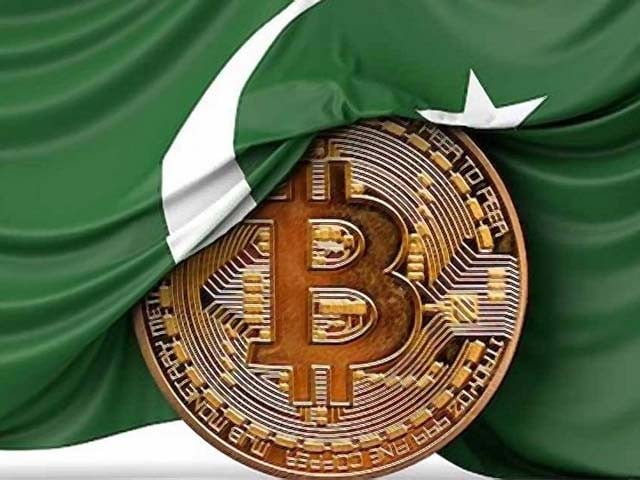
Prime Minister Shehbaz Sharif, on March 15, 2025, constituted the Pakistan Crypto Council (PCC), mandated to introduce new regulatory guidelines for launching digital currency – a move backed by all key stakeholders.
The five-member council will be chaired by Finance Minister Muhammad Aurangzeb, while his chief adviser, Bilal Bin Saqib, will serve as the Chief Executive Officer, according to a notification issued by the Ministry of Finance.
When cryptocurrency was emerging as a global trend, the State Bank of Pakistan (SBP), the government’s autonomous financial arm, issued an order declaring it illegal. That declaration was bound to be ineffective, as cryptocurrency thrives precisely because it is not regulated by any central bank – a liberating fact that attracts the masses.
The Federation of Pakistan Chambers of Commerce & Industry (FPCCI) once released a research report stating that, around three years ago, Pakistani individuals collectively held $20 billion in cryptocurrency. This demonstrates how deeply cryptocurrency has penetrated Pakistani society, despite SBP’s efforts. Instead of preventing its adoption, the SBP’s stance merely slowed progress – a recurring phenomenon in many sectors, contributing to the country’s sluggish economic growth. The purpose of the SBP statement was to evade any potential responsibility in case something went wrong, as every new venture carries risks along with potential benefits.
Meanwhile, although cryptocurrency has long been legal in the United States, former President Donald Trump has recently taken a more pro-crypto stance, reflecting the US government’s growing interest in digital assets and the geopolitical implications surrounding the dollar and the idea of shared currency by BRICS.
Trump embraced crypto as a campaign issue, appealing to younger voters and libertarians while still emphasising the importance of the dollar. During his campaign, he courted crypto donors and stated that he wanted the US to lead in crypto innovation, although initially, he criticised the Biden administration’s crypto policies, framing crypto as a tool for financial freedom.
Pundits see the formation of a “Crypto Council” by the US and pro-regulation moves as attempts to maintain US financial dominance. Others suggest that the US is trying to prevent crypto innovation from moving offshore, especially as other countries – like the EU with The Markets in Crypto-Assets Regulation (MiCA) – set their own rules. Some blockchain evangelists indicate that US lawmakers are pushing for clearer crypto regulations to prevent China or BRICS from gaining an edge.
There’s growing speculation that the US sees crypto as a way to counter BRICS’ de-dollarisation efforts. While BRICS is working on a gold-backed currency, the US might be hedging its bets by supporting crypto as an alternative global financial system. However, while crypto will not replace the dollar anytime soon, it could serve as a parallel system if dollar dominance erodes.
Economists believe that the concept of BRICS introducing a common currency is far-fetched. They argue that any country or group of countries with a strong currency would need to act as a paymaster for weaker nations that may seek loans, debt relief, and grants during challenging times. Currently, there doesn’t appear to be any country within BRICS willing to take on that role in the near future.
A question arises regarding Pakistan’s approach to attracting foreign investors, especially given the limited opportunities for modern businesses. Is Pakistan following the lead of the United States, or is it acting independently in forming the PCC to adopt cryptocurrency and integrate it into its financial system?
President Donald Trump has announced the creation of a US “Crypto Strategic Reserve,” encompassing five cryptocurrencies, including Bitcoin and Ether, said Dr Abid Qaiyum Suleri, the Executive Director of the Sustainable Development Policy Institute (SDPI). This initiative is part of his broader vision to make the US the “crypto capital of the world.”
Trump’s administration has rolled back restrictive policies from the Biden era and introduced regulations to foster innovation in blockchain and digital assets. His executive orders also aim to centralise government-held crypto assets and encourage private sector growth, signalling a major shift in US policy.
“I don’t think there is a deliberate attempt from Pakistan to align with the US policy shift. However, the timing coincides well with the policy shift to crypto in Washington,” he added.
Geoeconomist Mustafa Hyder Sayed also believes that although “this is an independent act,” it will enhance cooperation between Pakistan and the US.
He explained that it is a welcome move, as Pakistan will transition into an integrated economic system where cryptocurrency plays a crucial role. Various central banks are now holding reserves of cryptocurrencies.
He stated that although Pakistan is late in crypto adoption, state-level adoption of cryptocurrency is still a relatively recent phenomenon, and no other developing country has taken significant steps so far.
As per precedent, Pakistan will continue to engage with the US, as it remains Pakistan’s largest export destination. However, Pakistan welcomes investment from all countries.
In South Asia, Pakistan is an important economic destination, which is why other countries, especially the US, focus on it, he said. Pakistan should build crypto reserves and formally recognise cryptocurrency.
With a young population familiar with advanced technology, NFTs, and digital currencies, Pakistan has the potential to provide backend services to cryptocurrency systems of other countries, creating another stream of income for the country.
Sajjad Mustafa Syed, President of the Pakistan Software Houses Association (P@SHA), says Pakistan established the Cryptocurrency Council to keep pace with global trends and to meet the demands of its estimated 20 million cryptocurrency users. This move aligns with Pakistan’s broader financial and economic policies, which aim to attract foreign investment, enhance financial inclusion, and promote technological innovation. By regulating and promoting blockchain technology and digital assets, Pakistan seeks to modernise its economy.
This will increase capital inflows, attract foreign investors interested in digital assets, improve financial access, and provide low-cost financial services to the unbanked population.
The most important thing crypto acceptance will provide is global connectivity, he said. “Cryptocurrency is a growing global trend with all countries setting up their reserves; Pakistan is just being part of the global trend.”
Cryptocurrency adoption could significantly benefit Pakistan by attracting foreign investment. Investors interested in digital assets and blockchain technology may see Pakistan as an emerging market, boosting capital inflows and economic growth.
It will improve financial inclusion. Cryptocurrencies can provide affordable and accessible financial services to underserved populations, particularly those without access to traditional banking, by leveraging mobile technology and decentralised platforms.
The long-term impact of global trade moving to crypto is still unclear. However, cryptocurrency has the potential to reduce Pakistan’s reliance on the US dollar by enabling international transactions without the need for large dollar reserves, Mustafa highlighted. However, exchange rates of various currencies would still have to be managed.
The launch of the PCC will integrate blockchain technology into Pakistan’s financial system, said SDPI’s executive director. The PCC will not only establish clear regulations but is a step in the right direction to attract international investment and claim Pakistan’s space in blockchain-powered finance. With an estimated 15-20 million crypto users and a young, tech-savvy population, one can rightly see blockchain as a tool for remittances, trade, and financial inclusion.
We are slightly late in this endeavour, but through international collaborations, we can adopt best practices to avail the opportunities presented by crypto power, he added.
However, cryptocurrencies will come with their own set of challenges. Their volatility and limited acceptance by some countries could hinder their effectiveness as a dollar alternative, he said. Developing a central bank digital currency (CBDC) could provide a more stable and government-backed option to achieve this goal.
Widespread cryptocurrency adoption introduces several risks that national economies, including Pakistan’s, must address, P@SHA’s president said. Sharp price fluctuations can destabilise markets and erode public trust. The decentralised nature of cryptocurrencies complicates oversight, potentially enabling illegal activities like money laundering.
The writer is a staff correspondent
