


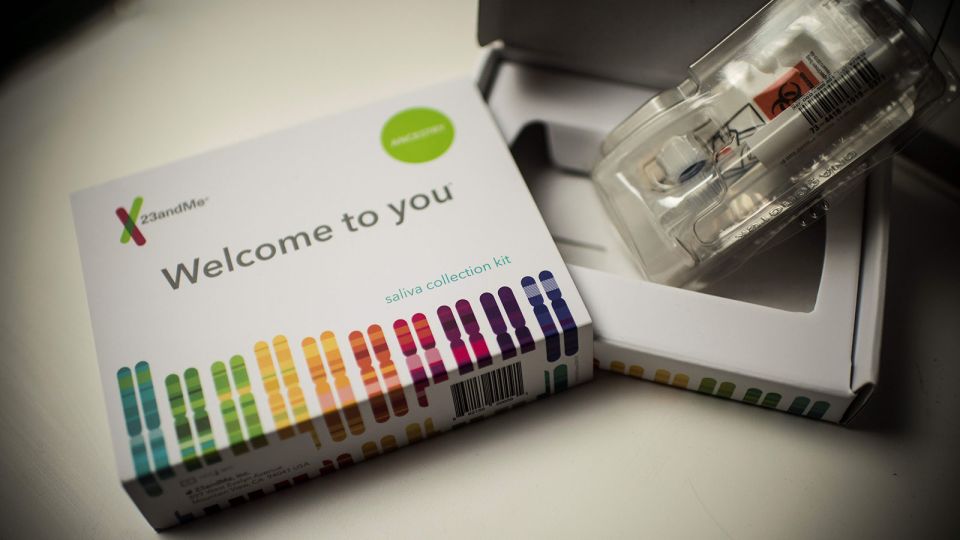

23andMe, a standard-bearer for the at-home health movement, announced on March 23 that it has filed for Chapter 11 bankruptcy to facilitate a sale, prompting many of its 15 million customers to wonder: What happens to my genetic data now?
Privacy advocates and two state attorneys general have urged Americans to delete their data on the service, even as 23andMe said the bankr uptcy won’t change how it handles user data.
It’s unclear what’s next for 23andMe, but experts say there’s a big incentive for corporations and researchers alike to get their hands on the company’s trove of genetic data.
Genetics can reveal a lot about a person, from their health predispositions to their food preferences, offering a rare glimpse into details about a person and their family for generations to come. Despite possible privacy issues, genetic data offers huge potential for everything from medical research to advertising.
“Genetic data is permanent and unique,” said Katie Hasson, associate director for the Center for Genetics and Society. “It could reveal information about people who don’t exist until many years from now.”
23andMe says on its website that any buyer must comply with laws around handling customer data. The company plans to continue selling kits and offering subscriptions.
Gideon Nave, an associate professor of marketing for the University of Pennsylvania’s Wharton School, told CNN that any company looking to personalize their products or advertising would find such data highly useful.
For example, genetics can be linked to certain taste preferences in food. Researchers from the University of Edinburgh and Human Technopole, Milan found that hundreds of genetic variants were tied to likings of specific foods.
Nave, who co-authored a paper on the potential uses of genetic data in marketing, said genetic data can be more telling than what’s in your grocery cart since the purchased items could be for someone else.
“In some cases, genetic data is more informative than even what people say that they eat,” he said.
The most obvious use for genetic data is discovering one’s health predispositions; 23andMe offers a subscription that shows whether a person’s DNA is associated with a likelihood for certain diseases, such as Type 2 diabetes or celiac disease. That’s why this type of data could also be helpful for healthcare research and developing personalized medicine, Nave said.
There’s also promise in combining genetic information with clinical data to make more accurate diagnoses, according to Vasant Dhar, a professor of business and data science at New York University’s Stern School of Business. That’s why he believes 23andMe’s bidders will most likely be interested in using the data for health and medical research.
