



Smith Collection / Gado/Getty Images
-
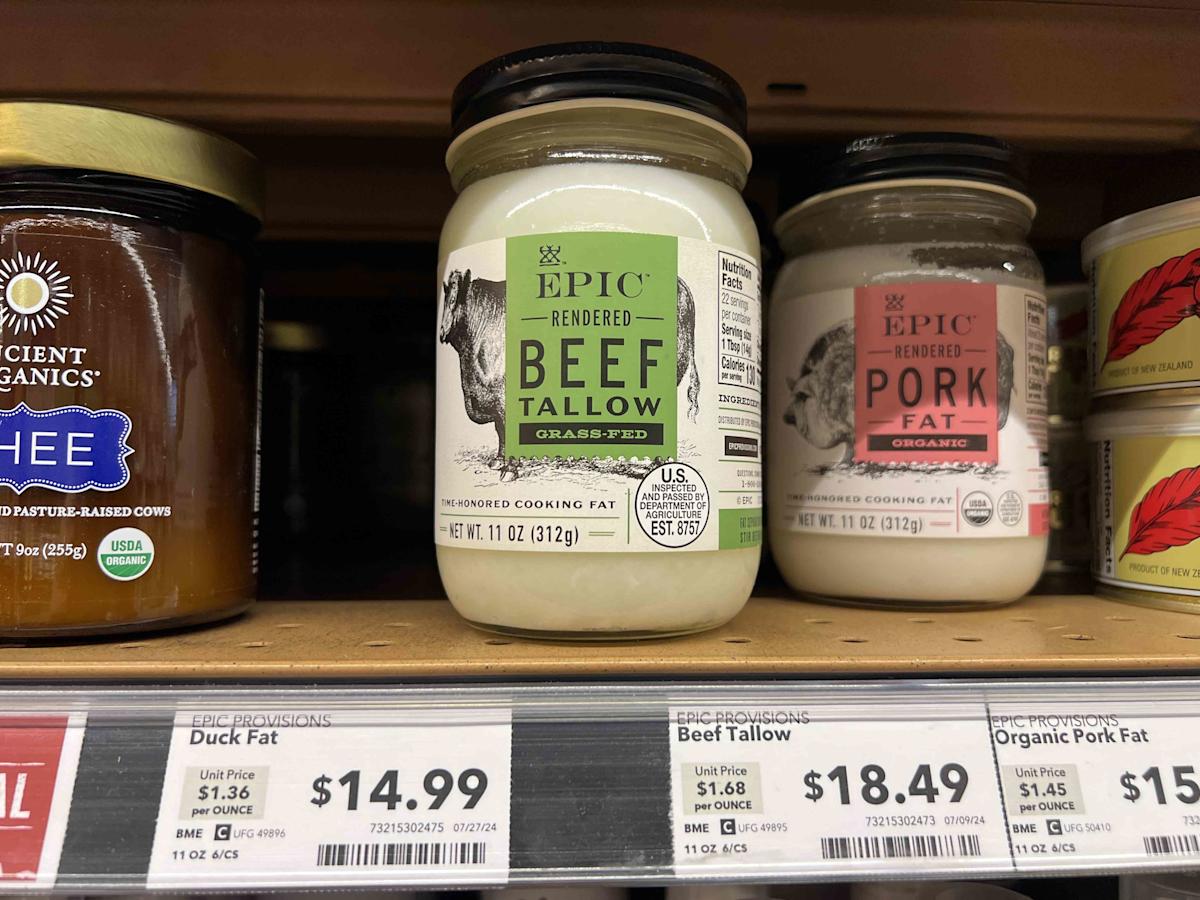
Beef tallow, a type of oil used for cooking, is growing more common at restaurants, including Steak ‘n Shake.
-
Proponents say the fat has flavor and health benefits, though nutritionists advise that seed oils can be a better choice.
-
Datassential, a food service insight firm, estimates 8% of restaurant menus will feature beef tallow in four years.
There was bone marrow. There was duck confit. Now beef tallow is the cooking medium of the moment.
Tallow—basically, beef fat cooked down to solid form—is coming up in food conversations across the country these days. It was a hot topic at a restaurant convention in New York City earlier this week, and Health and Human Services Secretary Robert F. Kennedy Jr. recently scarfed down fries cooked in the fat at a Steak ‘n Shake in Florida.
Fans laud its flavor and tout health benefits, arguing for its superiority to seed oils like canola and vegetable oil. The ingredient is showing up on a growing number of restaurant menus, in packages of chips and frozen fries, and even in beauty products.
“I hear about it all the time,” said Brian Goodman, who sells meats to restaurants for New Jersey-based distributor Marx Foodservice, which specializes in antibiotic-free, pasture-raised beef from New Zealand. “I have four people looking for it as we speak.”
Americans’ moves toward tallow may be a matter of palate preferences, ideological leanings—Kennedy, a Trump appointee, has boosted the slogan “Make America Healthy Again”—or efforts to eat healthier.
Diners’ motivations aside, it seems to be catching on in restaurants. Mentions on menus rose more than 40% from late 2023 to late 2024, according to Technomic, a food service insights firm. Steak ‘n Shake said this spring that it was moving away from seed oils and cooking fries, onion rings and chicken tenders in tallow instead.
Kennedy said a number of restaurants, including Popeyes, Outback Steakhouse and Buffalo Wild Wings, have or are in the process of transitioning away from seed oil while dining at Steak ‘n Shake on Fox News. (All three restaurants say in allergen guides that beef tallow or shortening may be used to prepare some dishes.)
“We want to do everything that we can to incentivize these companies to be transparent, to switch over from ultraprocessed food,” Kennedy said on Fox News earlier this month in Florida.
It’s far from a staple. The portion of tallow produced for human consumption each year has grown from about 16% to 17% over the past decade, according to the North American Renderers Association, a trade group. Datassential, a food service insights firm, expects the ingredient to land on 8% of menus in the next four years, though it’s currently on less than 1%.
