


(Bloomberg) — European natural gas prices dropped after Moscow and Kyiv agreed to a partial ceasefire in the Black Sea, feeding speculation it’s the first step toward broader peace talks that could help bring back some Russian supply.
Most Read from Bloomberg
Benchmark futures fell as much as 3.7% as traders assessed the outcome from talks in Saudi Arabia involving US, Russian and Ukrainian officials.
Ukrainian President Volodymyr Zelenskiy said his forces would observe the partial ceasefire immediately, and another round of talks with the US may take place soon. The Kremlin confirmed the agreement on safe navigation in the Black Sea, but said it was dependent on some sanctions relief.
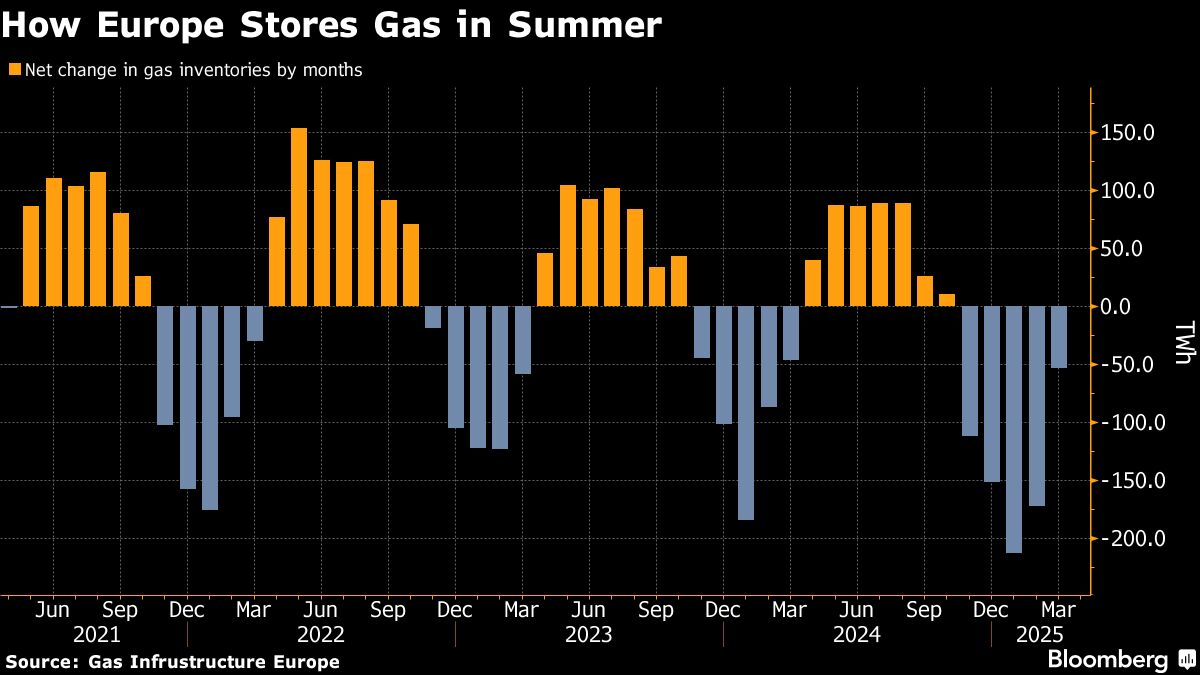
Europe is ending winter with inventories lower than usual, raising the prospect of a challenging stockpiling season. Russian pipeline flows across Ukraine stopped at the start of January when a transit agreement expired, meaning Europe now receives even less fuel from its former top supplier.
Delegates attending the Financial Times Commodities Global Summit in Lausanne this week said limited volumes of Russian gas could return, including via the link that transits Ukraine. But, even if a full truce were secured, that would take time.
“We don’t see a lot of volumes coming before 2026,” said Marco Saalfrank, head of continental Europe merchant trading at Swiss utility and trader Axpo Holding AG. Transportation agreements would take time to draft, while one of the possible routes — an undamaged Nord Stream 2 pipeline from Russia to Germany — would require authorizations from a number of European nations to be used, he said.
In a tight market, Russian pipeline and liquefied natural gas is the only spare source of supply, according to Anne-Sophie Corbeau, a researcher at Columbia University’s Center on Global Energy Policy. Allowing Ukraine transit to resume could make some Eastern European leaders happy and lower regional prices, she said on a panel.
Read Also: US Sees Russia, Ukraine Choosing a Longer War Over Bad Deal
Seasonal prices continue to point to a lack of market incentives to refill gas inventories during the summer. There’s a risk that storage injections will be slow at the beginning of the season as traders await a price correction or more supply to the market.
