


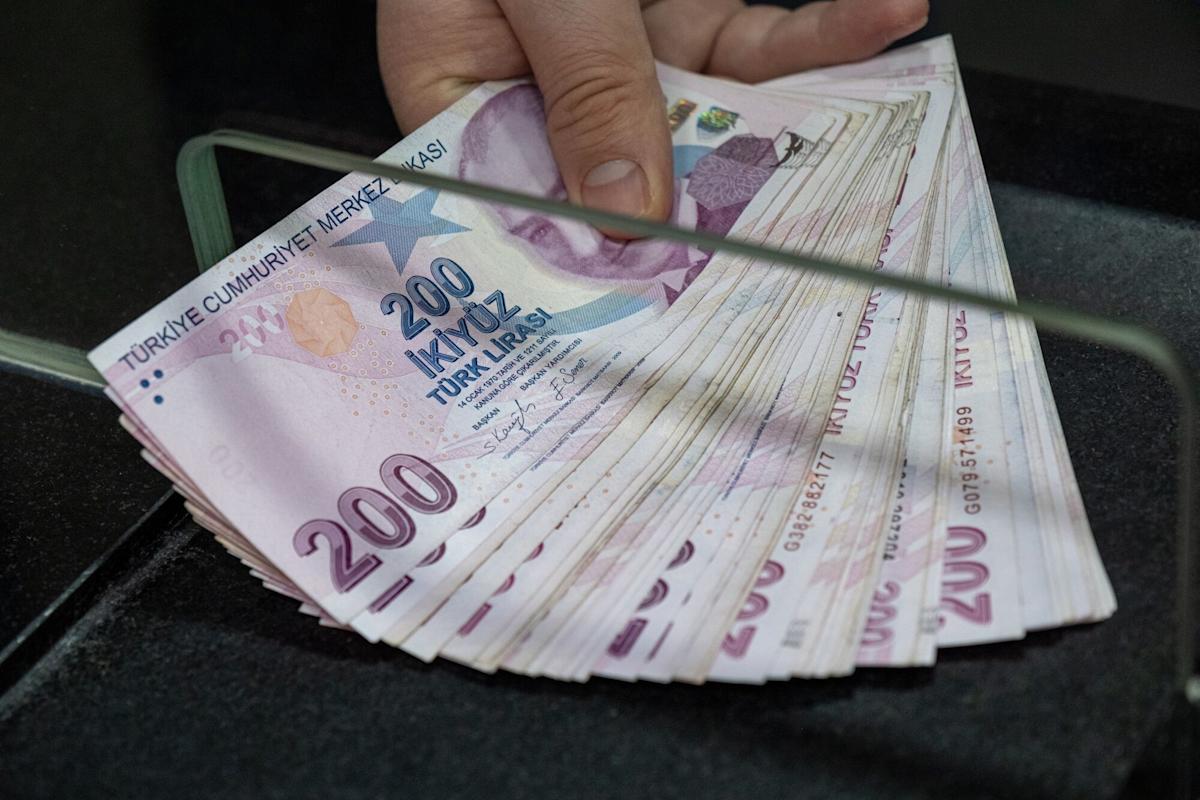
(Bloomberg) — Turkish markets began the week on edge as the cost of borrowing lira and insuring the country’s debt against default stuck near their recent highs after the formal arrest of President Recep Tayyip Erdogan’s main political rival over the weekend.
Most Read from Bloomberg
Authorities scrambled to shore up the nation’s assets, with Treasury and Finance Minister Mehmet Simsek meeeting with regulators on Sunday, and the central bank in contact with lenders over last week’s market turmoil — which was sparked by the detention of Istanbul Mayor Ekrem Imamoglu on corruption charges.
As markets opened on Monday, the lira resumed its drop, falling 0.3% against the US dollar. The five-year credit default swap — a measure of Turkey’s debt risk — was at 319 basis points, near a one-year high.
The benchmark stock gauge, meanwhile, soared 3% and banking shares led the rebound, after the capital markets regulator banned short-selling and eased share buybacks.
Read: Turkey Bans Short Selling, Eases Buyback Rules to Bolster Stocks
Anti-government demonstrators clashed with police through Sunday following the jailing of Imamoglu. His detention last week sent markets into their sharpest nosedive in years after a period of comparative political calm and investors are watching to see if the protests spread.
The case has the potential to keep Imamoglu, who denies the charges, behind bars for years and prevent him from running against Erdogan in the next elections. He is the most prominent person to be ensnared in a recent wave of detentions and investigations against opposition figures.
The cost of borrowing lira in the offshore market jumped to almost 100% from 36% Friday. The sharp increase signals that authorities may be engineering a shortage of the currency to make it harder for investors to borrow lira in order to place bets on it weakening further.
Read: What Arrest of Erdogan’s Top Rival Means for Turkey: QuickTake
Most Read from Bloomberg Businessweek
©2025 Bloomberg L.P.
