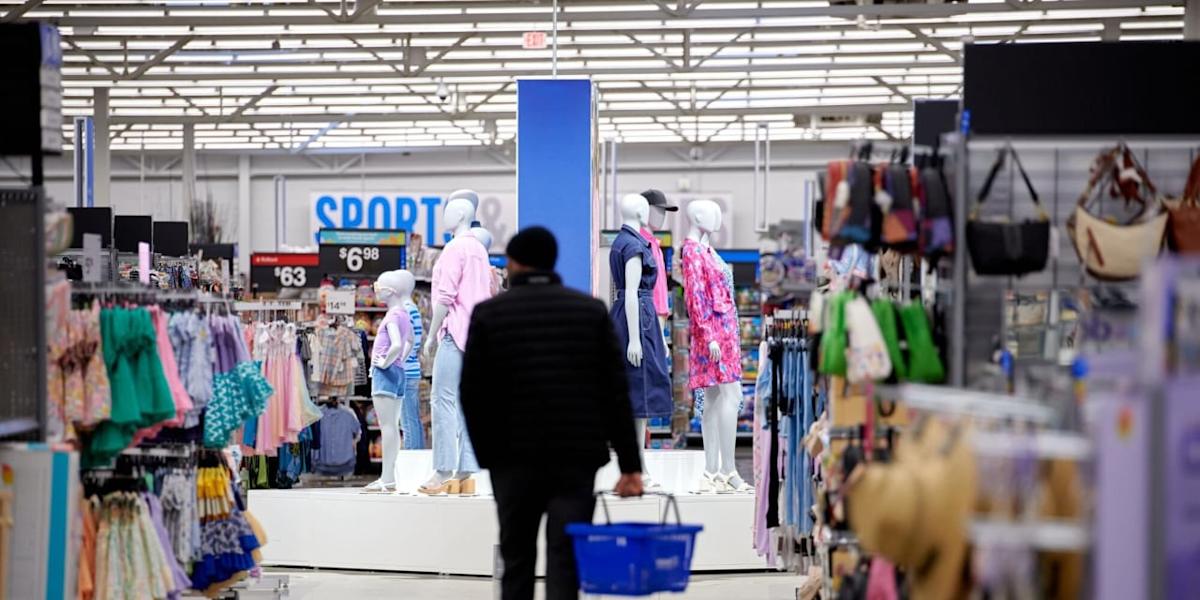
Chinese authorities summoned Walmart after suppliers complained the retailer was pressuring them to cut prices and absorb the tariff cost. – Gabby Jones/Bloomberg News
America’s biggest retailers are deploying every weapon they have to navigate President Trump’s fast-escalating trade war, from leaning on suppliers for discounts to finding alternate product sources. In some cases, that includes price increases for consumers.
Much of the action so far has focused on goods from China, which the Trump administration hit with a 10% tariff in February and another 10% in March. Some suppliers say Walmart, Home Depot and other retailers are pushing a variation of the same demand: Make a price concession or shift production out of China. Otherwise, the suppliers risk losing some business.
The sometimes-tense deliberations among retailers and suppliers show how Trump’s trade agenda is already rippling through global supply chains, with billions of dollars of consumer spending at stake.
“Companies are completely under the gun and panicking,” said Joe Jurken, founder of the ABC Group in Milwaukee, which helps U.S. businesses manage supply chains in Asia. He has received a flood of inquiries from manufacturers facing pressure from retailers to move production out of China, he said.
Some of the requests have raised the ire of Chinese officials. Authorities in China summoned Walmart for a meeting in recent days after some suppliers complained the largest U.S. retailer by annual revenue was pressuring them to cut prices and absorb the tariff cost.
Some suppliers say Home Depot and other retailers are pushing a variation of the same demand: Make a price concession or shift production out of China. – Christopher Dilts/Bloomberg News
Walmart said it was in discussions with suppliers to help consumers save money and that it would continue to work closely with them “to find the best way forward during these uncertain times.”
Some pricing negotiations are hitting an impasse because many of these manufacturers are often already operating on razor-thin margins, according to suppliers. And retailers don’t want to raise prices for shoppers so they can continue to compete for market share.
William Liu, sales director for Rongli Garments, a Chinese manufacturer that makes seamless apparel, said that when the 10% tariff hit in February, his company agreed to lower prices by 5% for Walmart, though it cut into the garment maker’s profit margins. After Trump imposed the additional 10% tariff, Walmart asked his company to raise the discount to 10%. Liu’s company couldn’t afford to absorb the cost and, as a result, Walmart is seeking new suppliers outside China, Liu said.
Target, too, is talking to suppliers about how to share any additional costs, said Rick Gomez, chief commercial officer for the company. “Right now, a lot of those negotiations are going on.”
Some of the haggling has prompted more sourcing from outside of China. After the first 10% tariff on Chinese goods in February, Home Depot asked one of its U.S. suppliers of lighting and home decor to absorb the cost, according to an executive at the supplier. The supplier agreed to a two-month, 10% discount, part of which would be covered by its Chinese manufacturer.
After the second 10% tariff in March, the supplier declined another request from Home Depot to lower prices again. Instead, the supplier is moving production to Southeast Asia so it can eventually charge the home-improvement retailer the original price, the executive said.
A Home Depot spokeswoman said the company has been diversifying its sourcing for more than a decade. “We do this partnering with our vendors typically over several years,” she said.
The tariff planning is especially complicated because companies have little sense of which tariff threats will materialize and where new ones could emerge, retailers and suppliers say. Bouqs Co., an online flower company, learned that lesson soon after Trump took office and threatened a 25% tariff against goods imported from Colombia because of the country’s initial refusal to accept repatriation flights from the U.S.
That sent Bouqs executives into an emergency weekend meeting, during which they came up with a plan for Bouqs and its partners to share costs if tariffs emerge, Chief Executive Kim Tobman said. Farms in Colombia provide much of the cut flowers sold in the U.S. Bouqs sells goods directly to shoppers as well as inside Amazon.com’s Whole Foods.
“We had been thinking China,” Tobman said. “There was no talk in our world about Colombia.”
Trump reversed course a few days later after Colombia accepted the repatriation flights. “It was a real shocker and stress for our team” and came just ahead of Valentine’s Day, one of the industry’s biggest sales days, she said.
Now as the president threatens additional tariffs on a range of other trading partners, companies are worried about investing resources into moving production, only to potentially face duties on goods from those locations.
“Choosing any other country other than the U.S. and thinking it’s a safe haven is risky,” said Kimberly Kirkendall, president of International Resource Development, an international supply-chain consulting firm that works with U.S. suppliers. “If your business is big enough and you’ve got the financial wherewithal to have multiple manufacturing sites, then that’s the best strategy.”
In some cases, retailers and manufacturers have decided it is worth it to keep production in China to maintain quality. Costco, the warehouse chain, plans to continue selling patio furniture made in China—even at an elevated price—because it is higher quality than versions made in other countries, Costco executives said. Costco and its supplier will absorb some of the cost increase and pass some on to shoppers, they said.
Prices on all goods affected by tariffs won’t go up equally. Retailers create their tariff pricing strategies with the full assortment of goods consumers usually buy in mind. They might raise the price of clothing that shoppers are willing to pay more for, while keeping the price steady on another item shoppers are likely to buy frequently like bananas or paper towels.
Merchants have to think through “pricing architecture,” said Gomez, the Target executive. Target, for example, wants to continue selling some Christmas ornaments at $3, rather than raising the price.
“That means we have to think about margin elsewhere. So maybe we will take pricing up a little bit on stockings,” he said. “It’s really not as simple as just flowing through cost.”
Retailers like Target are considering raising prices on certain items to offset the cost of tariffs, while keeping prices steady on others. – vincent alban/Reuters
Write to Hannah Miao at hannah.miao@wsj.com and Sarah Nassauer at Sarah.Nassauer@wsj.com