


(Bloomberg) — Companies are lining up to abandon Brazil’s stock market, joining dozens that have left in recent years as high interest rates sap valuations. Opportunistic investors are waiting with open arms.
Most Read from Bloomberg
Subsidiaries of media giant Globo Comunicacao e Participacoes and French supermarket chain Carrefour SA are a few of the firms planning to ditch B3 SA, which operates the local equity exchange.
Leia também a versão em português: Clique aqui.
It’s gotten harder to find reasons to stay. A mix of political instability and double-digit rates have hurt the local equity market, and many investors have moved their money into safer fixed income instruments with high yields. Today, 429 stocks trade on B3, according to the exchange, down from 463 in 2021. Half of those departures came in 2024.
Nobody is replacing those runaways. B3 hasn’t had an IPO in about four years, and a wave of buyouts — often from companies with existing stakes — is gradually leading to more delistings.
“The investable universe in equities in Brazil has become very small,” said Christian Keleti, Chief Executive Officer at Alpha Key Capital Management.
In August, payment processor Cielo delisted following a tender offer from its controlling shareholders. Carrefour plans to take its local subsidiary, Atacadao SA, private after buying the shares it doesn’t already own. Meanwhile, Globo is trying to pull Eletromidia SA, which it acquired in November, off the exchange.
Smaller constituents are also looking for a way out. Internet services provider LWSA SA, veterinary pharmaceutical company Ouro Fino Saude Animal Participacoes and electronics manufacturer Positivo Tecnologia SA are actively considering leaving B3, according to people with knowledge of the matter. All three companies declined to comment.
“Strategic investors have started to emerge, willing to delist,” said Keleti. “This will happen more and more with the current level of share prices, because, especially for those with a strong currency, it is very cheap to buy.”
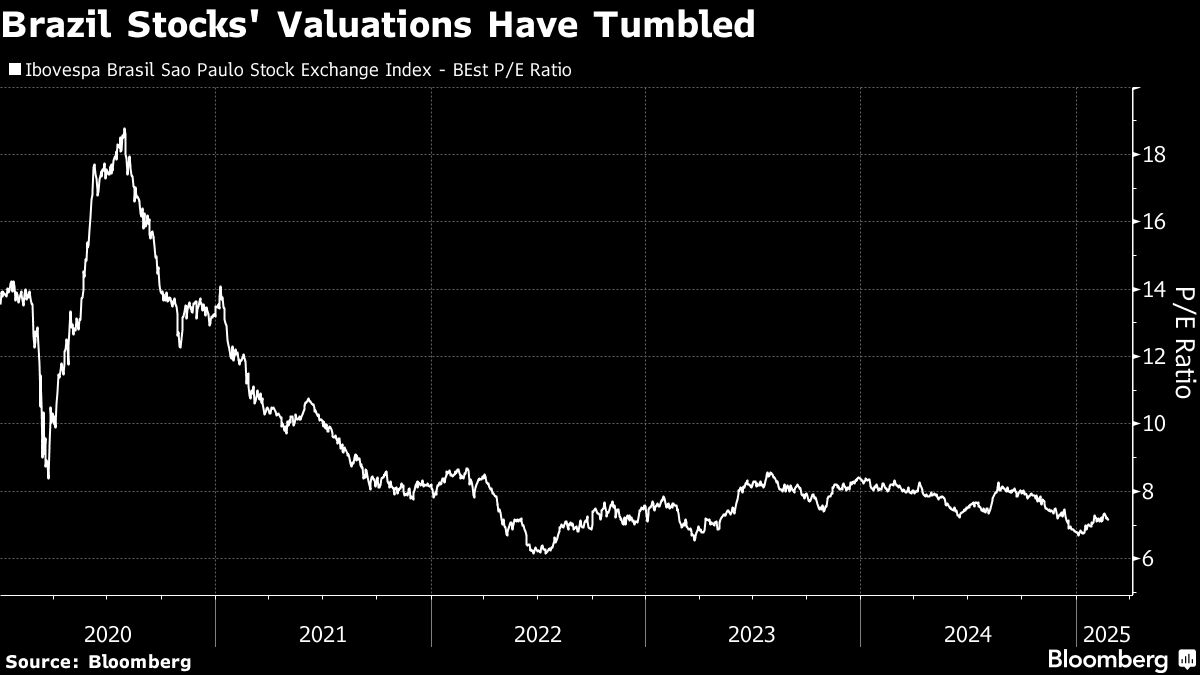
Brazilian stocks sell for 7.13 times blended-forward 12-month earnings, below the 10-year historical average of 10.06 times, according to data compiled by Bloomberg. They’re much cheaper than the MSCI gauge of emerging-market stocks, which trade at a ratio of 12.46.
