


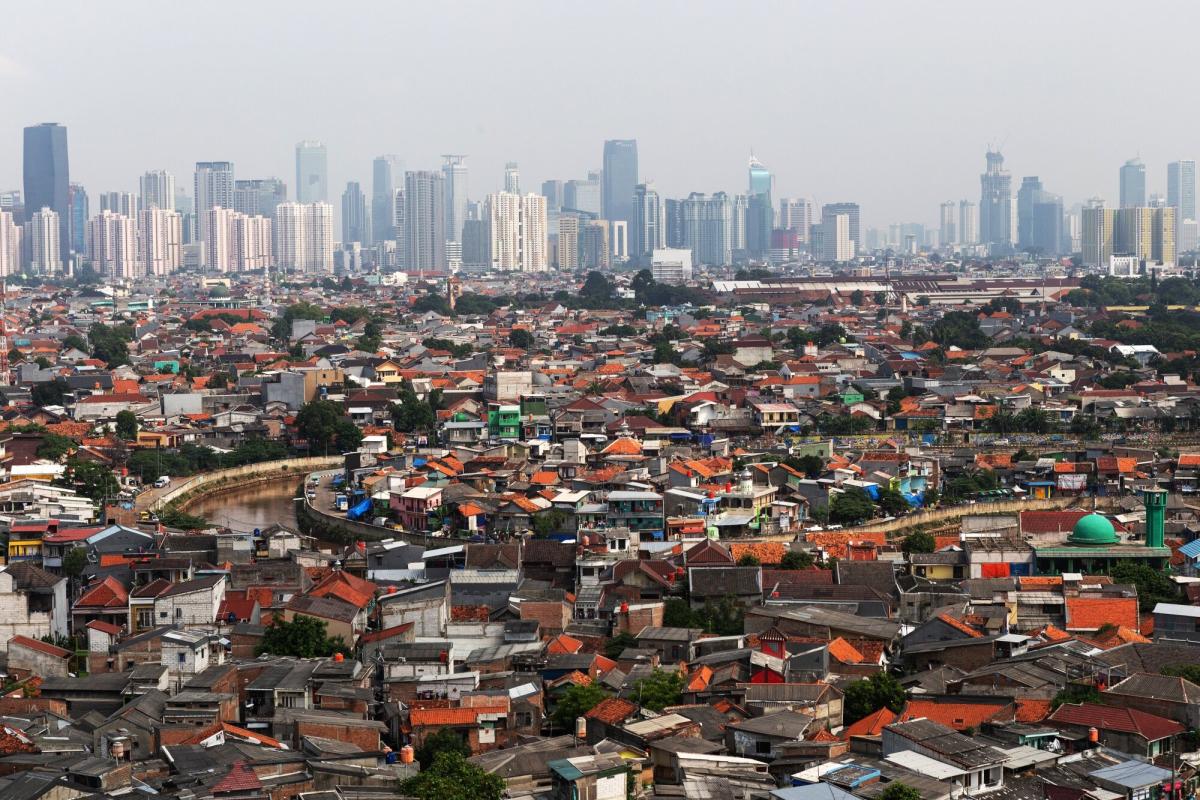
(Bloomberg) — Indonesia is planning a large issuance of bonds to fund President Prabowo Subianto’s ambitious public housing program, with the central bank agreeing to buy the debt in the secondary market.
Most Read from Bloomberg
The bond sale will help expand the government’s home ownership loan facility, Finance Minister Sri Mulyani Indrawati told reporters in a briefing late Thursday, without elaborating on the issuance size.
Housing Minister Maruarar Sirait said separately that the issuance would certainly be large, though the numbers are still being finalized, according to a report by Bloomberg Technoz.
It was not immediately clear if the sale is already part of the government’s $40 billion borrowing plan this year, and the finance ministry did not immediately respond to questions.
Ten-year bond yields were largely unchanged at 6.79%, paring some of the drop it recorded earlier on Friday. The rupiah closed 0.2% stronger against the the dollar, but was the weakest among Asian peers this week, losing nearly 0.3%. The local stock gauge went up 0.2% on Friday.
Bank Indonesia, which is set to purchase over $9 billion of government bonds in the secondary market this year, pledged to buy the property-linked bonds. Governor Perry Warjiyo earlier said that the bond-buying would be carried out in line with its monetary operations’ objectives.
The central bank’s share of government local bonds already stands at about 25%, among the highest compared to peers in Asia. Bank Indonesia has bought about 33 trillion rupiah ($2 billion) worth of bonds so far this year.
It highlights the extent by which fiscal and monetary policymakers have been roped in to help execute the President’s economic agenda, which has begun to raise concerns among investors.
Monetizing Debt
“There is no macroeconomic stress or liquidity issue to justify a pre-commitment to buy specific issues linked to the housing market,” said Rajeev De Mello, Gama Asset Management SA portfolio manager, responding to BI’s readiness to buy the bonds in the secondary market.
Monetizing the debt could worry foreign investors and could pressure the rupiah as they are concerned that “long-standing anchors of Indonesia’s financial stability are being weakened,” De Mello added.
Other than the bond plans, Bank Indonesia will lower the reserve requirement for banks that extend mortgage loans, raising its liquidity incentives for the housing sector to as much as 80 trillion rupiah. The finance ministry is also undertaking $19 billion in spending cuts across government to reallocate more money for Prabowo’s priority programs.
