(Bloomberg) — Stocks fell from all-time highs as a disappointing forecast from the world’s largest retailer added to concern about the economy’s main engine.
Most Read from Bloomberg
The S&P 500 slid about 1%. Walmart Inc., the first big-box retailer to report results after the holiday season, sank 6.5%. Its chief financial officer acknowledged “uncertainties related to consumer behavior and global economic and geopolitical conditions.” That’s just days after retail sales signaled an abrupt pullback by consumers. A slide in banks also weighed on trading, with JPMorgan Chase & Co. and Goldman Sachs Group Inc. down over 4%.
Retailers like Walmart tend to perform well during tough economic times. It’s also true that Walmart usually starts the year with a conservative guidance. But the fact is consumers are dealing with stubborn prices and high borrowing costs, and many are turning to credit cards and other debt to support their spending — with a rising number of those loans starting to go bad.
“This news out of Walmart raises even more concerns about the state of the consumer,” said Matt Maley at Miller Tabak + Co. “We have already seen some very disappointing numbers on consumer confidence and last week’s retail sales data was much lower than expected. It raises some questions about how strong growth will be over the rest of this year.”
Those uncertainties hit a market dealing with risks ranging from tariffs to inflation, geopolitics and lofty tech valuations. After rallying more than 20% last year, US stocks have trailed global counterparts — with the S&P 500 failing to achieve meaningful breakouts during the three times it notched closing records in 2025.
“A correction may soon be necessary to restore a more attractive valuation for US stocks,” said Fawad Razaqzada at City Index and Forex.com. “While there are no overt warning signs just yet, it pays to be alert to signals that would put the S&P 500 forecast on a downward trajectory in the short-term.”
The S&P 500 slipped 0.8%. The Nasdaq 100 slid 0.9%. The Dow Jones Industrial Average lost 1.4%. The Russell 2000 dropped 1.1%. The KBW Bank Index slumped 2.7%. A gauge of the Magnificent Seven megacaps fell 0.6%.
The yield on 10-year Treasuries fell three basis points to 4.50%. The Bloomberg Dollar Spot Index fell 0.7%. The yen led gains in major currencies on bets the Bank of Japan will hike rates sooner rather than later.
Aside from the slide in consumer companies, banks are among the groups hit the hardest.
Among the reasons, Jason Goldberg at Barclays cited Walmart’s outlook and a contraction in the Conference Board leading economic index as factors fueling concerns.
But there’s also the fact that banks have also “had a decent move” resulting in “some profit taking,” the analyst wrote.
Meantime, a measure of the S&P 500’s ability to brush off fear-inducing headlines and surprise policy announcements is the strongest since before the Covid-19 pandemic.
Investors are now less fixated on one particular variable — like a key inflation report — than in recent years, making the market more resilient to macro shocks, according to analysts at 22V Research.
“More variables, like earnings, industry group, and factor exposures, matter,” said Kevin Brocks, director at 22V Research. “The macro picture has improved and the economy is further from recession.”
A flood of retail investor cash into the most speculative corners of the stock market should be a warning for US equity bulls, according to Morgan Stanley Investment Management’s Andrew Slimmon.
“What keeps me up at night the most is this retail frenzy into euphoric stocks,” the senior portfolio manager and head of the applied equity advisors team said this week in an interview on Bloomberg Television. “Euphoria is the tail end of a bull market, and we’re moving too quickly through the optimism phase.”
Individual investors’ exposure to stocks is in the 96th percentile in data going back to 1997 as of the end of January, according to an analysis from Barclays’ equities tactical strategies division led by Alexander Altmann. Sentiment across that group has also reached the highest on record, surpassing levels seen during the meme-stock mania of 2021, according to Emma Wu, JPMorgan’s global quantitative and derivatives strategist.
Corporate Highlights:
Boeing Co.’s chief executive officer said Elon Musk and his DOGE team are helping the planemaker work through bottlenecks that have caused the next fleet of Air Force One jets to fall years behind schedule.
Carvana Co. fell after the used-car retailer reported lower gross profit per vehicle and shrinking wholesale volumes for the latest quarter, undercutting a turnaround narrative that had buoyed the stock.
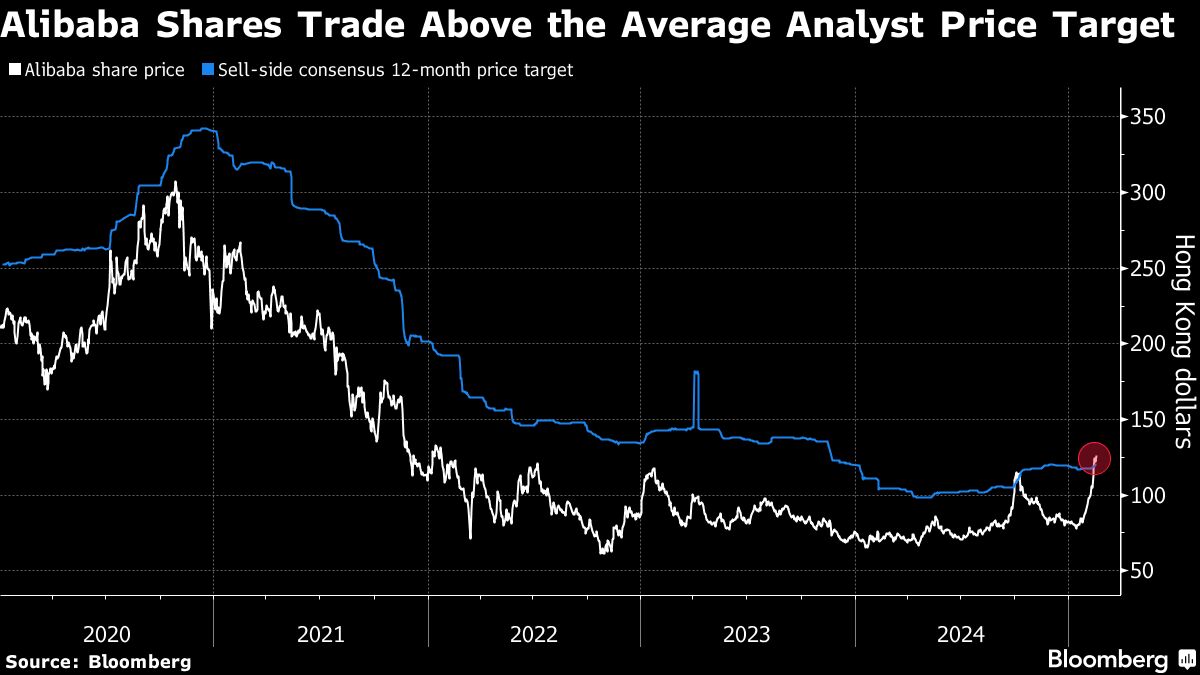
Alibaba Group Holding Ltd. posted its fastest pace of revenue growth in more than a year, as the Chinese internet pioneer co-founded by Jack Ma takes another step toward a recovery after years of turbulence.
Hasbro Inc. is targeting mid-single-digit sales growth through 2027 and savings of about $1 billion, as the toymaker laid out a plan to expand its reach over the next few years.
Herbalife Ltd., a nutrition company, reported fourth-quarter adjusted earnings per share that beat consensus estimates.
Birkenstock Holding Plc reported faster sales of its high-end sandals and clogs while keeping its annual financial targets unchanged, as the German shoe company seeks to convince investors that it can stay fashionable.
Grab Holdings Ltd. predicted full-year revenue that trailed estimates, suggesting caution around a Southeast Asian ride-hailing and food delivery market where GoTo Group remains a formidable rival.