Close Menu
  • Home
  • AI & Technology
  • Politics
  • Business
  • Cryptocurrency
  • Sports
  • Finance
  • Fitness
  • Gadgets
  • World
  • Marketing

Subscribe to Updates

Subscribe to our newsletter and never miss our latest news

Subscribe my Newsletter for New Posts & tips Let's stay updated!

What's Hot

Fan fiction website AO3 is finally coming out of beta

April 3, 2026

NASA’s Artemis II mission has left Earth’s orbit

April 3, 2026

Balancing AI and Human Connection

April 3, 2026
Facebook X (Twitter) Instagram
  • Home
  • About US
  • Advertise
  • Contact US
  • DMCA
  • Privacy Policy
  • Terms & Conditions
Facebook X (Twitter) Instagram
MNK NewsMNK News
  • Home
  • AI & Technology
  • Politics
  • Business
  • Cryptocurrency
  • Sports
  • Finance
  • Fitness
  • Gadgets
  • World
  • Marketing
MNK NewsMNK News
Home » Invasive bugs and toxic pesticides hurt Kenya’s exports
Finance

Invasive bugs and toxic pesticides hurt Kenya’s exports

MNK NewsBy MNK NewsFebruary 14, 2025No Comments4 Mins Read
Facebook Twitter Pinterest LinkedIn Tumblr Email
Share
Facebook Twitter LinkedIn Pinterest Email


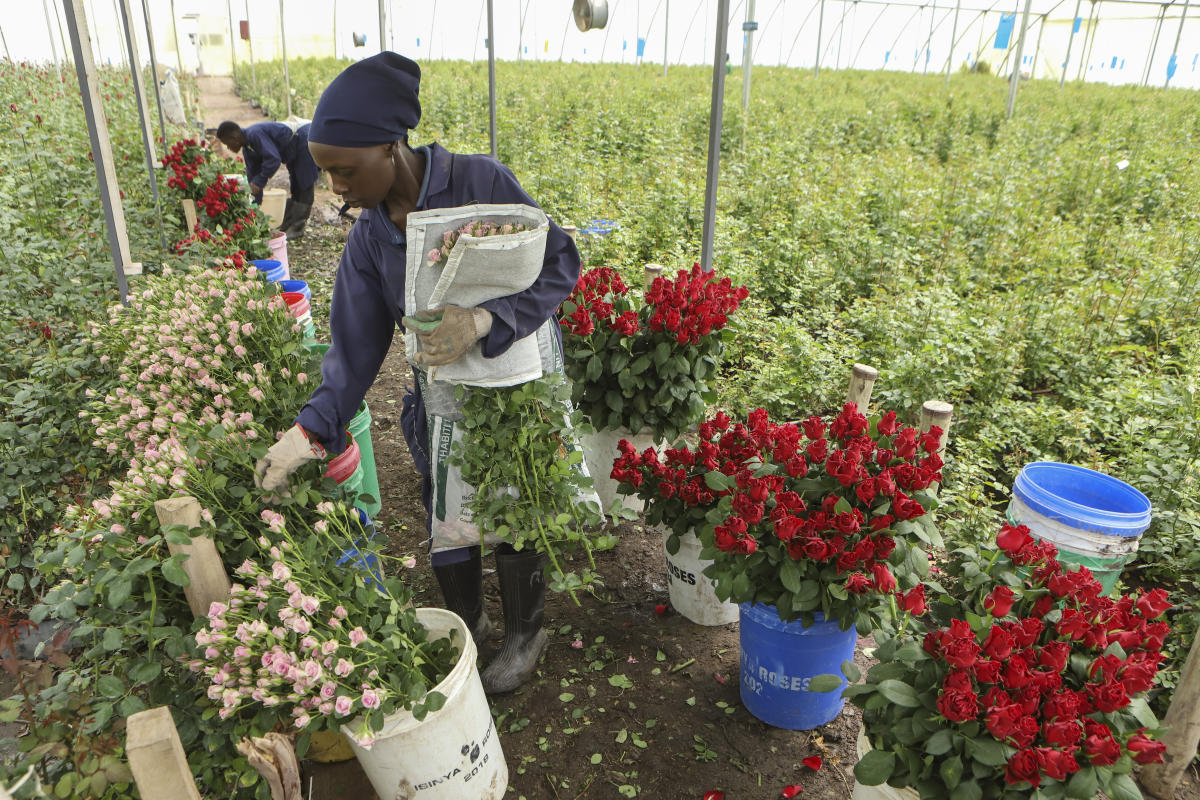
ISINYA, Kenya (AP) — The red rose: a token of love for many, and for Kenya, a major economic sector. More than a third of Kenya’s flower exports where the roses, in particular, are prized for their longevity and vase performance, the Kenyan government says.

What can’t be seen within these uniformly perfect blooms is a tiny larva laid inside the rosebuds, laid by the false codling moth (Thaumatotibia leucotreta), which doesn’t just feed on roses but can also affect fruits and vegetables.

The moth has been devastating crops across Africa. The European Union is intensifying measures to prevent its spread into Europe, classifying FCM among organisms targeted for regulation as quarantine pests, with consequences for hard-pressed Kenyan farmers.

According to the Kenya Flower Council, the detection of a single live FCM at any developmental stage leads to the rejection of an entire flower consignment.

“They are too strict,” laments Jacky Mwanzia, a marketer with Isinya Roses in Kajiado County, south of Nairobi. “Most of our shipments to the EU are quarantined, and it takes time. It is a waste because we have to meet customers’ demand, so we are looking for alternative markets where these measures are not too strict, as we lose about 30% of our revenue.”

Nationally, the flower industry employs half a million people, according to a Central Bank of Kenya 2021 report, and is estimated by the National Bureau of Statistics to be worth over $800 million. Roses make up about 66% of cut flower exports, at an estimated value of about $300 million.

The Kenya Plant Health Inspectorate Service (KEPHIS) reports that since 2020, EU sampling of Kenyan roses has increased from 5% to 25%, leading to more frequent quarantines and shipment returns.

Despite existing stringent protocols, the EU is expected to enforce even tougher restrictions in the coming months. Due to ongoing noncompliance by exporters, the EU will impose special requirements applicable to Kenyan cut roses, reports the Committee Linking Entrepreneurship, Agriculture, and Development, a French-based network of companies that engages in sustainable agriculture. These new rules take effect on Apr. 26, 2025.

Kenya’s warm climate and soils are ideal for growing roses but also favor pests, so pesticides are routinely used to minimize losses. A 2020 study by the Route To Food Initiative of the Nairobi branch of the Heinrich Boell Foundation, a non-profit, found that 75% of pesticides used in Kenya are highly hazardous. Nearly half are banned in the EU but are still used in Kenya largely due to lower regulatory standards.

Farmers who want to export to the EU have to stay within the bloc’s pesticide regulations while also trying to control FCM populations. It can be a tricky balancing act.

“The EU has a strict zero tolerance on caterpillars and on several chemicals that, given the current weather conditions, we must use. Otherwise, we cannot meet our production targets,” says Anantha Kumar, marketing manager at Isinya Roses. The company is a major local employer, with a workforce of up to 1,000 people, depending on seasonal demand.

As a result, the company is now eyeing other markets with less stringent regulations. “The Middle East market is ready to accept our products, and it is really growing,” Kumar says.

In spite of the challenges, the growers at Isinya Roses are not ready to abandon the European market just yet. They are trying natural pest control methods, including releasing beneficial insects, companion planting, using pheromone traps, and applying natural fertilizers and composting instead of chemical fertilizers.

But this year, flower farmers will likely face a challenging Valentine’s Day and Mother’s Day, which are usually peak sales periods for cut flowers around the world.


Source link

Share. Facebook Twitter Pinterest LinkedIn Tumblr Email
MNK News
  • Website

Related Posts

Rite Aid files for bankruptcy — again

May 6, 2025

How to Track Driver Performance Without Micromanaging

May 6, 2025

Ford says its Q1 profit fell by two-thirds and it expects a $1.5 billion hit from tariffs this year

May 6, 2025
Add A Comment
Leave A Reply Cancel Reply

Editors Picks

Italy’s football chief resigns after World Cup disaster

April 2, 2026

James Anderson backs England for Australia revenge despite Ashes woes

April 1, 2026

Spanish police open probe into anti-Muslim chants at friendly match with Egypt

April 1, 2026

Iraq seal FIFA World Cup return after 40 years; Turkiye end 24-year drought

April 1, 2026
Our Picks

New Bitcoin Crash Ahead? Bloomberg Strategist Forecasts Return To $10,000 – Here’s Why

April 3, 2026

Best Cryptos to Buy in Q2 2026 – Three Coins That Could Deliver the Next 100x Returns

April 3, 2026

Ethereum Compression Deepens Near $2,000 — Volatility About To Explode?

April 3, 2026

Recent Posts

  • Fan fiction website AO3 is finally coming out of beta
  • NASA’s Artemis II mission has left Earth’s orbit
  • Balancing AI and Human Connection
  • New Bitcoin Crash Ahead? Bloomberg Strategist Forecasts Return To $10,000 – Here’s Why
  • Best Cryptos to Buy in Q2 2026 – Three Coins That Could Deliver the Next 100x Returns

Recent Comments

No comments to show.
MNK News
Facebook X (Twitter) Instagram Pinterest Vimeo YouTube
  • Home
  • About US
  • Advertise
  • Contact US
  • DMCA
  • Privacy Policy
  • Terms & Conditions
© 2026 mnknews. Designed by mnknews.

Type above and press Enter to search. Press Esc to cancel.